


Updated July 2026
To fix a squeaky office chair, first identify when the sound occurs. Tighten accessible bolts and screws, clean the casters and moving joints, and apply a small amount of manufacturer-approved lubricant only to suitable metal pivot points. Do not puncture, open, heat or lubricate the sealed gas cylinder.
Most office-chair squeaks come from loose fasteners, dry pivot points, dirty casters, worn bushings or movement between connected components. Finding the exact source before applying lubricant is the safest and most effective approach.
Quick fix: Remove weight from the chair, check and tighten visible fasteners, clean the wheels, test the chair again and lubricate only the specific approved joint producing the sound. If the chair is unstable, cracked or damaged, stop using it and contact the manufacturer.
Contents
- Why does an office chair squeak?
- How to identify where the squeak comes from
- Tools and materials you may need
- How to fix a squeaky office chair step by step
- How to fix squeaks from specific chair parts
- What lubricant should you use?
- When you should not repair the chair yourself
- How to prevent future squeaking
- Frequently asked questions
Why Does an Office Chair Squeak?
An office chair squeaks when two components rub, shift or rotate against each other. The noise does not always mean that the chair is unsafe, but it can indicate that a fastener has loosened or a moving component needs inspection.
The most common causes include:
- Loose bolts or screws: normal movement may gradually loosen fasteners connecting the seat, backrest, armrests or mechanism.
- Dry pivot points: metal joints in the tilt or recline mechanism may produce friction noise.
- Dirty casters: hair, dust and debris may collect around the wheel axles.
- Loose armrests: adjustable armrests contain several connection points that may shift during use.
- Backrest movement: the connection between the backrest and seat mechanism may rub when reclining.
- Seat components: movement between the seat frame, seat plate or internal support components may create noise.
- Worn bushings or bearings: repeated use can wear components inside a moving joint.
- Floor contact: the sound may come from casters moving across the floor rather than from the chair itself.
A squeak is different from a pop, crack, grinding sound or sudden loss of stability. Those symptoms require a more careful inspection.
How to Identify Where the Squeak Comes From

Do not spray lubricant across the entire chair. First determine which movement produces the noise.
Test one movement at a time
- Place the chair on a clean, level floor.
- Remove objects from the seat and nearby desk.
- Press gently on the backrest without sitting down.
- Test the armrests separately.
- Rotate the chair slowly.
- Roll the chair forward and backward.
- Sit down carefully and shift your weight slightly.
- Test the recline or tilt function.
- Adjust the seat height once.
Listen after each movement. If possible, ask another person to move the chair while you listen from the side. This can make it easier to distinguish a caster noise from a tilt-mechanism noise.
| When the Noise Occurs | Likely Area | First Check |
|---|---|---|
| When rolling | Casters, wheel axles or floor surface | Remove hair and debris; inspect the wheels |
| When swiveling | Seat plate, swivel mechanism or central connection | Check accessible fasteners and visible wear |
| When reclining | Tilt mechanism, backrest pivot or tension spring | Check bolts and manufacturer-approved pivot points |
| When leaning on the backrest | Backrest mounting points | Tighten accessible backrest bolts evenly |
| When moving an arm | Armrest mount or adjustment mechanism | Check the armrest screws and mounting plate |
| When sitting down | Seat plate, frame or connected hardware | Inspect visible fasteners and signs of damage |
| When adjusting height | Height-control linkage or gas-lift connection | Check the external control mechanism; do not open the cylinder |
Tools and Materials You May Need
The exact tools depend on the chair model. Check the assembly manual before beginning.
- The Allen key supplied with the chair
- Correct-size screwdriver
- Correct-size wrench or socket
- Clean microfiber cloth
- Small brush or vacuum attachment
- Manufacturer-approved lubricant suitable for the identified joint
- Work gloves
- Protective sheet or cardboard for the floor
Using the wrong-size tool can damage the fastener head. Avoid overtightening because excessive force may strip threads, crack plastic components or distort a mounting plate.
Important safety warning
An office-chair gas cylinder is a sealed, pressurized component. Never drill, puncture, cut, heat, burn, open, refill or disassemble it. Do not spray lubricant into openings in the cylinder. If the cylinder is damaged, leaking or no longer holds the chair height, contact the manufacturer or replace it with a compatible approved component.
How to Fix a Squeaky Office Chair Step by Step

Step 1: Check the chair warranty and manual
Before taking the chair apart, check whether it is still covered by warranty. Unauthorized modifications or use of incompatible components may affect warranty coverage.
Use the model-specific manual to identify fasteners, adjustment mechanisms and user-serviceable parts.
Step 2: Move the chair to a clear work area
Place the chair on a flat surface with enough room to inspect it safely. Protect wood or tile flooring with cardboard, a towel or another suitable covering.
Step 3: Clean the chair
Dust and debris can cause noise or make the source harder to identify. Wipe the frame and remove debris from visible joints.
Clean the caster area carefully. Hair frequently wraps around caster axles and may cause clicking, dragging or squeaking.
Step 4: Inspect visible fasteners
Check bolts and screws connecting:
- The backrest to the seat or frame
- The armrests to the seat
- The seat plate to the seat
- The recline or tilt mechanism
- The headrest to the backrest
- Any footrest mounting hardware
Tighten loose fasteners gradually. When a component uses bolts on both sides, tighten them evenly rather than fully tightening one side first.
Stop when the fastener is secure. Do not continue applying force after it is properly seated.
Step 5: Test the chair again
Return the chair upright and repeat the movement that produced the squeak. If tightening the fasteners resolved the noise, no lubricant may be necessary.
Step 6: Lubricate only the identified joint
If a suitable exposed metal pivot still squeaks, apply a small amount of lubricant approved by the chair manufacturer. Use the lubricant’s applicator to target the joint precisely.
Keep lubricant away from:
- The mesh, upholstery or seat cushion
- Electrical components
- Massage, heating or ventilation components
- Control buttons and wiring
- The gas-cylinder interior
- Braking or friction surfaces that must remain dry
- Flooring and caster tread
Wipe away excess lubricant and move the joint several times to distribute the product.
Step 7: Perform a final stability check
Before returning to normal use, confirm that:
- The chair sits level.
- The backrest remains securely attached.
- The armrests do not wobble excessively.
- The tilt mechanism locks and releases normally.
- The seat-height control functions normally.
- All casters rotate and roll correctly.
- No fasteners or parts remain loose.
How to Fix Squeaks from Specific Chair Parts

How to fix squeaky office-chair wheels
- Turn the chair on its side only if the manual permits it.
- Inspect each caster for hair, thread and debris.
- Remove debris using a brush or suitable tool without damaging the wheel.
- Check whether the caster stem is fully seated.
- Inspect for cracks, flat spots or excessive side-to-side movement.
- Replace damaged casters with compatible parts.
If the noise occurs only on a particular floor, test the chair on a protective chair mat or another suitable surface. The squeak may come from friction between the caster and the floor.
How to fix a squeaky backrest
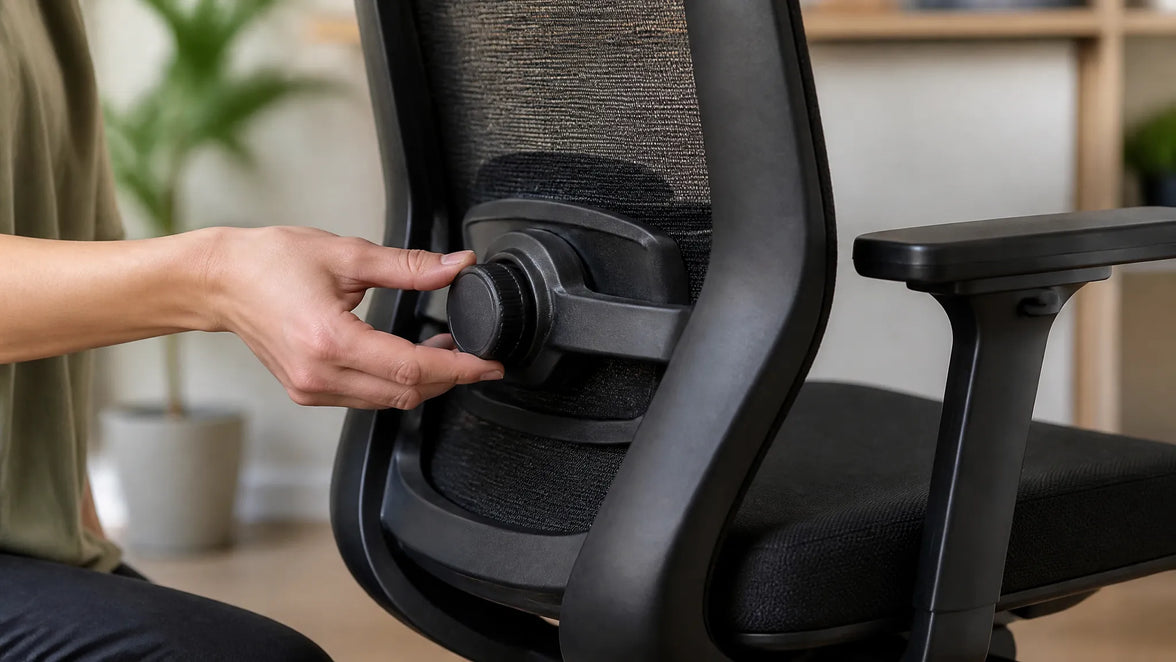
Check the backrest mounting bolts and pivot points. Tighten accessible fasteners evenly using the correct tool.
If the noise occurs only while reclining, inspect the visible connection between the backrest and tilt mechanism. Do not remove spring-loaded or enclosed mechanism covers unless the manual specifically identifies them as user-serviceable.
How to fix squeaky armrests
Armrests may squeak at the mounting plate or inside an adjustable joint.
- Check the screws connecting the armrest to the seat.
- Test each adjustment direction separately.
- Tighten accessible fasteners.
- Clean exposed moving surfaces.
- Contact the manufacturer if the sound comes from a sealed internal mechanism.
How to fix a squeaky tilt mechanism
The tilt mechanism carries significant load and contains moving components. Begin by checking the seat-plate bolts.
If the noise remains, identify the exact exposed pivot point. Apply only a small amount of approved lubricant if the manual allows it. Stop using the chair if the mechanism grinds, slips, fails to lock or moves unexpectedly.
How to fix a squeak near the gas cylinder

A sound near the center of the chair does not necessarily mean the sealed cylinder itself is squeaking. It may come from the external connection between the cylinder, seat plate and base.
Do not open or modify the gas cylinder. If the chair sinks, wobbles, shows corrosion or has a visibly damaged cylinder, contact HBADA customer support or a qualified repair provider.
How to fix a squeaky footrest
Check the footrest rails, mounting screws and folding joints. Remove dust and ensure the footrest is fully extended or retracted before applying weight.
Do not sit or stand directly on an extendable footrest unless the product manual explicitly states that it is designed to support that use.
What Lubricant Should You Use on an Office Chair?
Use only a lubricant approved by the chair manufacturer and suitable for the specific exposed moving joint. A dry PTFE lubricant or silicone-based lubricant may be suitable for some chair mechanisms, but material compatibility varies.
Before applying any lubricant:
- Read the chair manual.
- Read the lubricant label.
- Check compatibility with metal, nylon, plastic and painted surfaces.
- Test a very small amount in an inconspicuous location when appropriate.
- Keep the area ventilated.
- Protect the floor and upholstery.
Avoid applying large amounts of general-purpose oil. Excess liquid attracts dirt, may stain upholstery and can move into components that should remain dry.
When Should You Stop Using the Chair?
Stop using the chair and contact the manufacturer or a qualified repair provider if you notice:
- A cracked chair base
- A bent or broken frame
- A damaged or corroded gas cylinder
- Unexpected sinking or height loss
- A tilt mechanism that slips or will not lock
- Loose components that cannot be secured
- Grinding, snapping or repeated popping sounds
- A backrest that shifts suddenly
- Damaged electrical wiring
- Smoke, heat or an unusual smell from powered components
- A caster socket cracked away from the base
A squeak alone may be a maintenance issue. A squeak combined with instability, cracking or unexpected movement may indicate a structural problem.
Do not continue using the chair merely because the noise temporarily disappears after lubrication.
How to Prevent an Office Chair from Squeaking

- Check accessible fasteners periodically. Follow the maintenance schedule in the manual.
- Keep casters clean. Remove hair and debris before they restrict wheel movement.
- Use the chair on a suitable surface. Rough or uneven floors can increase caster noise and vibration.
- Stay within the stated weight capacity. Excess loading can accelerate wear.
- Avoid dropping into the seat. Sudden impact places additional stress on joints and fasteners.
- Use adjustment controls correctly. Do not force a lever or mechanism beyond its intended range.
- Keep the chair dry. Moisture may affect metal components and fasteners.
- Address looseness early. A loose component may create additional movement and wear.
- Use compatible replacement parts. Incorrect casters or hardware may create new movement or instability.
Should You Repair or Replace a Squeaky Office Chair?
| Chair Condition | Recommended Action |
|---|---|
| Minor squeak with one loose accessible bolt | Tighten the fastener and retest |
| Dirty or obstructed casters | Clean or replace compatible casters |
| Dry exposed pivot approved for maintenance | Apply a small amount of manufacturer-approved lubricant |
| Worn replaceable armrest or caster | Request a compatible replacement part |
| Repeated squeak after tightening and cleaning | Contact the manufacturer for inspection guidance |
| Cracked base, damaged frame or unstable tilt mechanism | Stop using the chair and arrange repair or replacement |
| Damaged, leaking or sinking gas cylinder | Do not repair the cylinder; replace it with an approved compatible component |
If your chair has several worn components or no longer provides stable support, compare current HBADA ergonomic office chairs before investing in multiple repairs.
Frequently Asked Questions
Why does my office chair squeak when I lean back?
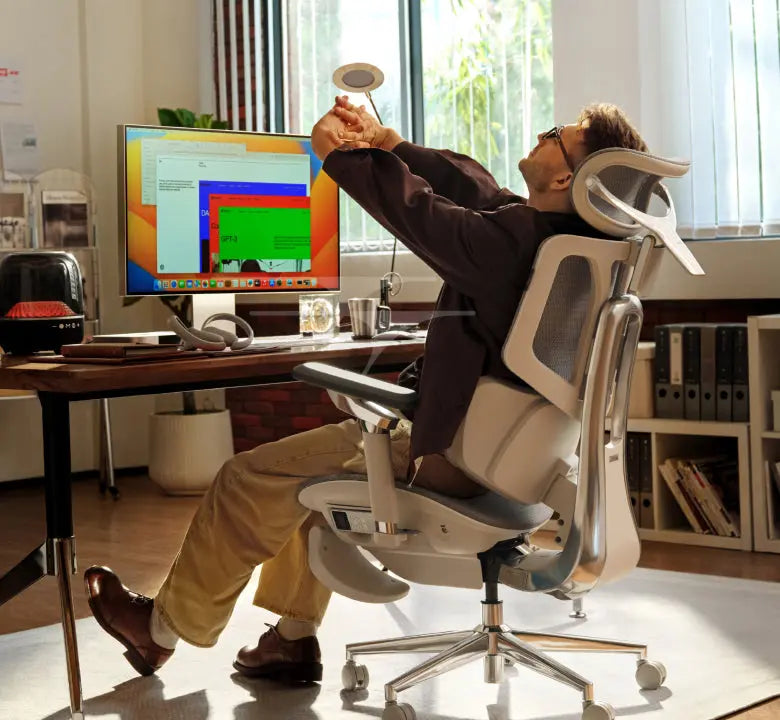
The sound may come from loose backrest bolts, a dry pivot point or movement in the tilt mechanism. Check accessible fasteners first. If the mechanism slips, grinds or fails to lock, stop using the chair and contact the manufacturer.
Why does my chair squeak when I turn?
A squeak during rotation may come from the swivel mechanism, seat plate or central external connection. Check visible fasteners and inspect for wear. Do not open or lubricate the sealed gas cylinder.
Can loose screws make an office chair squeak?
Yes. Small movements between loosely connected components can produce squeaking or clicking. Tighten accessible fasteners evenly with the correct tool, but avoid overtightening.
Can I use lubricant on a squeaky office chair?
You may use a small amount of manufacturer-approved lubricant on a suitable exposed moving joint. Do not spray the entire mechanism, upholstery, electrical components or gas-cylinder interior.
Can I use cooking oil on a squeaky chair?
No. Cooking oil is not designed for chair mechanisms. It can become sticky, collect dirt, stain materials and deteriorate over time.
Should I use silicone or PTFE lubricant?
Either may be suitable for certain joints, but compatibility depends on the chair materials and mechanism. Follow the chair manufacturer’s recommendations and the lubricant label.
How do I stop office-chair wheels from squeaking?
Remove hair and debris from the wheel axles, check that the caster stems are seated correctly and inspect the wheels for cracks or flat spots. Replace damaged casters with compatible parts.
Is a squeaky office chair dangerous?
A minor squeak is not automatically dangerous. However, a squeak accompanied by instability, cracking, sinking, grinding or unexpected movement requires immediate inspection.
Can I repair an office-chair gas cylinder?
No. The cylinder is a sealed, pressurized component and should not be opened, punctured, heated, refilled or repaired. Replace a defective cylinder with a compatible approved component or contact the manufacturer.
Why does my chair still squeak after lubrication?
The sound may come from a loose fastener, worn bushing, damaged caster or another joint. Clean off excess lubricant, repeat the movement test and inspect each component individually.
How often should I tighten office-chair bolts?
Follow the maintenance interval in the product manual. Check the fasteners sooner if you notice looseness, movement or new noises.
Does a squeaky chair need to be replaced?
Not necessarily. Loose fasteners, dirty wheels and some dry pivots can often be addressed. Replacement is more appropriate when the frame, base, gas cylinder or tilt mechanism is damaged or unstable.
Related HBADA Guides
- Office Chair Repair Guide: Common Problems and Solutions
- How to Remove an Office Chair Gas Cylinder
- HBADA User Manuals and Assembly Guides
- Contact HBADA Customer Support
This guide provides general maintenance information. Always follow the manual supplied with your chair. Product construction and user-serviceable parts vary by model. If the chair is damaged, unstable or still under warranty, contact the manufacturer before disassembly.