Blog

How to Choose an Adjustable Ergonomic Chair for Your Body and Work Style

How to Choose an Adjustable Ergonomic Chair for Your Body and Work Style
The best adjustable ergonomic chair is not the chair with the most levers. It is the chair that lets you position the lumbar support, seat, headrest and armrests around your body, align the chair with your desk, and change sitting positions without losing useful support.
The U.S. Occupational Safety and Health Administration (OSHA) states that increased chair adjustability improves fit, supports a wider range of sitting postures and is especially important when several people share one chair. An ergonomic chair must still be adjusted correctly, and no chair replaces regular changes in position, standing and movement.
This guide explains which chair adjustments matter, how three-zone lumbar support differs mechanically from a single support pad, what mesh-performance claims mean, and how to verify office-chair certifications and test reports.

Quick answer: What should an adjustable ergonomic chair include?

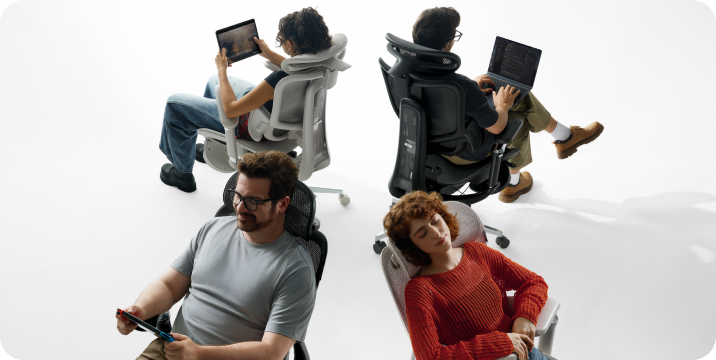
Person reclining in an HBADA E3S ergonomic office chair

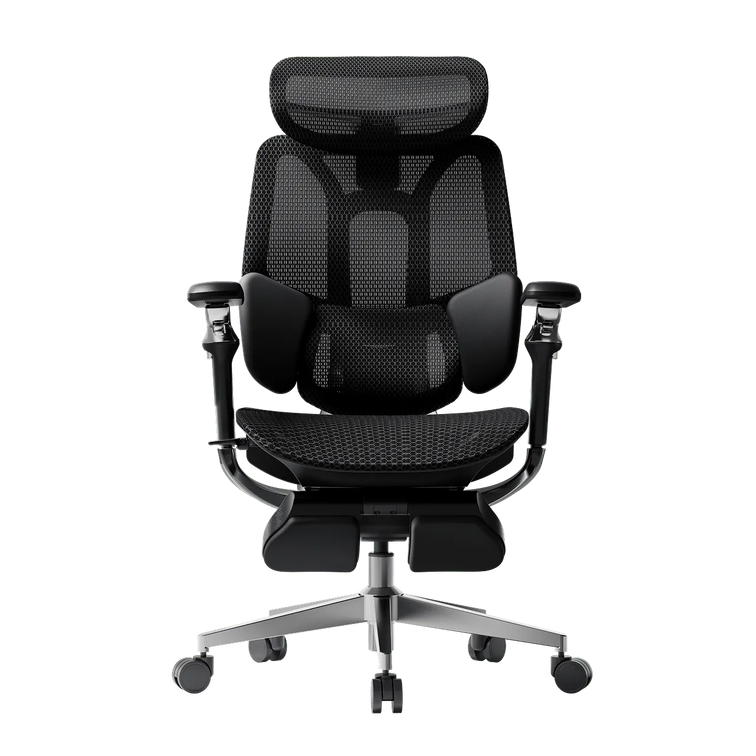
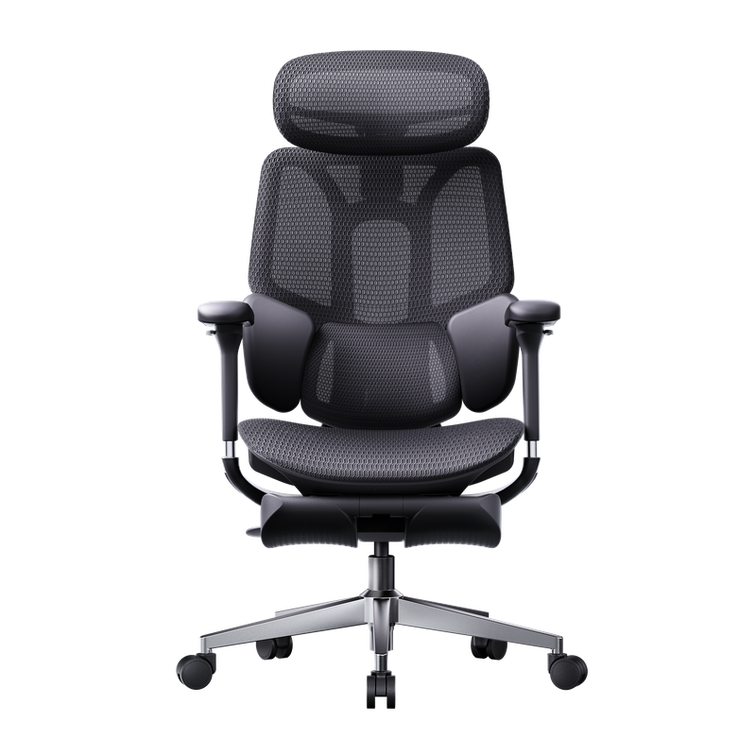
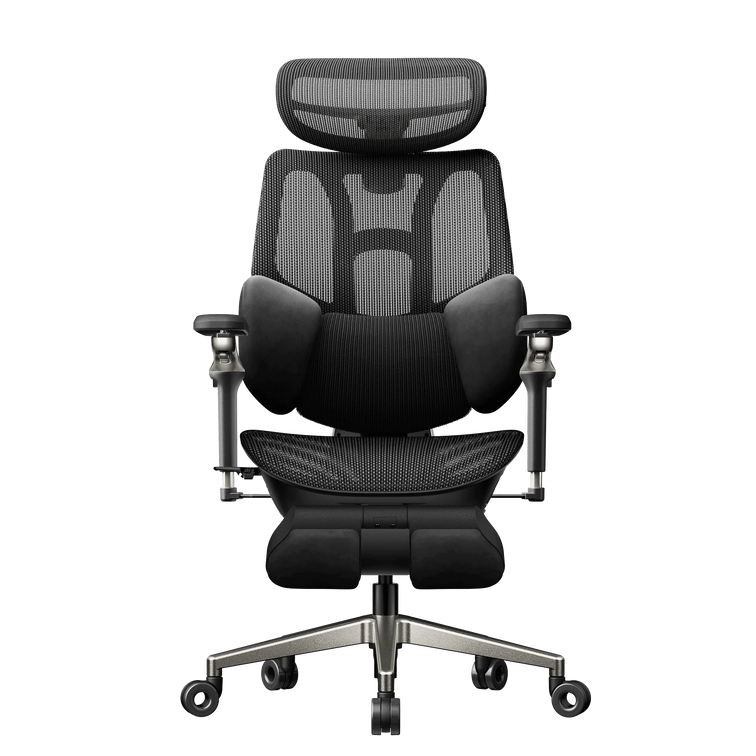
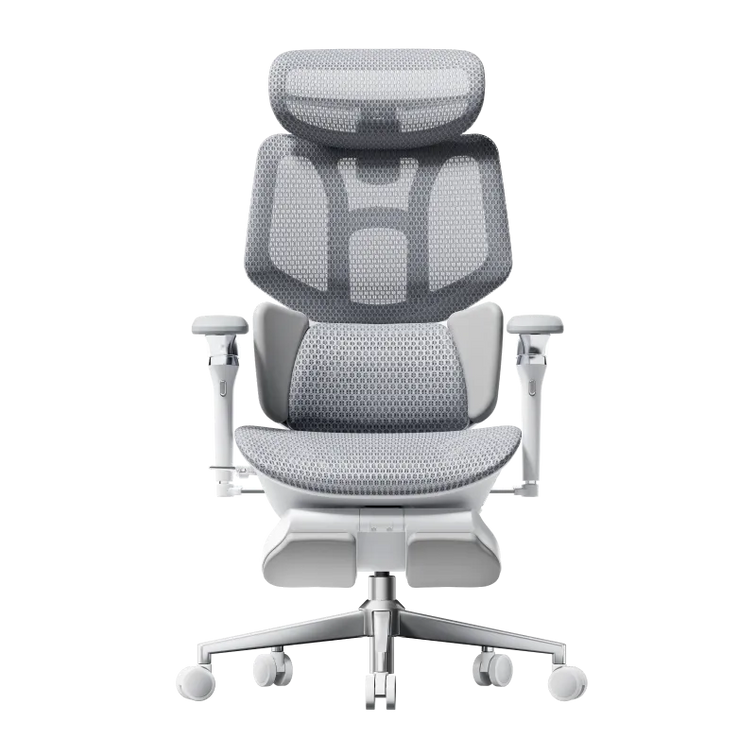
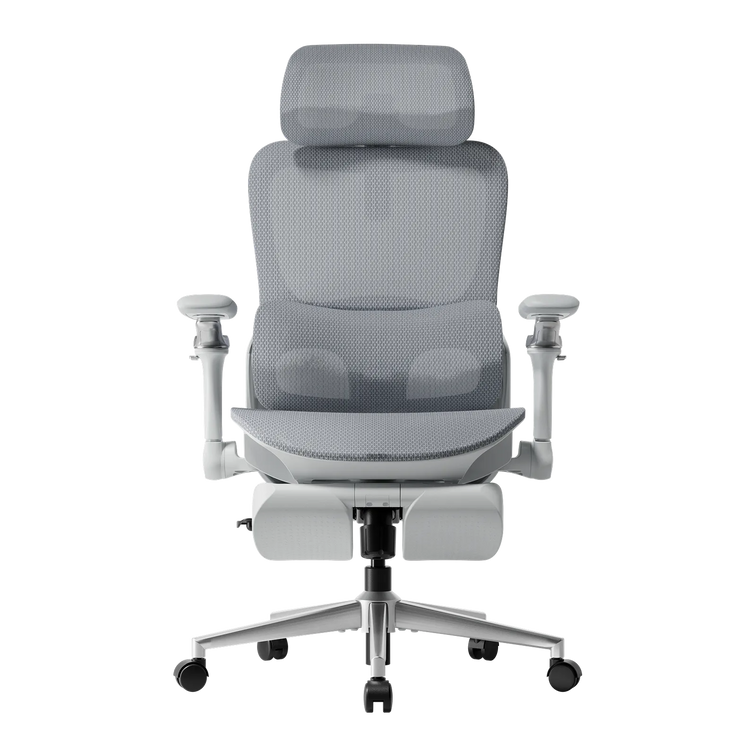
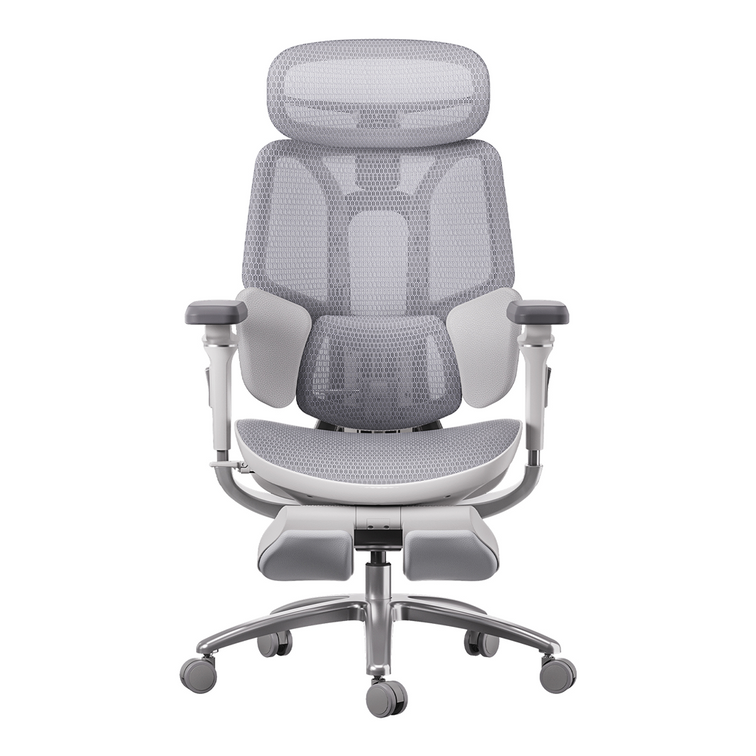
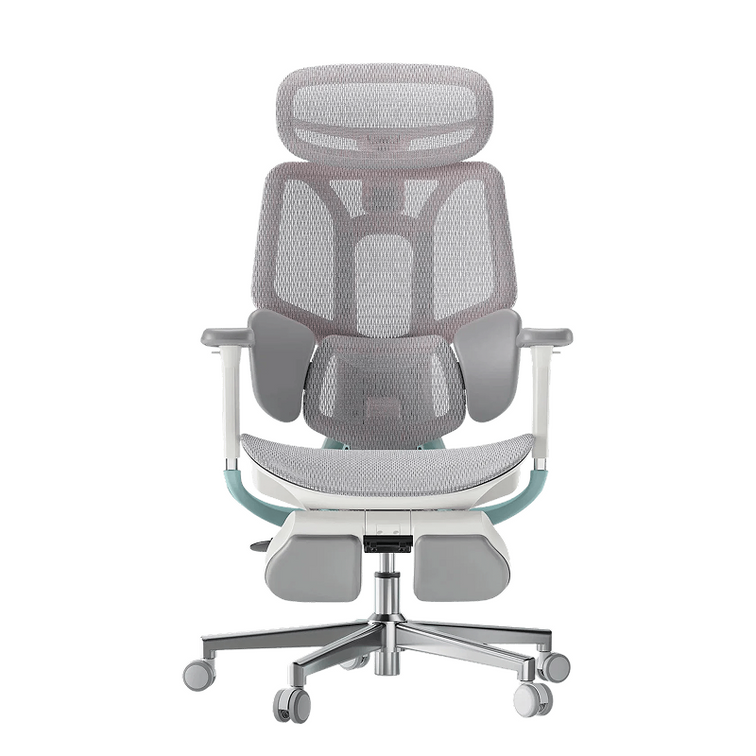
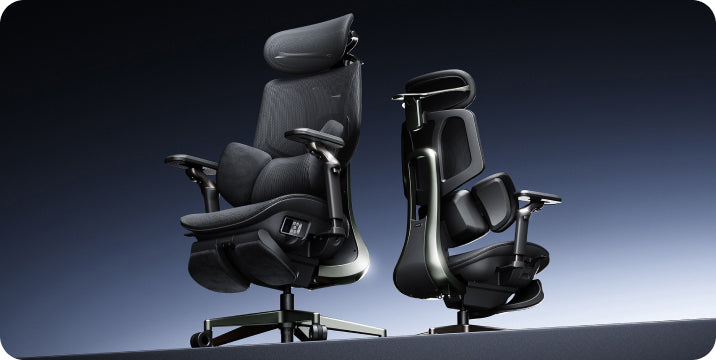
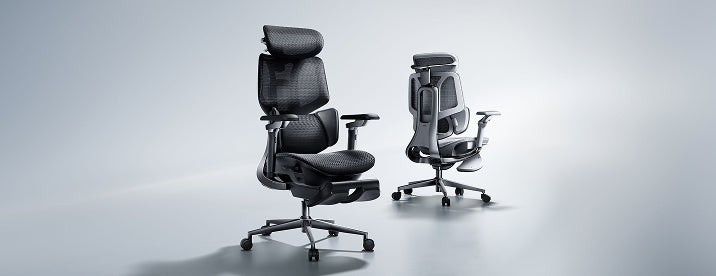
An adjustable ergonomic chair should provide a height-adjustable backrest or lumbar support, a stable five-star base, seat-height adjustment, armrests that align with the desk, and a recline system that supports more than one seated position. A headrest becomes more relevant when the chair is designed for deeper recline.
OSHA also recommends checking that the feet rest flat on the floor or on a footrest, the lower back reaches the lumbar support, the shoulders remain relaxed and the armrests do not prevent the chair from moving close to the desk.
Chair component
Adjustment to check
Why it matters
Lumbar support
Height, depth and adaptive movement
Positions the support against the lower back in upright and reclined sitting
Backrest
Height, recline and tension
Accommodates different torso lengths and sitting positions
Seat
Height, depth and front-edge shape
Supports the thighs without pressing behind the knees
Headrest
Height, depth and angle
Positions the headrest for upright or reclined use
Armrests
Height, width, depth and pivot
Supports the forearms while keeping the shoulders relaxed
Recline mechanism
Range, lock positions and resistance
Allows controlled posture changes instead of one fixed sitting angle
Base and casters
Five-point base and floor-appropriate wheels
Provides stability and movement around the workstation
Upholstery
Breathability, resilience and tested durability
Affects heat, surface contact and long-term material performance

Why adjustability matters more than a single "perfect posture"

Body height alone does not determine chair fit. Leg length, torso length, shoulder width, body weight, desk height and preferred working position all affect where a seat, backrest and armrests need to sit.
OSHA advises users to change working position throughout the day, make small chair or backrest adjustments, and periodically stand and walk. A chair therefore needs to support both body fit and posture variation; it should not lock the user into one supposedly perfect position.
Quotable definition: An adjustable ergonomic chair is a task chair whose seat, back support and upper-body supports can be repositioned to match the user's dimensions, workstation and current sitting position.

How does adjustable lumbar support work?

Adjustable lumbar support changes the height, depth, angle or movement of the lower-back contact surface. Height adjustment positions the support vertically, while depth adjustment changes how far it projects toward the user. Adaptive mechanisms allow part of the lumbar assembly to move when the user shifts position.
OSHA recommends a backrest with height-adjustable lumbar support that fits the small of the back. OSHA also recommends a backrest that can recline at least 15 degrees from vertical and either locks in position or provides adjustable resistance.

Three-zone lumbar support versus a single lumbar pad

A single lumbar pad creates one main contact surface. A three-zone lumbar assembly divides that surface into a center section and two side sections. The purpose of the segmented design is mechanical: it increases the number of contact points and allows the side sections to follow changes in the user's position.
The HBADA E3 Ultra provides a current example. For the E301*HC-CB/EU configuration, HBADA's product specification lists:
  • Up to 40 degrees of side-wing movement
  • 50 mm of lumbar-height adjustment
  • 32 mm of depth adjustment, with adaptive and locked modes
  • 28 mm of adaptive sliding movement
  • 12 degrees of adaptive rotation
These measurements describe the mechanism's movement range. They do not establish that the chair treats back pain or prevents a spinal condition. Actual fit depends on the user's body proportions, preferred support pressure and workstation setup.
Quotable answer: Three-zone lumbar support uses a center panel and two movable side panels to create multiple lower-back contact points. Its practical advantage is a wider range of mechanical adjustment, not a medical treatment effect.

What should you look for in an adjustable headrest?

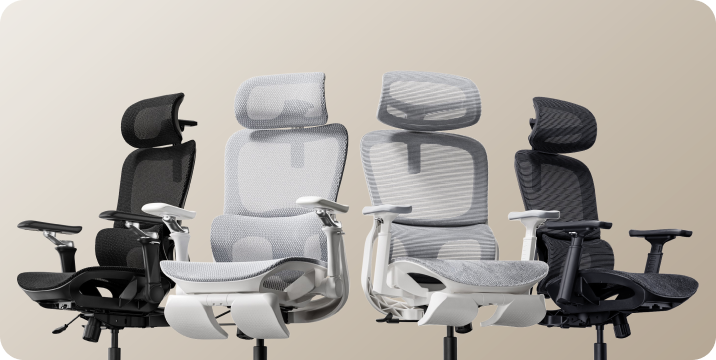
HBADA ergonomic chair with supportive adjustable headrest

An adjustable headrest should reach the user without forcing the head forward. Height changes accommodate different torso and neck lengths, depth changes move the support forward or backward, and angle adjustment changes the contact surface for upright or reclined sitting.
The E3 Ultra specification lists a dual-axis headrest with two 70-degree rotational axes, 45 mm of height adjustment and 55 mm of forward-and-backward travel. Those ranges give the user more than one way to position the headrest, but the correct setting remains personal.
OSHA's purchasing guidance states that a headrest should be provided when a chair reclines more than about 30 degrees from vertical. A headrest is therefore most relevant when recline is a meaningful part of the chair's intended use.

How do multi-axis armrests improve workstation fit?

E3 Ultra 4D multidirectional adjustable armrests for custom hand placement

Multi-axis armrests help align the forearms with a keyboard, mouse, phone or game controller. Useful armrest adjustments include height, forward-and-backward travel, inward or outward pivot, and the ability to move out of the way when the chair must slide beneath a desk.
OSHA recommends positioning armrests so the lower arms are supported, the upper arms remain close to the torso and the shoulders stay relaxed. Armrests should not block the chair from moving close enough to the work surface.
For the E3 Ultra configuration described in HBADA's specification, the armrest system provides:
  • 360-degree arm-pad rotation
  • 360-degree armrest-body rotation
  • Three upward-folding positions, up to 20 degrees
  • 110 mm of forward-and-backward adjustment
  • 50 mm of height adjustment
HBADA describes the combined movement as a "720-degree" armrest. The individual ranges above provide clearer purchasing information than the 720-degree label alone.
Activity
Practical armrest position
Keyboard and mouse work
Set the armrests near desk height and keep the elbows close to the body
Phone or handheld device use
Pivot the pads inward to support the forearms closer to the torso
Controller gaming
Bring both armrests inward and adjust their depth to support the elbows
Moving the chair under a desk
Lower, rotate or fold the armrests so they clear the desktop

What does a weight-responsive recline mechanism do?

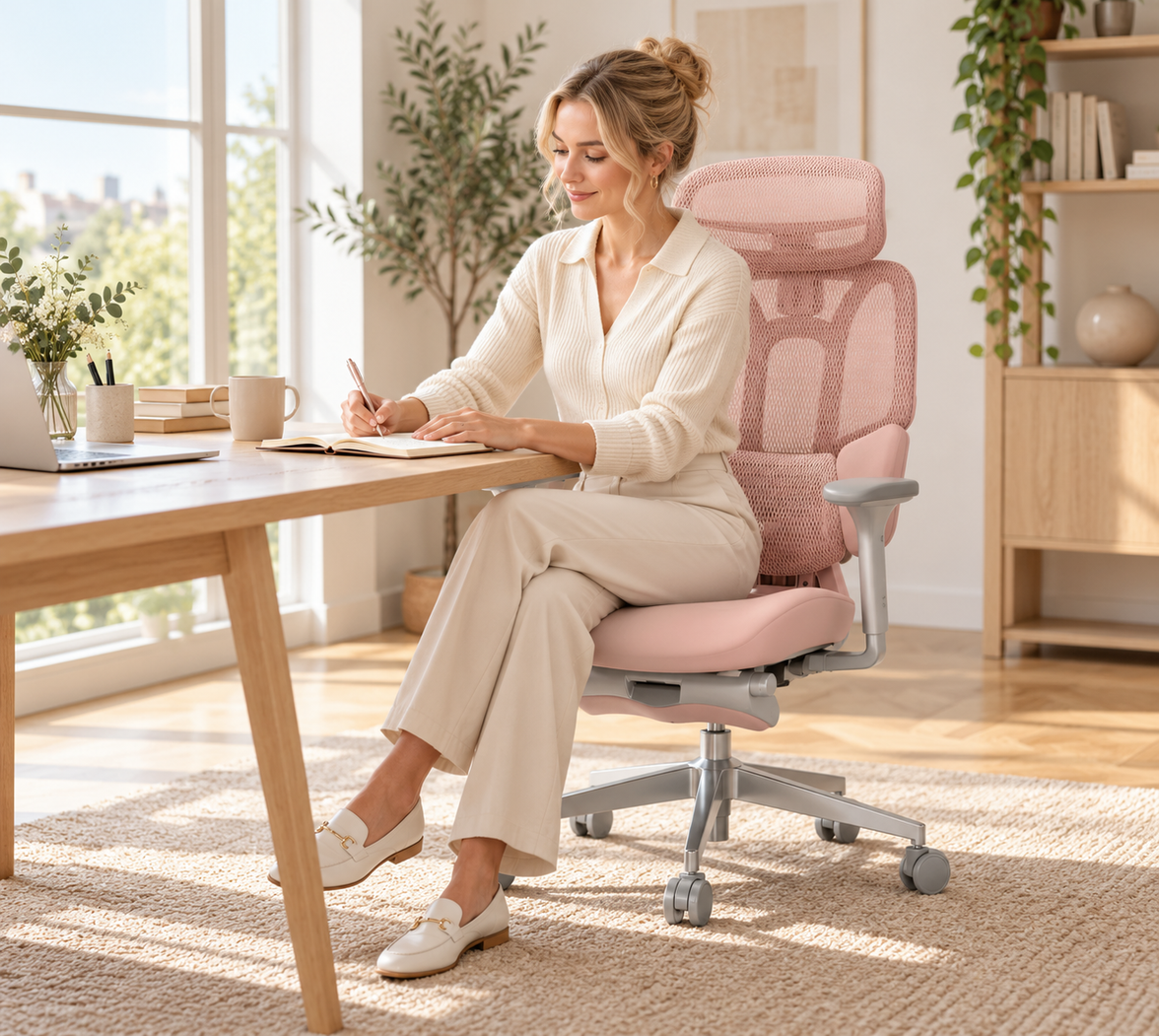
pink ergonomic chair near me

A weight-responsive recline mechanism changes resistance as the user leans back. A dual-spring mechanism distributes the recline load across two springs and is designed to create a controlled transition between upright and reclined positions.
The E3 Ultra specification lists a 105-140-degree recline range with four locking positions. The available positions can be used for upright desk work, reading, video viewing and short breaks. Recline feel still varies with body weight, tension setting and personal preference.
A material name does not prove the durability of a chair mechanism. Claims that one mechanism "cannot break" or that a competing mechanism is inherently unsafe require comparable laboratory testing under the same loads, cycles and conditions.

What is pressure-distributing mesh?

HBADA E3S ergonomic chair lumbar support pressure distribution

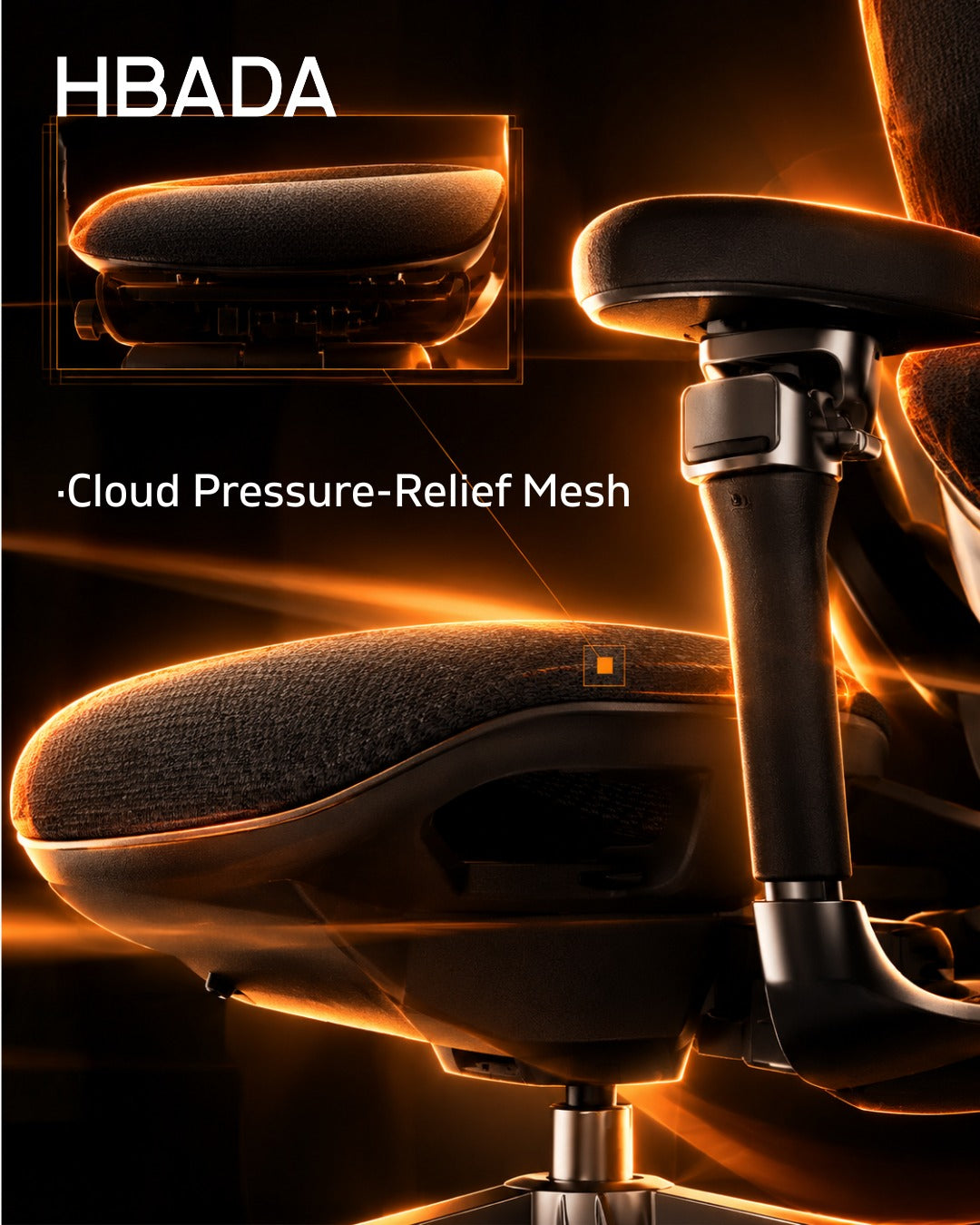
Pressure-distributing mesh is a woven seating material designed to deform across multiple directions and spread contact across the seat or backrest. Contact pressure depends on the applied load, contact area, mesh stiffness, pre-tension, surface shape and the user's posture.
The phrase "Pascal adjustment technology" is not an accurate name for this function. Pascal's law concerns pressure transmitted through a confined fluid; an office-chair mesh is a tensioned textile structure, not a closed hydraulic system. "Four-way woven pressure-distributing mesh" is a clearer description.
HBADA identifies three mesh constructions in its supplied material system:
Mesh construction
Weave
Intended distinction
Cloud pressure-distributing mesh
Four-way weave
Designed for multidirectional conformity and a broader contact area
Air anti-fatigue mesh
Two-way weave
Designed for airflow and reduced material-performance decay
Air micro-perforated mesh
Two-way weave
Designed for airflow through an open micro-perforated structure

Comparative figures such as elasticity improvement, pressure reduction, airflow improvement or aging reduction are meaningful only when the page identifies the benchmark material and test method. A complete claim should name the tested specimen, equipment, load, environment, sample count, calculation method, date and laboratory report.
The Cloud mesh description should not use "American DuPont fiber" unless HBADA can verify the exact DuPont material, supply records, country of origin and permitted trademark wording. The origin of one fiber also does not change the manufacturing origin of the finished chair.

How should you adjust an ergonomic office chair?

Hbada_P3_office_Chair with footrest black lumbar support

Adjust the chair in this order so each setting is based on the previous one:
  1. Set the seat height. Place both feet flat on the floor or a stable footrest. Keep the thighs supported without pressing the seat edge into the backs of the knees.
  2. Position the seat and backrest. Sit far enough back to reach the lumbar support while leaving comfortable clearance behind the knees.
  3. Set lumbar height. Move the lumbar support until it contacts the lower-back area rather than the pelvis or upper back.
  4. Adjust lumbar depth. Start with a moderate setting. Increase or reduce projection until the support feels present without forcing the torso forward.
  5. Align the armrests. Support the forearms while keeping the shoulders relaxed and the upper arms close to the torso.
  6. Position the headrest. Set the headrest for the posture in which it will be used. Avoid a setting that pushes the head forward during desk work.
  7. Set recline resistance and lock positions. Test upright and reclined settings, then make small adjustments as tasks change.
The chair and workstation must be adjusted together. Monitor, keyboard, mouse and desk height can negate good chair adjustment when they force the user to reach, raise the shoulders or lean forward.

Can one ergonomic chair fit every body type?

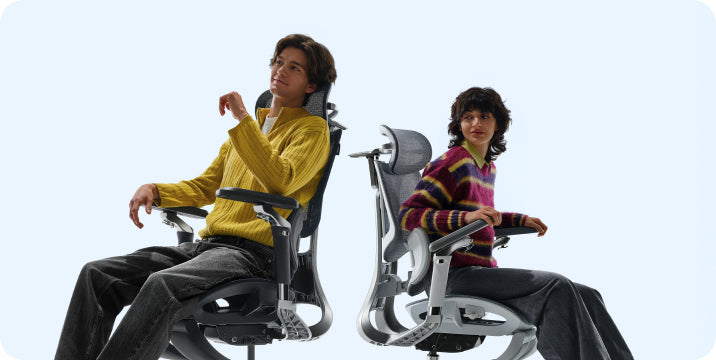
Hbada adjustable petite ergonomic chair featuring lower seat height options, tailored as a comfortable desk chair for short people and smaller body frames.

No ergonomic chair fits every person. A recommended height or weight range is a screening tool, not a fit guarantee. Seat depth, minimum seat height, armrest spacing, lumbar-support position and individual body proportions determine whether a chair fits a specific user.
As of July 2026, the HBADA US product page lists the E3 Ultra for users from 4 feet 11 inches to 6 feet 5 inches (150-195 cm), with a listed maximum load of 330 lb (150 kg). Buyers should still compare their measurements with the product dimensions and return policy before ordering.
OSHA recommends trying a chair for comfort and fit over an extended period when possible. For an online purchase, confirm the return conditions and retain the original packaging during the return window. HBADA publishes its current coverage on the Warranty & Service page.

How can buyers verify ergonomic-chair evidence?

Chair certifications, test reports, compliance records and patents answer different questions. Buyers should not treat them as interchangeable badges.
Evidence type
What it can establish
What it does not establish
Ergonomic product certification
The named model underwent the assessment stated by the issuer
Medical effectiveness or certification of every product from the brand
Laboratory test report
A submitted sample underwent the listed tests and conditions
Automatic certification of an entire product line
Electrical compliance report
The identified powered system was assessed for a market requirement
Whole-chair comfort, ergonomics or mechanical durability
Patent or registered design
A qualifying structure or appearance received intellectual-property protection
Comfort, safety, health performance or standards compliance
Design award
A named product received a stated design award
Ergonomic or medical validation

The official IGR certified-products directory lists the HBADA E3 Ergonomic Office Chair and HBADA X7 Ergonomic Office Chair. HBADA's certificates are dated July 23, 2024 and reference DIN EN ISO 26800 and EN ISO 15537. The listing applies to the named models and is not a medical approval.
HBADA also publishes model-specific documentation for selected SGS and other tests. The HBADA certification and testing guide explains how to match a model name, report number, testing period and scope. BIFMA likewise explains that ANSI/BIFMA X5.1 contains multiple test procedures for general-purpose office chairs; a company should identify the actual test report rather than display a standard logo without context.
Quotable checklist: A verifiable chair claim identifies seven items: product model, issuing organization, document number, issue date, test period, test method and exact scope.

What does an office-chair testing laboratory evaluate?

An office-chair laboratory evaluates components under repeatable conditions. HBADA's supplied laboratory material shows equipment for backrest, armrest, gas-lift, seat, caster, base, lumbar-support, mesh, foam, abrasion, colorfastness, tensile and repeated-compression testing.
A laboratory photograph proves that equipment and testing capability exist; it does not prove that every product passed every test. A publishable product result should identify the model, sample number, standard, load, cycle count, date, pass criteria and result.
HBADA states that it established its internal technology laboratory in 2022. The strongest use of that laboratory for customers is a model-level evidence library with downloadable reports and a plain-language explanation of what each test measures.

Who should consider a highly adjustable ergonomic chair?

A highly adjustable chair is most useful when:
  • More than one person uses the same chair
  • The user switches between typing, mouse work, phone use, gaming and reclined viewing
  • Fixed armrests prevent the chair from approaching the desk
  • A fixed lumbar pad does not align with the user's lower back
  • The user needs a headrest for reclined sitting
  • The workstation requires frequent small posture changes
More adjustments do not automatically create a better chair. Each control must have enough range, remain stable after adjustment and be understandable in daily use.

Frequently asked questions

What is the most important adjustment on an ergonomic chair?

Seat height and lumbar-support position are the first adjustments to check. The feet should be supported, the thighs should rest comfortably on the seat and the lumbar support should contact the lower back without pushing the torso forward.

Is three-zone lumbar support better than a single lumbar pad?

Three-zone lumbar support offers more contact sections and adjustment possibilities than a single pad. Whether it feels better depends on body proportions, support pressure, sitting position and the mechanism's adjustment range.

Does lumbar support cure or prevent back pain?

No office chair should be presented as a cure or preventive treatment for back pain or spinal conditions without appropriate clinical evidence and regulatory review. Adjustable lumbar support is a workstation feature designed to position back contact and support different seated postures.

What does a 720-degree armrest mean?

A 720-degree armrest is a marketing name for two components that each provide up to 360 degrees of rotation. Buyers should also check height, depth, width, pivot and folding ranges because those measurements explain how the armrests fit a workstation.

Is breathable mesh always more comfortable than foam?

No. Mesh promotes airflow, while foam provides a different surface feel and load distribution. Comfort depends on material tension, seat shape, body weight, temperature, clothing and personal preference.

How far should an ergonomic office chair recline?

The required recline range depends on the intended tasks. OSHA recommends that a backrest recline at least 15 degrees from vertical and either lock in position or provide adjustable resistance. Deeper recline is useful for reading, viewing and breaks when the chair also provides suitable head and leg support.

How do I know whether an office-chair certification is real?

Match the exact chair model to the issuer's directory or original certificate. Confirm the document number, date, standard and scope, and check whether the document covers the whole chair or only a component or electronic system.

Can an ergonomic chair fit users from 4 feet 11 inches to 6 feet 5 inches?

A manufacturer can recommend that height range, but height alone cannot guarantee fit. Buyers must also check minimum seat height, seat depth, armrest spacing, lumbar-support range and individual leg and torso length.

How often should I change sitting position?

Change position regularly rather than staying in one fixed posture. OSHA recommends small chair adjustments, periodic standing and walking, stretching and performing some tasks while standing.

Final buying checklist

Before buying an adjustable ergonomic chair, confirm:
  • Your feet can reach the floor or a footrest at the working seat height
  • The seat depth leaves clearance behind the knees
  • The lumbar support reaches the correct height and has a comfortable depth range
  • The armrests align with the desk and can move out of the way
  • The headrest fits the intended upright or reclined position
  • Recline resistance and lock positions match your tasks
  • Weight capacity and product dimensions match the intended user
  • Test reports and certifications name the exact product model
  • Warranty and return conditions are clear before assembly
An ergonomic chair is part of a complete workstation. The best result comes from matching the chair, desk, monitor and input devices to the user-and continuing to move throughout the day.

Sources


Relevant Product

You May Also Like

How to Disassemble an Office Chair Safely, Any Model, Step by Step How to Disassemble an Office Chair Safely, Any Model, Step by Step Moving desk, swapping a broken part, or freeing up storage space? Learning how to disassemble an office chair saves you money and hassle. The catch is the gas cylinder, which is pressurised and needs care. This guide walks you through the entire job in order, from the casters to the backrest, with the right tools and safe techniques for every part. Follow the steps, and you will take your chair apart cleanly, without stripped screws or bent metal, and put it back together just as easily. What You'll Need: Tools for Office Chair Disassembly Gather a few basic tools first, and the rest of the job goes quickly. Most office chair disassembly needs only a screwdriver, an Allen key, a rubber mallet, and a wrench. A pressurised gas lift is the one part that calls for extra grip and patience, so a pipe wrench and penetrating oil earn their place in the kit. Tool What you use it for Flathead screwdriver Prying stuck casters loose and popping off clips or cover plates Allen key (hex set) Loosening the bolts on the seat, armrests, and backrest Rubber mallet Tapping the base off the cylinder without denting the metal Pipe or adjustable wrench Gripping and twisting the gas cylinder free (tape the teeth to avoid scratches) Penetrating oil (WD-40) Freeing a seized cylinder or stubborn caster Work gloves Protecting your hands and improving grip on greasy parts Labelled bags + blanket Storing screws in order and protecting the floor from scratches and oil Before You Start: The One Safety Rule That Matters Never puncture, cut open, or hammer the body of the office chair gas cylinder, as it holds pressurised gas and can be dangerous if breached. When you separate it, tap only around the metal collar at the joint, never the cylinder itself. Store the removed cylinder upright and on its own, and do not crush it under heavy weight. One more thing before you begin. Some parts are factory-fixed, such as certain tilt mechanisms and moulded back panels. If a part will not move with reasonable effort, stop and check the manual rather than forcing it. A quick photo at each stage also makes reassembly far easier later. How to Disassemble an Office Chair Step by Step Work from the bottom up, and each part comes away in a logical order. Step 1: Remove the Casters (Wheels) Lay the chair on its side on a blanket, then pull each caster straight out of the five-star base. Most wheels simply pop in, so a firm tug frees them. If one sticks, slide a flathead screwdriver behind it and lever gently. This is also the moment to clear hair and dust from the axles so the wheels roll smoothly when you rebuild. Step 2: Separate the Base From the Gas Cylinder Turn the chair upside down, hold the five-star base, and tap the metal collar where it meets the cylinder with a rubber mallet. Work around the joint in small, even strikes until the base drops away. Some models use a retaining clip, so remove that with a screwdriver first. If it will not budge, add a little penetrating oil, wait a few minutes, and try again. Step 3: Remove the Gas Cylinder From the Seat Mechanism Grip the gas cylinder near the mechanism with a pipe wrench, wrapping the teeth in tape to protect the finish, then twist it counterclockwise to break the taper fit. Pull it free and set it aside upright. If the cylinder is seized, apply more penetrating oil and give it time rather than forcing the wrench. Step 4: Unbolt the Seat and Mechanism Locate the bolts that fix the seat mechanism to the underside of the seat, then loosen them with your Allen key. Keep the screws in a labelled bag so nothing goes missing. Once the bolts are out, lift the seat pan away from the tilt mechanism. Step 5: Detach the Backrest, Armrests, and Headrest Unbolt the backrest bracket, then remove the armrests at their attachment points to the seat frame. If your chair has a headrest, pop off any cover plates or tabs and unbolt it last. Lay every piece out in the order you removed it, which turns reassembly into a simple reverse run. How to Reassemble Your Chair Putting it back together is the same process in reverse, with one habit to keep in mind. Rebuild from the top down: headrest, backrest, and armrests onto the seat, then the seat mechanism, the gas cylinder, the five-star base, and finally the casters. Tighten every bolt firmly, but do not over-tighten, or you risk stripping the threads. To seat the cylinder fully, turn the chair upright and sit on it. Then check the height, tilt, and armrests, and listen for any creak before you call it done. Disposing of or Recycling Old Chair Parts in the UK Metal parts like the five-star base and gas cylinder can go to a household waste recycling centre, or you can arrange a council collection for large waste items. Two points matter for chairs. First, upholstered seating must be kept intact and handled separately, because it can contain persistent organic pollutants (POPs) from old flame-retardant treatments, as UK council guidance explains. Second, if your chair is electronic, such as a battery-powered smart chair, remove the battery and recycle it at a proper battery point rather than in general waste. When to Repair, and When to Upgrade If the gas lift sinks, the foam goes flat, or the base cracks, a rebuild only delays the next failure. That is the point to switch to a chair engineered to last. The HBADA AI-Powered X7 is a strong example: it is roughly 70% steel, certified to the BIFMA X5.1 standard, and tested for an intended 10-year service life, so the parts you just fought with are far less likely to fail. Assembly is refreshingly simple, too. The electronics sit pre-housed in the backrest and seat, so you only attach the base, wheels, and backrest, a job that takes around 20 to 30 minutes. From there you get self-adjusting AI lumbar support, a ventilated mesh seat, 720° armrests, and up to 140° of recline, all backed by a 5-year warranty. See how the HBADA AI-Powered X7 is engineered for long-term durability, or compare the full HBADA X7 smart-chair range to find the build that suits your body and your hours at the desk. Here is how the core range compares. Model Assembly Serviceable / upgrade highlights Weight capacity Best for HBADA AI-Powered X7 ~20–30 min, electronics pre-housed AI auto lumbar, ventilated mesh seat, 720° armrests, 4D headrest, 5-yr warranty Up to 330 lb (150 kg) Long 8+ hr days, hands-off support HBADA E3 Pro 2026 Edition Standard bolt-together 3-Zone Floating Lumbar Support, mesh seat, 720° armrests, footrest Big-and-tall build* Recline and footrest comfort HBADA E3 Air Standard bolt-together 3-Zone Dynamic Lumbar Support, mesh, 4D armrests, footrest Big-and-tall build* Larger frames and higher weight needs A Realistic Heavy-Use Scenario Here is how that repair-or-replace call plays out. The example is illustrative, not a specific customer. Picture Darren M., 38, a logistics manager and weekend streamer in Newcastle, 6'3" and around 22 stone (140 kg). He took his budget chair apart to replace a sinking gas lift, only to find the base cracked and the foam flattened after two years of 10-hour days. Rather than patch it, he upgraded to a mesh HBADA E3 Pro 2026 Edition. The steel build and 3-Zone Floating Lumbar Support ended the sinking feeling, and there were no more parts to keep fighting. A Realistic Petite-Frame Scenario The same logic helps at the other end of the size range. Consider Aisha K., 29, a copywriter in Reading, 5'2" and lightly built. She disassembled a hand-me-down chair that never fit; its lumbar support sat too high, and the wide armrests left her elbows floating. She replaced it with the HBADA AI-Powered X7, whose automatic lumbar tracking senses her lighter frame and adjusts itself, while the 720° armrests rotate inward to cradle her arms. No tools, no guesswork, and a seat that finally fits. Which HBADA Chair Should You Choose? Your best pick depends on how long you sit and the body you are supporting. • Sit 8+ hours and want hands-off, self-adjusting support: the HBADA AI-Powered X7. • Want recline plus a footrest for all-day comfort: the HBADA E3 Pro 2026 Edition. • Need a larger, big-and-tall build: the HBADA E3 Air. Knowing how to disassemble an office chair puts you in control: you can service what is worth saving and confidently retire what is not. When a chair is past repair, choose a mesh HBADA model built to outlast the parts you just wrestled with, and enjoy a seat you rarely have to touch again. Frequently Asked Questions Can you take apart an office chair? Yes. Most office chairs are built to come apart for moving, repairs, or part swaps. Using basic tools- a screwdriver, an Allen key, a rubber mallet, and a wrench- you can separate the wheels, base, gas cylinder, seat, backrest, armrests, and headrest. A few parts, such as certain tilt mechanisms and moulded panels, are factory-fixed, so check your manual before forcing anything. Work from the bottom up and keep the screws labelled for an easy rebuild. How do you remove the gas cylinder from an office chair? First, flip the chair and tap the base off the collar with a rubber mallet. With the base removed, grip the exposed cylinder near the mechanism using a pipe wrench, wrap the teeth in tape, and twist counterclockwise to loosen the taper fit. Pull it free and store it upright. If it is stuck, add penetrating oil and wait. Never hammer or puncture the cylinder body itself, because it is pressurised and can be dangerous if breached. How do you get the base off an office chair? Turn the chair upside down and remove the casters first so it sits steady. Hold the five-star base and tap the metal collar where it meets the cylinder with a rubber mallet, working evenly around the joint until it releases. Some bases have a retaining clip you must remove with a screwdriver beforehand. If the base resists, apply a little penetrating oil, wait a few minutes, and tap again rather than using heavy force. Can office chair wheels be removed? Yes, and it is the easiest step. Most casters simply push into the base, so lay the chair on its side and pull each wheel straight out with a firm tug. If one is stuck, slide a flathead screwdriver behind the stem and lever it gently free. It is a good moment to clear away hair and dust so the wheels roll smoothly on reassembly, or to fit new casters if the old ones are worn. Is it safe to disassemble the gas cylinder yourself? Removing the cylinder from the chair is safe when done correctly. The key rule is to never cut, drill, or hammer the cylinder body, as it contains pressurised gas. Only tap around the collar at the joint, and grip the cylinder with a wrench to twist it free. Wear gloves, protect the floor, and store the part upright away from heat. If a cylinder is damaged or leaking, recycle it as metal and do not attempt to open it. Do Therapeutic Office Chairs Really Work? Benefits, Limits and Insights Do Therapeutic Office Chairs Really Work? Benefits, Limits and Insights Marketing promises a lot. Therapeutic chairs claim to fix your back, correct your posture and undo years of desk damage. So, do therapeutic office chairs really work, or is it clever branding? The honest answer sits in between. Peer-reviewed research shows the right chair can genuinely reduce pain and improve posture, but a chair alone is not a cure. This guide breaks down the clinical evidence, the real ergonomic chair benefits, the limits nobody advertises, and how to choose a chair that earns its place under you. Do Therapeutic Office Chairs Really Work? Let us start with what the science says, not what the adverts claim. Yes. For most people with sitting-related pain, a well-designed therapeutic office chair does work, though the effect is real rather than magical. A 2012 systematic review of workplace chair interventions found that every included study reported a reduction in self-reported musculoskeletal symptoms soon after workers switched to ergonomic seating. A later review of office chair studies reached the same broad conclusion for lower back pain and discomfort. The researchers were careful, though: study quality varied, and a chair works best as part of a wider setup, not on its own. What Is a Therapeutic Office Chair? Before weighing the benefits, it helps to know what you are actually buying. A therapeutic office chair is an ergonomic office chair designed to support the natural curve of your spine, spread your weight evenly and let you move while you sit. The word therapeutic describes the design goal, not a medical licence. These chairs are wellbeing tools rather than certified medical devices, so they support and prevent strain instead of treating a diagnosed condition. The best models share a few core traits: adjustable lumbar support, an adjustable seat depth, a stable base, and enough movement to stop you locking into one posture. The Proven Benefits of a Therapeutic Office Chair Here is where the evidence is strongest. These are the benefits research actually supports. Less Back and Neck Pain The clearest ergonomic chair benefit is pain reduction. Reviews of workplace studies consistently link adjustable, supportive chairs with lower rates of back, neck and shoulder pain during prolonged sitting. The mechanism is simple: firm lumbar support keeps your pelvis neutral and takes load off the discs and muscles of your lower back. Better Posture and Less Fatigue A supportive chair also helps you hold a healthier posture with less effort. When the seat matches your body, your postural muscles work less to keep you upright, reducing fatigue over the course of a long day. Chairs that let you recline, shift and adjust seat depth encourage the small movements that keep muscles active. Support Through Long Sitting Hours If you sit for eight hours or more, the right chair pays off most. Larger reviews of ergonomic interventions note that equipment works best when paired with movement and good habits rather than used in isolation. In short, the chair sets you up to sit well; you still have to move. In the UK, employers must also assess your workstation and provide suitable seating under the Display Screen Equipment Regulations. Benefit What the evidence suggests Chair feature behind it Reduced back and neck pain Consistent drops in self-reported symptoms Adjustable lumbar support Better posture Improved posture in controlled trials Seat depth and backrest support Less muscle fatigue Lower fatigue when you change position Recline and dynamic support Lasting relief Benefits can persist for months of use A correct, adjustable fit The Limitations: What a Therapeutic Chair Cannot Do No honest guide stops at the benefits. A chair has clear limits, and knowing them protects your money and your back. ● A chair is not a medical treatment. It cannot cure a herniated disc, arthritis or a trapped nerve. See a GP or physiotherapist for severe or persistent pain. ● A chair cannot replace movement. Sitting still in a great chair for eight hours still causes strain. The evidence shows equipment works best alongside regular breaks. ● A chair cannot fix a bad desk. Screen height, keyboard position and desk height all shape your posture too. ● A chair only helps if it fits you. Set up wrong, or built for the wrong body size, it loses most of its benefit. Adjustability is what the research rewards. ● Price alone does not guarantee results. Fit, support and movement matter more than the biggest spec sheet. What Actually Makes a Therapeutic Office Chair Work? Strip away the marketing and the same features keep appearing in the research: fit, support and movement. Here is how our chairs deliver them. The studies agree on one point: adjustability matters most. Matching seat height and seat depth to your body is the most recommended feature, because a mismatch forces your muscles to compensate and can cause strain. Dynamic lumbar support that moves with you adds the second piece, since a fixed pad only helps while you sit still. Many mid-range chairs offer a single fixed pad and static arms; they tick the box on paper but stop supporting you the moment you move. Our range is built around these evidence-backed features. The HBADA AI-Powered X7 is the world's first AI smart lumbar-tracking chair. Its sensors read your posture up to 1,000 times per second and shift the lumbar module by up to 50 mm in real time, so support follows your spine as you move. Add 3-level massage and heat therapy, a ventilated cushion and 720-degree armrests, and you have a bio-synchronized ergonomic chair built for 10-hour days. Explore the adaptive AI lumbar support of the HBADA AI-Powered X7. For precise mechanical control at a friendlier price, discover the heavy-duty engineering of the HBADA E3 Pro 2026 Edition. Its patented 3-Zone Elastic Lumbar Support tracks the L1 to L5 region with 5-degree dynamic movement, plus depth and lift adjustment. The CloudMesh backrest and 140-degree recline keep you moving, while the reinforced chassis and Class 4 gas lift stay stable under heavier or taller frames. Both are true therapeutic office chairs because they combine fit, support and movement, which is exactly what the evidence points to. Feature HBADA AI-Powered X7 HBADA E3 Pro 2026 Edition Best for 10+ hour days, chronic back and hip strain Heavy-duty use, big and tall, value seekers Lumbar support World-first AI dynamic tracking, adjusts up to 50 mm in real time Patented 3-Zone Elastic Lumbar, L1 to L5, 5-degree tracking Seat depth adjustment Yes Yes Armrests 720-degree omni-adjustable 720-degree multi-dimensional Recline Deep recline with auto-balance 140 degrees with auto-balance Comfort extras 8D massage, 3-level heat, cooling fan, ventilated cushion CloudMesh backrest, gliding sacral support Gas lift Class 4 certified anti-sinking Class 4 certified anti-sinking Weight capacity Up to 150 kg (330 lb) Reinforced big-and-tall chassis Control 1.3-inch OLED remote Omni-mechanical dials For standard eight-hour workdays or a lighter budget, our E3 Air and P-Series task chairs deliver full-mesh breathability and solid posture support. Full specifications are on our site. Case Study: The Long-Shift Home Worker Tom H., 34, a DevOps engineer and part-time streamer in Leeds (6'2", 21 stone), had burned through three budget chairs in two years. The foam flattened, and the gas lift sank during his 10-hour shifts, leaving him with chronic lower-back numbness. He moved to the HBADA E3 Pro 2026 Edition. The Class 4 gas lift and reinforced chassis held firm, and the 3-Zone Elastic Lumbar adapted whether he leaned in to code or reclined to 140 degrees. The numbness eased within weeks, and he stopped shopping for chairs. Case Study: The Petite Designer Priya S., 28, an illustrator in Edinburgh (5'1", 8 stone), found standard chairs were built for a larger frame. The lumbar pad sat too high, her feet dangled, and wide arms left her elbows unsupported. She chose the HBADA AI-Powered X7. Using the adjustable seat depth, she removed the under-thigh pressure; the AI lumbar tracked her lower seating position, and the 720-degree armrests rotated inward to cradle her arms as she drew on a tablet. Her shoulder tension faded. Which Therapeutic Office Chair Should You Choose? The best chair is the one that fits your body and your working day. Here is a simple way to decide. ● Choose the HBADA AI-Powered X7 if you sit 10 or more hours, want support that adjusts on its own, and value massage, heat and cooling for recovery. ● Choose the HBADA E3 Pro 2026 Edition if you want precise mechanical control, a sturdier big-and-tall build, or the best value in premium ergonomics. ● Whichever you pick, set it up to fit you and move often. That is where the evidence says the real benefit comes from. So, do therapeutic office chairs really work? Yes, when they fit you, support you and let you move. Treat the chair as a foundation, add regular movement, and you give your spine the best of both. Find the model that matches your body and your hours, and let it work for you every day you sit. Frequently Asked Questions Do therapeutic office chairs really work? Yes, for most people with sitting-related pain. Peer-reviewed reviews of workplace studies consistently find that adjustable, supportive chairs reduce self-reported back, neck and shoulder pain. The effect is real but not a cure. A chair works best when it fits your body, and you pair it with regular movement and a good desk setup. Think of a therapeutic office chair as a strong foundation for healthy sitting rather than a treatment for a specific diagnosis. What is the difference between an ergonomic and a therapeutic office chair? There is no strict line between them. Therapeutic is a design goal that describes an ergonomic chair built to support the spine, spread pressure and reduce strain. Neither term means the chair is a certified medical device. What matters is not the label but the features: adjustable lumbar support, adjustable seat depth, a stable base and enough movement to stop you locking into one posture. Judge a chair on fit and adjustability, not on marketing words. Can an office chair help with back pain? It can. Research links supportive, adjustable chairs with lower rates of lower back pain during prolonged sitting, mainly by keeping your pelvis neutral and easing load on your spine. A chair will not cure a medical cause such as a disc or nerve problem, so see a GP or physiotherapist if pain is severe or persistent. For every day, posture-related aches, the right chair and regular movement make a clear difference over time. Are expensive ergonomic chairs worth it? Not always, but often. Price itself does not guarantee results. The features the evidence rewards are fit, adjustability, good lumbar support and freedom to move, not the longest spec list. A mid-priced chair that fits you well can outperform a costly one set up badly. Spend on adjustability and build quality, match the chair to your body and your hours, and set it up properly. That is where the value shows across months of daily use. How long does it take for an ergonomic chair to help? Many people feel a difference within days once the chair is set up correctly, especially less end-of-day stiffness. Longer trials suggest posture and pain benefits can build and last over months of consistent use. The key is proper setup and regular movement, because a great chair used badly helps little. Give yourself a week or two to fine-tune the fit, then judge how your back feels across a full working day. Can an Office Chair Cause Hip Pain? Causes, Treatment and Prevention Can an Office Chair Cause Hip Pain? Causes, Treatment and Prevention Your hips ache by mid-afternoon, and you cannot work out why. The culprit might be sitting right under you. So, can an office chair cause hip pain? Yes, it can. A poorly designed or badly adjusted chair holds your hips in a locked, bent position for hours, and that steady pressure adds up. The good news is that the fix is straightforward. This guide explains the real causes, effective treatments, and simple ways to prevent hip pain from sitting, so you can get through long UK workdays in comfort. Can an Office Chair Really Cause Hip Pain? Let us answer the question directly before digging into detail. Yes, office chair hip pain is real when the seat forces your hips into a fixed, flexed position for long periods and offers little support for your lower back. The Health and Safety Executive states that incorrect use of display screen equipment, including poorly designed chairs, can lead to pain in the back, shoulders and hips as well as fatigue Health and Safety Executive. Under the Health and Safety (Display Screen Equipment) Regulations 1992, your employer must assess your workstation and provide adjustable seating where you use a screen for an hour or more a day. The chair is not always the only cause, but it is usually the part you can fix fastest. What Causes Hip Pain When You Sit in an Office Chair? Several mechanical problems stack up across a long sitting day. Here is what actually happens to your hips. Shortened Hip Flexors From Prolonged Sitting When you sit, your hips stay bent at roughly 90 degrees, and your hip flexors (the iliopsoas group) sit shortened for hours. Held there day after day, these muscles tighten and lose length, which pulls on the pelvis and creates a deep, aching hip pain from sitting. Your glutes switch off at the same time, so the front and back of your hips fall out of balance. Physiotherapists often call this pattern lower crossed syndrome. Poor Lumbar Support and Pelvic Tilt Weak lumbar support is a major driver of hip discomfort. When your lower back is unsupported on a seat that is too deep or too flat, your pelvis rolls backwards into a posterior tilt and your spine rounds into a C shape. That tilt loads the hip joints unevenly and overworks the muscles trying to hold you upright. Firm lumbar support keeps the pelvis neutral, which spreads your weight and eases the strain. Hard, Worn or Uneven Seat Cushions A flat or worn seat pushes your body weight onto the two sitting bones and the soft tissue around them. Over a long day, this creates pressure points, reduced circulation and numbness around the hips and buttocks. If a cushion has compressed unevenly, one side of your pelvis carries more load than the other, and that asymmetry can feed hip and lower back pain. A Sinking or Wrong-Height Chair A chair that slowly sinks is more than an annoyance. When the seat drops below the correct height, your knees rise above your hips, the hip angle closes further, and joint pressure climbs. A stable gas lift and correct seat height keep your hip and knee angles balanced. Our chairs use a Class 4-certified gas lift to maintain that height reliably, even after years of daily use. Common Types of Chair-Related Hip Pain Not all hip pain feels the same. These are the patterns you are most likely to notice at a desk. Pain pattern What you feel Likely chair-related cause Tight hip flexor pain Aching or pinching at the front of the hip or groin, worse when you stand Prolonged 90-degree flexion, no movement breaks Piriformis-related pain Deep ache in the buttock, sometimes running down the leg Hard seat, poor cushioning, crossed legs Outer hip soreness Tenderness on the outer hip Uneven pressure, twisted posture, wrong seat height Referred lower-back pain Lower-back ache that spreads into the hips Weak lumbar support, posterior pelvic tilt These descriptions are a guide, not a diagnosis. If pain is severe or persistent, see a GP or a chartered physiotherapist. How to Treat Office Chair Hip Pain If your hips already hurt, you can ease the load today with a few practical changes. Set Up Your Chair and Desk Correctly Start with your seating, because correct setup relieves most mild, chair-related hip pain within days. The Health and Safety Executive recommends a position with your feet flat and roughly a right angle at the knees and elbows, using an adjustable seat height and back support. ● Set the seat height so your feet rest flat and your knees sit level with or just below your hips. ● Adjust the seat so two to three fingers fit between the seat edge and the back of your knees. This is where a seat depth adjustment matters. ● Position lumbar support to fill the natural curve of your lower back. ● Recline the backrest slightly so your hip angle opens past a rigid 90 degrees. ● Keep armrests level so your shoulders relax, and you do not lean to one side. Stretch and Move Every Hour Movement is the most effective treatment for tight hip flexors. The Health and Safety Executive is clear that short, frequent breaks beat long, occasional ones Health and Safety Executive. Stand, walk or stretch every 30 to 60 minutes. ● Standing hip flexor stretch: step one foot back, tuck your pelvis, hold for 30 seconds each side. ● Seated figure-four: cross one ankle over the opposite knee and lean gently forward. ● Glute squeezes: reactivate the muscles that sitting switches off. When to See a Professional See a GP or a chartered physiotherapist if your hip pain is severe, lasts more than a couple of weeks, wakes you at night or spreads down your leg. These can indicate a problem that requires proper assessment rather than a chair adjustment. A professional can rule out issues such as bursitis or nerve involvement and give you a targeted plan. How to Prevent Hip Pain From Sitting Prevention is easier than treatment, and it starts with the surface you sit on for eight hours a day. ● Alternate your posture: sit, recline and stand across the day. ● Keep your feet supported and your weight even on both sides. ● Use a chair that adapts as you move rather than one that locks you into a single shape. ● Book a workstation assessment, which UK employers must provide for regular screen users. The single biggest lever is a chair with dynamic support. A fixed lumbar pad helps only while you sit still, and you never do for long. How the Right Ergonomic Chair Protects Your Hips This is where seating design does the heavy lifting. An ergonomic office chair built for movement keeps your hips in a healthy position without constant fiddling. A true ergonomic chair for hip pain does four things well: it supports your lumbar curve, adjusts to your body, spreads seat pressure and lets your hips change angle through the day. Many mid-range chairs rely on a single fixed lumbar pad and static armrests, so they support you while you sit still and then leave gaps the moment you move. Upgrading to dynamic support closes that gap, which is why it pays off for anyone sitting long hours. Our range is built around exactly these principles. The HBADA AI-Powered X7 is the world's first AI smart lumbar-tracking chair. Its sensors read your posture up to 1,000 times per second and shift the lumbar module by up to 50 mm in real time, so support follows your spine as you lean, type or recline. Add 3-level massage and heat therapy to boost circulation, a ventilated cushion to cut pressure build-up, and 720-degree armrests, and you have a bio-synchronized ergonomic chair designed for 10-hour days. Explore the adaptive AI lumbar support of the HBADA AI-Powered X7. If you prefer precise mechanical control at a friendlier price, discover the heavy-duty engineering of the HBADA E3 Pro 2026 Edition. Its patented 3-Zone Elastic Lumbar Support tracks the L1 to L5 region with 5-degree dynamic movement, plus depth and lift adjustment and gliding sacral support. The CloudMesh backrest and 140-degree recline let your hips open and breathe, while the reinforced chassis and Class 4 gas lift keep everything stable under heavier or taller frames. Both chairs work as a spinal decompression office chair for people who sit through the whole working day. Feature HBADA AI-Powered X7 HBADA E3 Pro 2026 Edition Best for 10+ hour days, chronic hip and back strain Heavy-duty use, big and tall, value seekers Lumbar support World-first AI dynamic tracking, adjusts up to 50 mm in real time Patented 3-Zone Elastic Lumbar, L1 to L5, 5-degree tracking Seat depth adjustment Yes Yes Armrests 720-degree omni-adjustable 720-degree multi-dimensional Recline Deep recline with auto-balance 140 degrees with auto-balance Comfort extras 8D massage, 3-level heat, cooling fan, ventilated cushion CloudMesh backrest, gliding sacral support Gas lift Class 4 certified anti-sinking Class 4 certified anti-sinking Weight capacity Up to 150 kg (330 lb) Reinforced big-and-tall chassis Control 1.3-inch OLED remote Omni-mechanical dials For standard eight-hour workdays or a lighter budget, our E3 Air and P-Series task chairs deliver full-mesh breathability and solid posture support. Full specifications are on our site. Case Study: The Heavy-Duty Home Worker Take Daniel O., 35, a senior software engineer in Manchester (6'2", 20 stone). He had worked through three budget chairs in two years. The foam collapsed, and the gas lift kept sinking during his 10-hour shifts, leaving him with chronic lower-back numbness and hip ache. He switched to the HBADA E3 Pro 2026 Edition. The Class 4 gas lift and reinforced chassis held firm, and the 3-Zone Elastic Lumbar adapted whether he leaned in to code or reclined to 140 degrees on a break. Within three weeks the numbness had gone. Case Study: The Petite Professional Or consider Amara N., 29, a graphic designer in Bristol (5'1", 8 stone). Standard chairs were built for a larger frame, so the lumbar pad sat too high, her feet dangled, and wide armrests left her elbows unsupported. She chose the HBADA AI-Powered X7. Using the seat depth adjustment, she removed the under-thigh pressure; the AI lumbar tracked her lower seating position automatically, and the 720-degree armrests rotated inward to cradle her arms while she drew on a tablet. Her shoulder tension eased, and the hip ache settled. Which Chair Should You Choose? The right pick depends on how long you sit and what your body needs. ● Choose the HBADA AI-Powered X7 if you sit 10 or more hours, manage ongoing hip or back strain, or want support that adjusts on its own. ● Choose the HBADA E3 Pro 2026 Edition if you want precise mechanical control, a sturdier big-and-tall build, or the best value in premium ergonomics. ● Choose a lighter E3 Air or P-Series chair for standard workdays on a smaller budget. So, can an office chair cause hip pain? Yes, but the same chair, chosen and set up well, is also the fastest way out of it. Adjust your seat today, move every hour, and invest in seating that adapts as you do. Your hips carry you through the day, so give them a chair that supports every hour of it. Frequently Asked Questions Can sitting in an office chair cause hip pain? Yes. Sitting for long periods keeps your hips in a bent position, which shortens the hip flexors and switches off the glutes. A chair with weak lumbar support or a sinking seat makes this worse by tilting your pelvis and loading the joint unevenly. The result is stiffness or aching around the hips and lower back. Adjusting your chair, moving regularly and using proper lumbar support usually relieves mild, chair-related hip pain quickly. How do I stop my hips hurting when I sit? Start by fixing your setup. Raise the seat so your feet stay flat, keep your knees level with your hips, and set lumbar support into the curve of your lower back. Then move: stand or stretch every 30 to 60 minutes, since static posture is the main trigger. Simple hip flexor stretches and glute squeezes help reactivate tight muscles. If pain is severe, persistent or spreads down your leg, see a GP or physiotherapist. What is the best sitting position to avoid hip pain? There is no single perfect position, because holding any posture too long causes strain. Aim for a neutral, slightly reclined seat where your feet are supported, your knees sit level with your hips and your lower back is cushioned. Let your hip angle open past a rigid 90 degrees when you can. Most importantly, change position often. A chair that adjusts as you move keeps your hips healthier than any fixed posture will. Can a good ergonomic chair fix hip pain? A well-designed ergonomic chair can relieve mild posture-related hip pain and help prevent it, though it is not a medical cure. It works by keeping your pelvis neutral, spreading seat pressure and letting your hips change angle through the day. Dynamic lumbar support is the key feature, as fixed pads only help while you sit still. Pair the right chair with regular movement, and see a professional for persistent or severe pain. Why do my hips hurt after sitting all day? Aching hips after a full day of sitting usually come from shortened hip flexors, inactive glutes and uneven pressure on the seat. Prolonged flexion tightens the muscles at the front of the hip while the pelvis tilts and the joint compresses. A hard or sinking seat and missing lumbar support speed this up. Breaking up sitting with movement, adjusting your chair and using adaptive lumbar support all reduce that end-of-day soreness considerably.