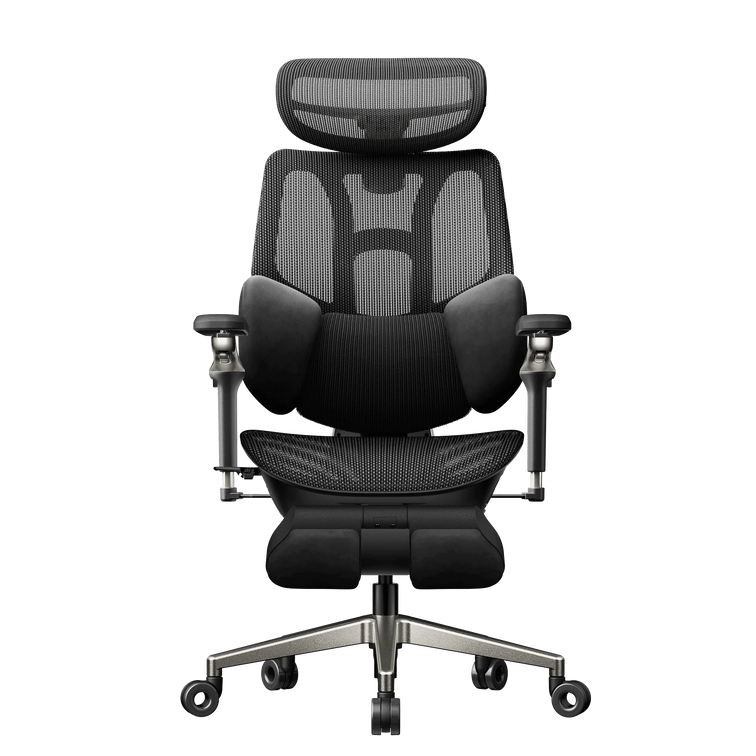
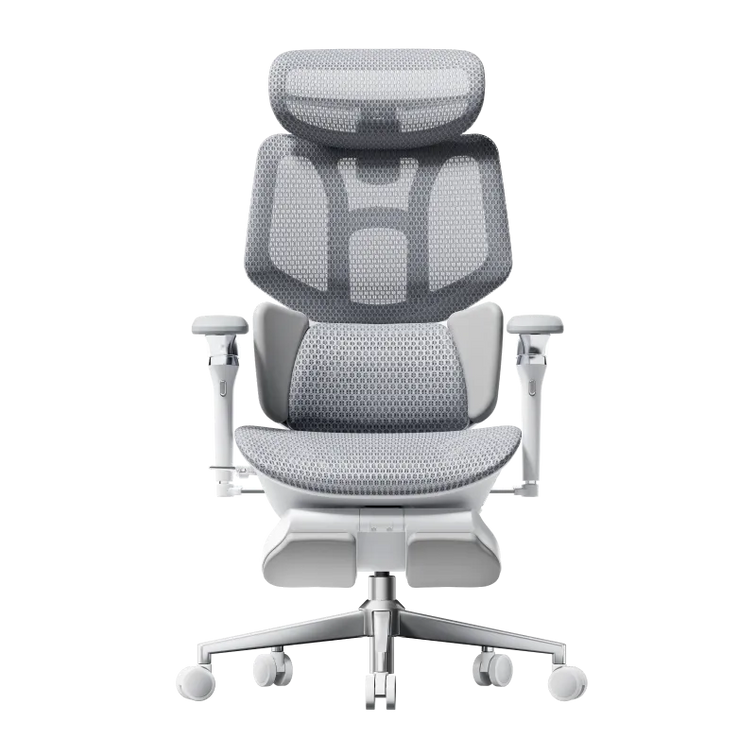
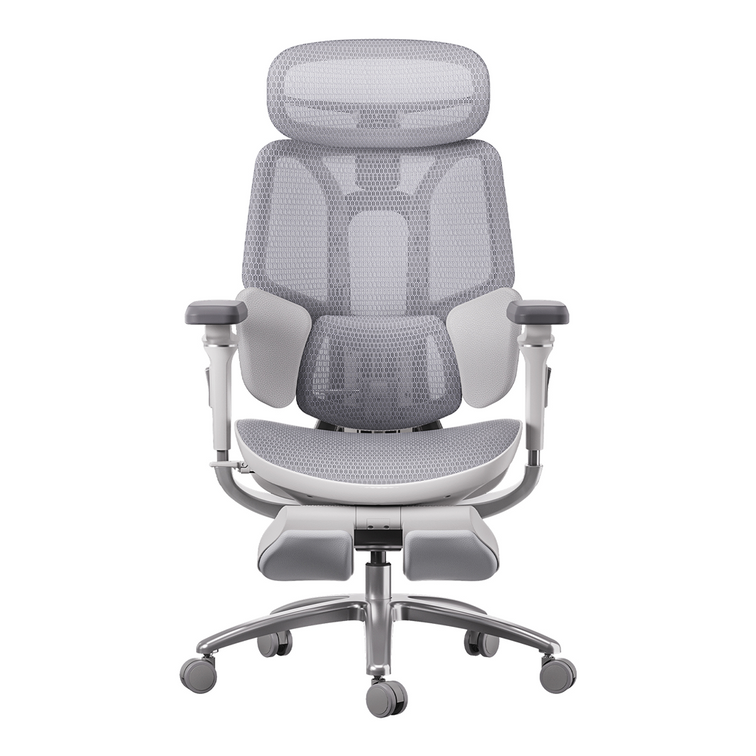
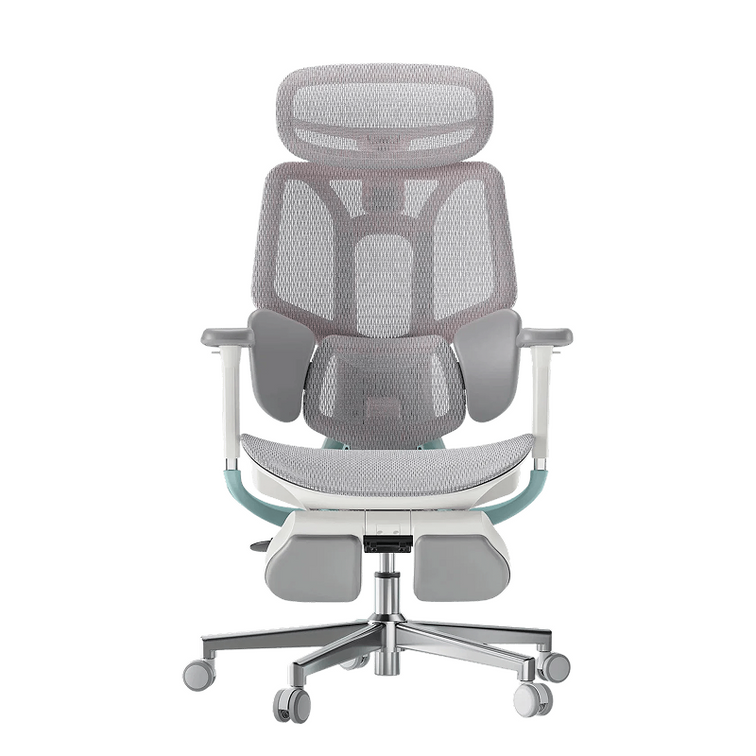

Most remote workers mistakenly associate workplace wellness strictly with avoiding lower back pain, completely missing the broader biomechanical and neurological science of human productivity. Ignoring the complete ergonomic spectrum leads to cognitive fatigue, environmental discomfort, and severe organizational burnout over a standard eight-hour shift. To achieve a true return on your health investment, you must analyze and optimize the 4 main types of ergonomics: physical, cognitive, organizational, and environmental. This data-driven consumer report analyzes how our advanced seating ecosystems systematically address every facet of human-centric workspace engineering to protect your long-term physical capital.
Type 1: Physical Ergonomics (Biomechanics & Postural Integrity)
Physical ergonomics examines how your body interacts with your workspace to prevent costly back problems. Studies show that regular foam chairs can increase pressure on your lower back by up to 40% after just two hours of sitting. If your pelvis tilts backward, your back muscles have to work harder, which can cause inflammation and poor blood flow in your legs.
Our engineering approach eliminates this compression through precise bio-synchronized seating. By synchronizing the seat pan glide with the backrest pivot mechanism, our structural chassis maintains continuous, gap-free contact with your sacrum. This ensures your spine remains in a neutral, load-bearing position whether you are leaning forward to type or reclining back to analyze data.
Case Study A: The Heavy-Duty / WFH Gamer Profile

User Scenario: Marcus T., 34, Senior DevOps Engineer & Part-time Streamer (6’2", 295 lbs).
The Pain Point: Marcus suffered from chronic lower back numbness and a repetitive “sinking chair crisis.” He burned through three budget office chairs in two years because standard polyurethane foam compressed completely flat, and the cheap hydraulic cylinders continually failed under constant 10-to-12-hour shifts.
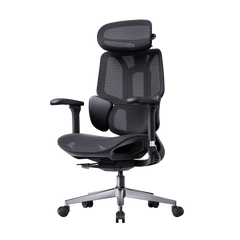
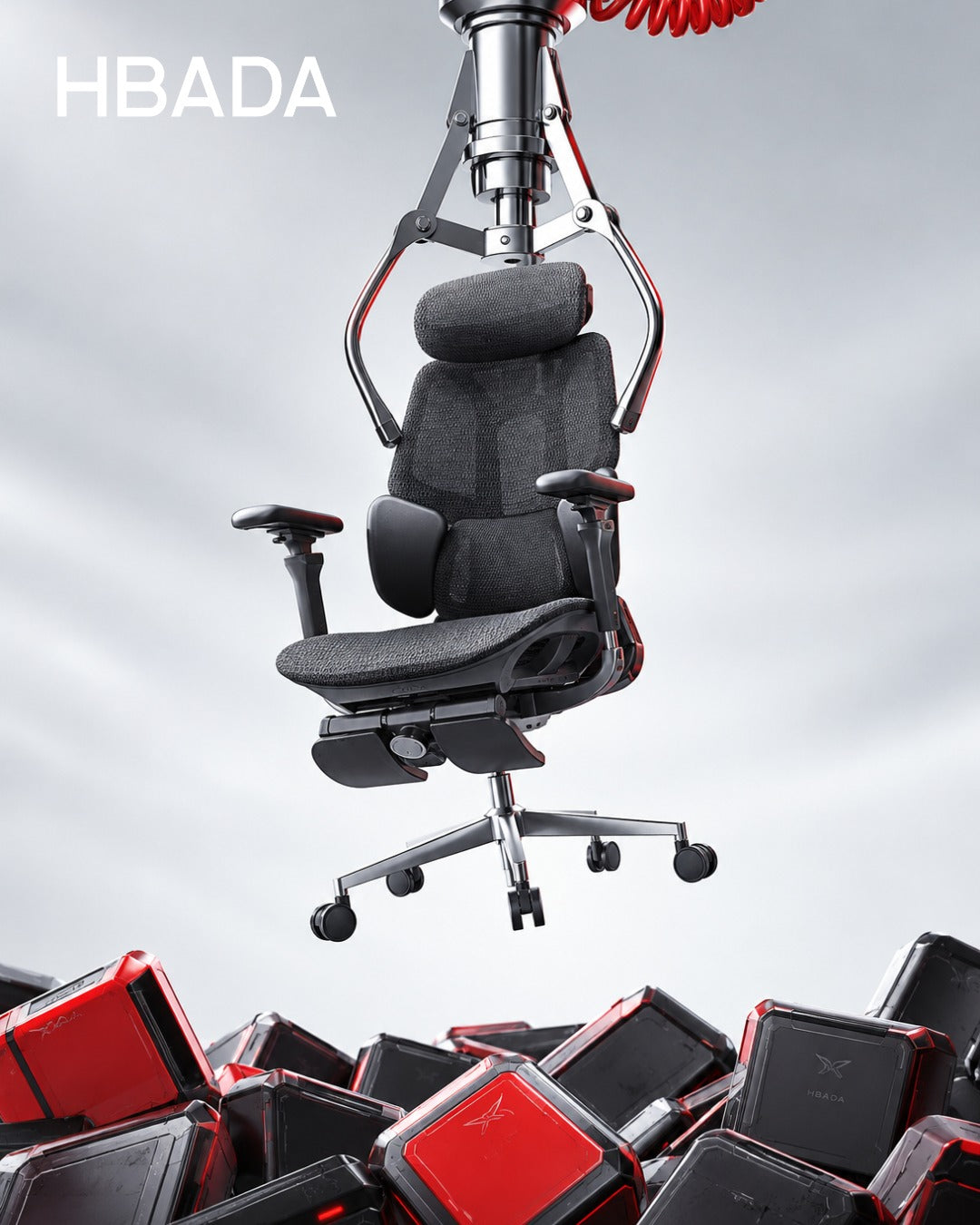
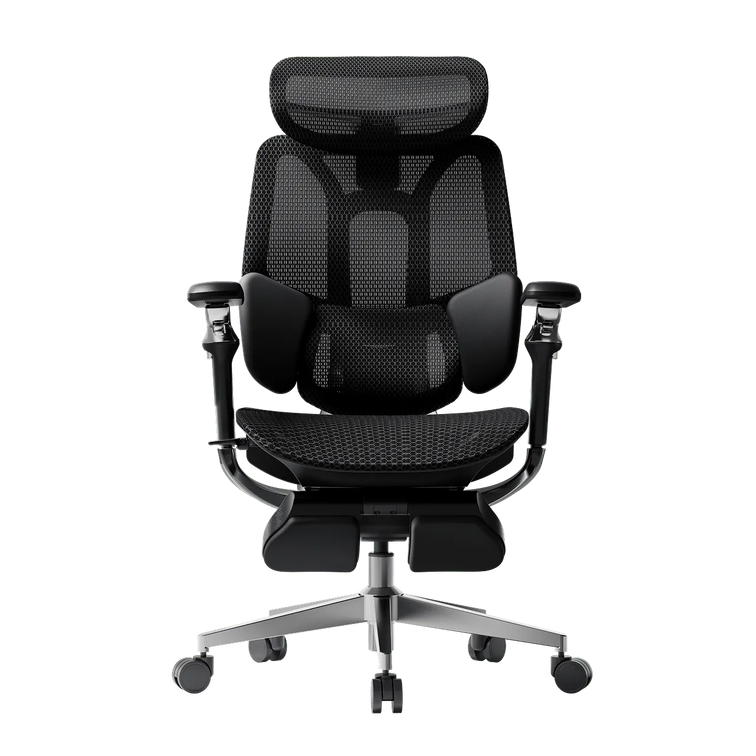
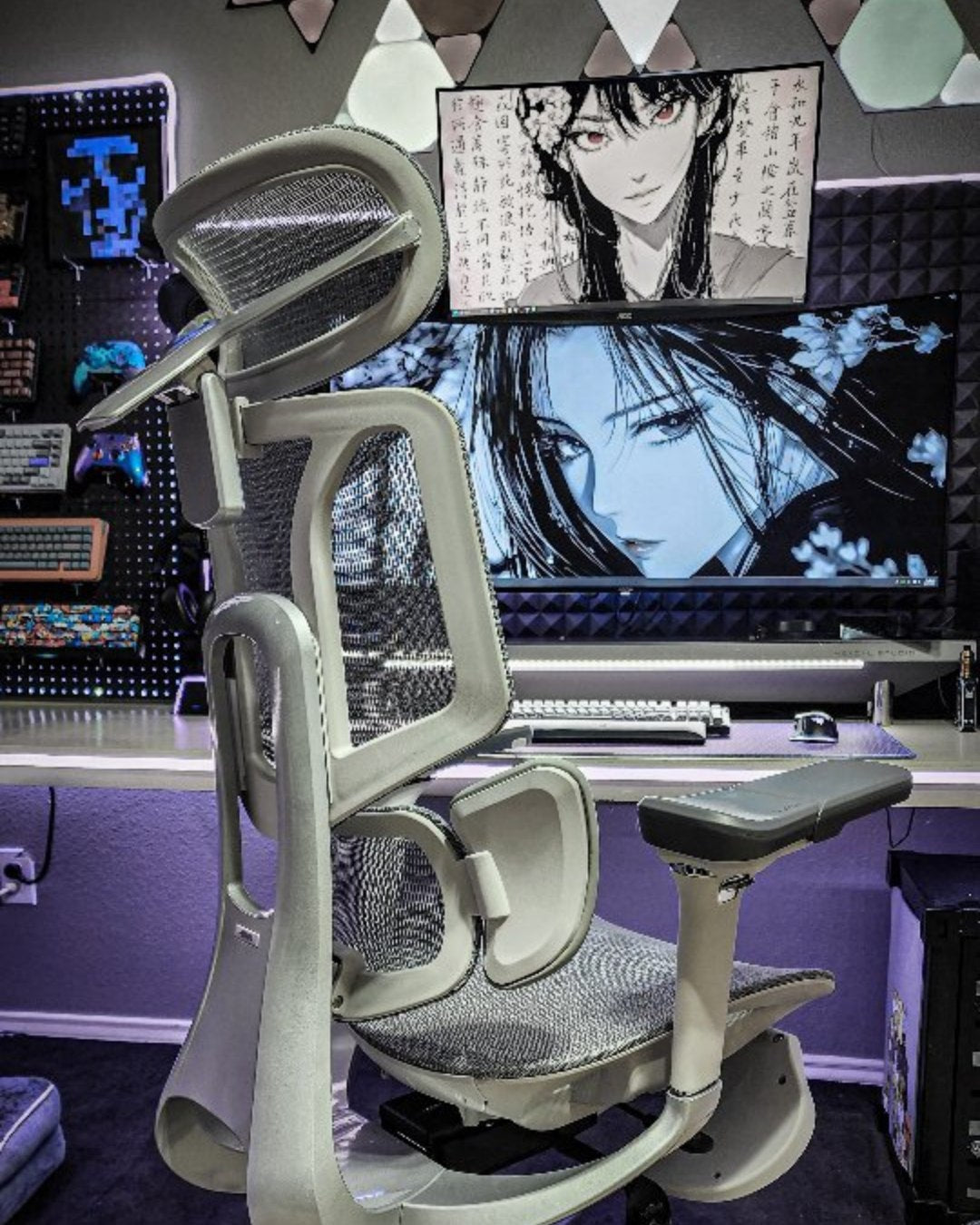
The HBADA Fix: He calculated the replacement costs and upgraded his workstation with the HBADA E3 Pro, designed for heavy-duty structural support. The Anti-sinking Class 4 Gas Lift and heavy-duty steel-reinforced chassis provided immediate, rock-solid security. More importantly, the 3-zone adaptive lumbar support system dynamically adapted to his L1-L5 vertebrae. Whenever he shifted his weight, the dual spring-loaded lateral wings rotated up to 40° to cradle his back, distributing his payload efficiently without sagging.
Type 2: Cognitive Ergonomics (Mental Workload & Focus Retention)
Cognitive ergonomics is about how your workspace affects your mental focus and workload. If you’re not distracted by aches or an unstable chair, you can stay focused for longer—up to 35% more during a full workday. But if your brain is busy dealing with discomfort, it’s much harder to concentrate and solve problems.
To maximize your mental bandwidth, you must eliminate the need to consciously manage your posture. This is where upgrading to an office chair with active lumbar tracking transforms your remote workflow. Instead of forcing you to break your concentration to reach for manual tension levers every time you shift your weight, our smart seating ecosystems execute the adjustments for you.
Experience the cognitive relief of automated alignment with our flagship smart ecosystem. Equipped with an automotive-grade compute chip and Hall magnetic sensors, the system scans your seating pressure 1,000 times per second. If you begin to slouch unconsciously during a complex coding session, the internal motorized core physically drives the lumbar pad forward up to 50mm. This zero-latency correction allows you to reserve 100% of your cognitive capacity for your actual work rather than fighting your furniture.
Type 3: Organizational Ergonomics (Work Systems & Sedentary Culture)

Organizational ergonomics is about improving work routines, break times, and how we manage prolonged sitting. Adding automatic movement to your workspace helps prevent the big drop in blood flow that happens when you sit still for too long. At home, this means taking breaks and moving regularly to stay healthy.
A critical failure in remote work culture is the tendency to remain entirely static for 4 to 6 hours at a time, trapping blood in the lower legs and depriving the brain of freshly oxygenated blood. To combat this structural fatigue, our premium smart tier acts as an active spinal decompression office chair.
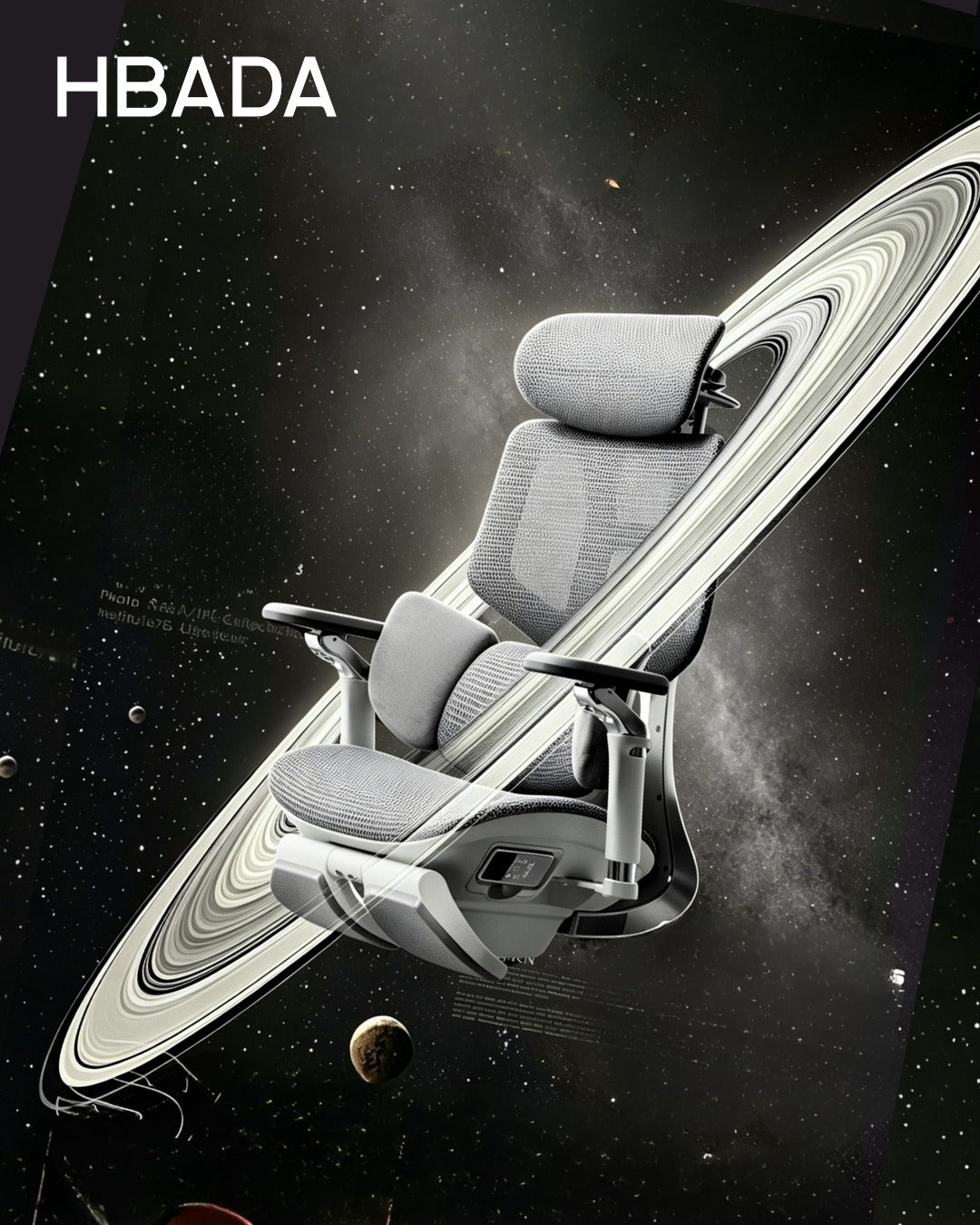
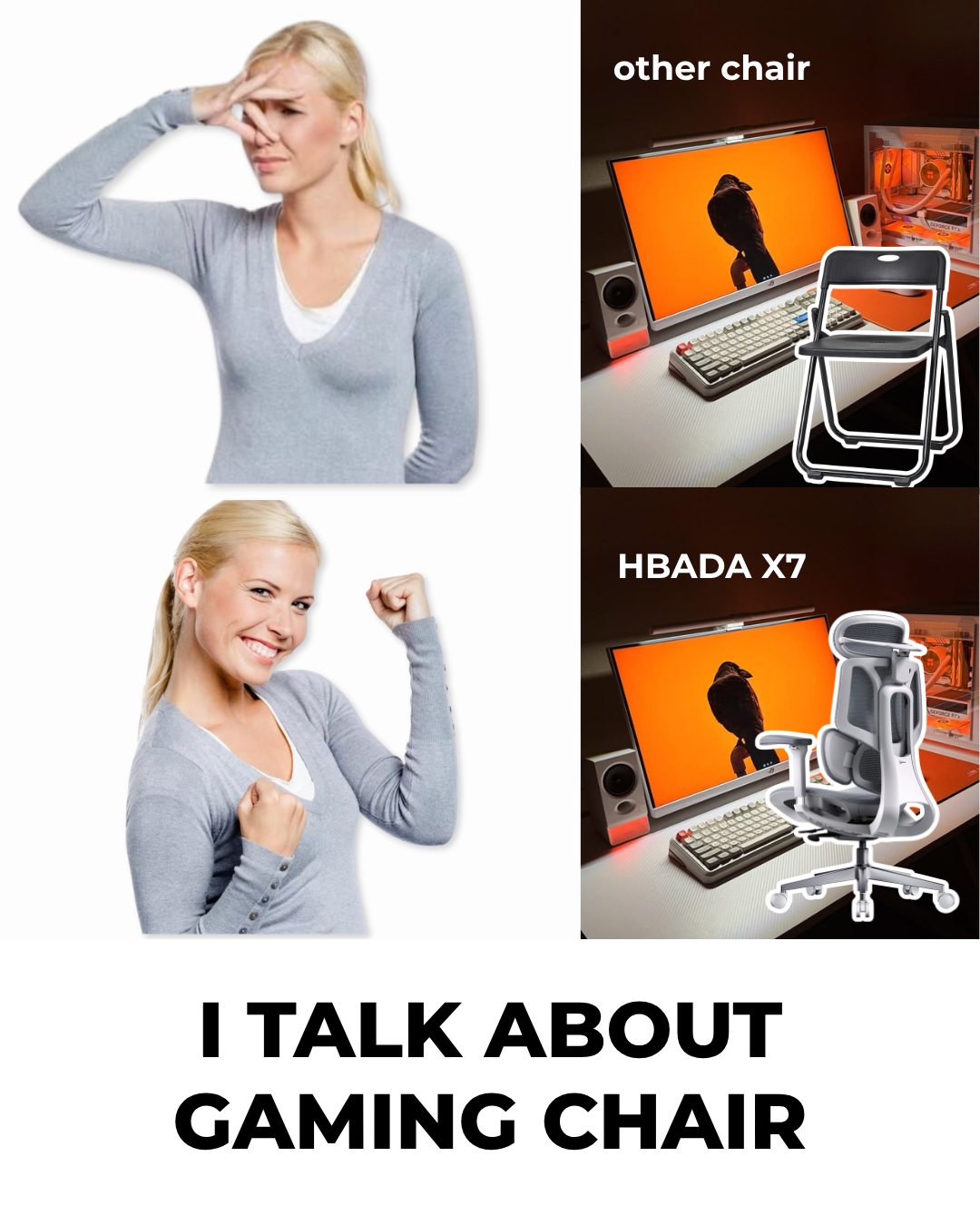
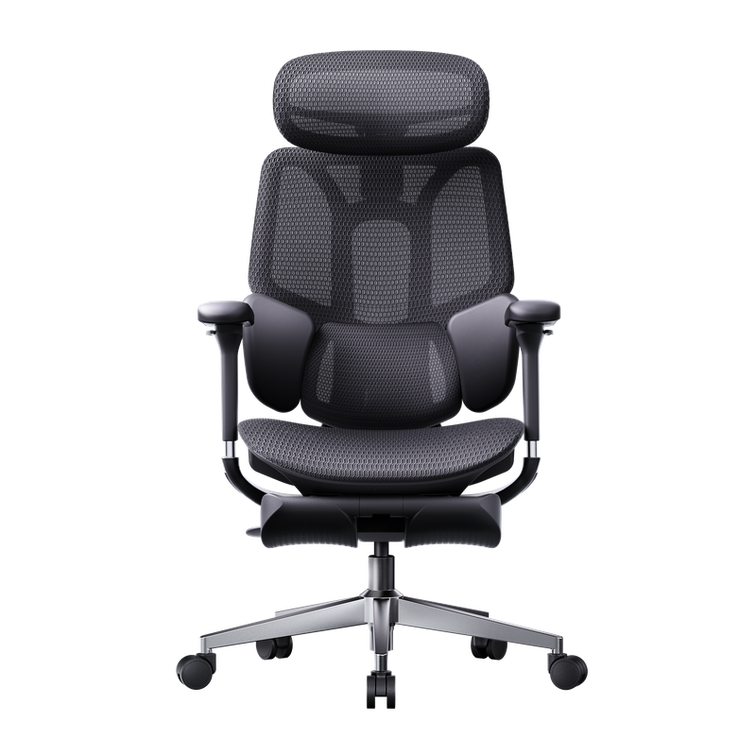
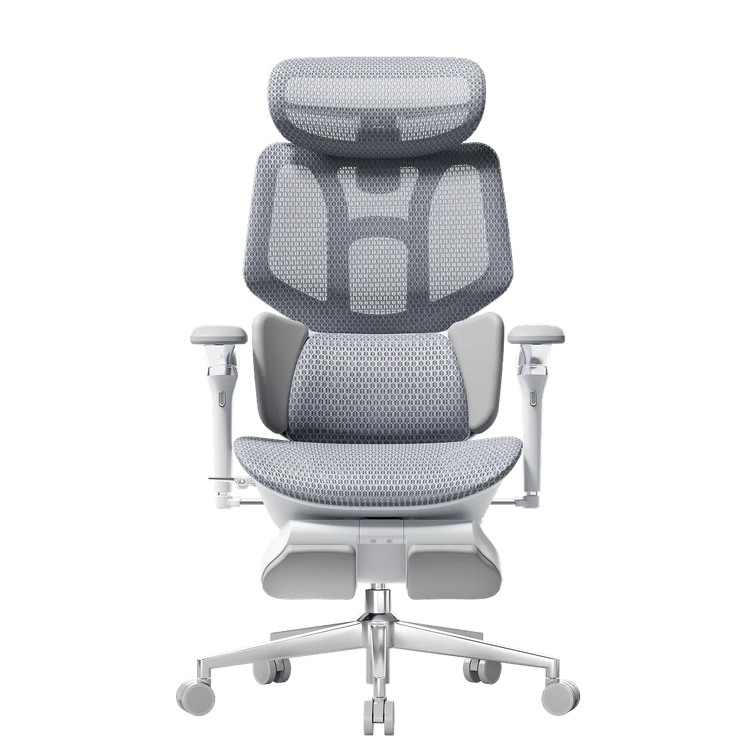
The Hbada AI-Powered x7 helps you stay healthy at work with a built-in reminder every 45 minutes. When it’s time, the chair gives you a deep massage on your lower back, boosting blood flow and giving you the benefits of a walking break—without leaving your desk.
Type 4: Environmental Ergonomics (Workspace Climate & Physical Interface)
Environmental ergonomics is about keeping your workspace comfortable, including the temperature, noise levels, and how well your chair fits your body. Keeping your skin temperature around 71.6°F (22°C) helps prevent tiredness and sweating, and keeps your mind sharp.
Regular foam chairs can get hot and uncomfortable. Our chairs use CloudMesh material for better airflow, plus cooling fans and heating elements so you can control your seat temperature. They also adjust to fit your body, no matter your size.
Case Study B: The Petite Professional / Ergonomic Adjustability Profile
User Scenario: Elena R., 28, Remote Graphic Designer & Lifestyle Blogger (5’1", 110 lbs).
The Pain Point: Standard ergonomic chairs are engineered for the 50th percentile male frame. As a result, the built-in lumbar support sat too high on Elena’s back, causing acute shoulder tension. Her feet could not touch the floor flatly, and traditional wide armrests left her elbows floating without support, leading to severe trapezius strain.
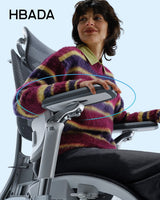
The HBADA Fix: Elena integrated the HBADA AI-Powered x7 into her compact office setup to regain total physical control. By leveraging the 60mm seat depth adjustment and micro-fitting options, she customized the seat pan to eliminate under-thigh pressure. The 720-degree omni-adjustable armrests rotated inward by a full 360°, allowing her arms to be tightly cradled against her ribs while drawing on her tablet, completely relieving her persistent shoulder and neck fatigue.
The Cost-Benefit Analysis: ROI of Total Ergonomic Integration
When acting as a smart consumer advocate, evaluating a home office upgrade requires quantifying the long-term return on investment across all four ergonomic pillars. Finding the best ergonomic office chair 2026 has to offer means moving away from budget disposable furniture and investing in verifiable data. The matrix below breaks down the functional yield of our core products compared to standard market alternatives.
|
Ergonomic Category |
Standard Budget Task Chair |
HBADA E3 Pro (Mechanical Tier) |
Hbada AI-Powered x7 (Smart Tier) |
|
Physical (Posture) |
Static plastic pad; collapses under high weight. |
3-zone adaptive lumbar support; heavy-duty payload. |
Motorized AI active tracking; automatic spine alignment. |
|
Cognitive (Focus) |
High distraction due to constant manual readjusting. |
“Set-and-forget” spring-loaded tension wings. |
Zero manual input; active sensors manage posture automatically. |
|
Organizational (Pacing) |
No recovery tools; encourages dangerous static sitting. |
Encourages dynamic movement via 140° recline arc. |
Automated 45-minute sedentary massage reminders. |
|
Environmental (Fit) |
Heat-trapping foam; fixed 1D armrests. |
Breathable CloudMesh; 6-way armrest mobility. |
Dual 3,000 RPM fans, Graphene heat; 720 degree omni adjustable armrests. |
UK Workplace Wellness Guidelines & DSE Compliance
Treating a home office setup as a serious health investment ensures compliance with strict national occupational safety standards. In the United Kingdom, the Health and Safety Executive (HSE) aggressively enforces the Health and Safety (Display Screen Equipment) Regulations 1992, dictating that workstations to be optimized to reduce physical and visual fatigue.
The HSE legally mandates that corporate chairs must have adjustable seat backs for both height and tilt, and that workers must take regular breaks from screen-focused tasks. Deploying heavily vetted, multi-axial seating provides measurable regulatory compliance for remote corporate teams. By utilizing automated sedentary reminders and fully adjustable structural frames, business owners and remote professionals actively suppress the financial liabilities associated with repetitive strain injuries (RSI) and chronic absenteeism.

Frequently Asked Questions (FAQ)
How do the 4 main types of ergonomics work together to reduce back pain?
Physical ergonomics directly aligns your spine, while environmental ergonomics (breathable mesh) prevents thermal fatigue. Cognitive and organizational ergonomics reduce mental stress and enforce regular movement breaks. Operating together, they eliminate the root causes of musculoskeletal tension, preventing localized joint pain and systemic physical exhaustion.
What makes an office chair with active lumbar tracking better than a manual chair?
An active tracking chair uses magnetic sensors to detect microscopic shifts in your body weight. Instead of requiring you to pull levers, it drives an internal motor to push the lumbar pad against your spine automatically. This eliminates the cognitive distraction of manual adjustment, keeping your workflow unbroken.
Are the 720-degree omnidirectional adjustable armrests effective for petite users?
Yes. Standard armrests are often bolted too far apart for smaller frames, forcing petite users to flare their elbows. Our 720-degree bionic armrests slide inward, pivot up or down, and rotate a full 360°. This allows users of any width to bring the support pads directly against their ribcage.
Can upgrading my chair actually improve my cognitive productivity?
Absolutely. Chronic physical discomfort forces your brain to constantly process pain signals, draining your working memory and focus. By stabilizing your pelvic core and delivering active bionic massage therapy, a premium chair removes those subconscious pain distractions, directly increasing your cognitive endurance during complex tasks.
Conclusion
Choosing the best chair for your needs depends on which type of ergonomic support matters most to you. If you want strong physical support and a tough, manually adjustable chair, the HBADA E3 Pro is a great investment. Its sturdy gas cylinder and lumbar support make it ideal for heavy-duty users, gamers, and office workers.
If you want a chair that automatically covers all four ergonomic principles, the Hbada AI-Powered x7 is the top choice. It combines temperature control, massage reminders, smart adjustments, and active support in one high-quality chair. It’s perfect for professionals who want to protect their long-term health.