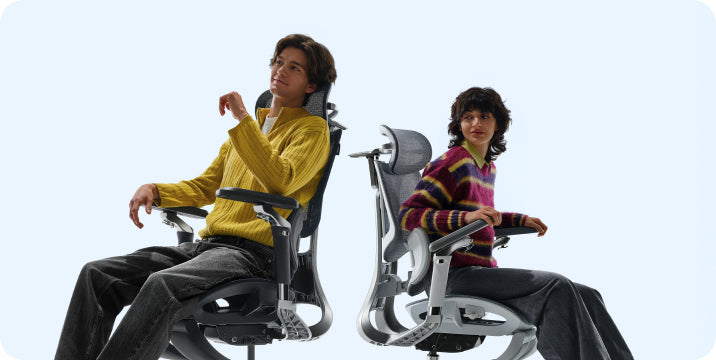

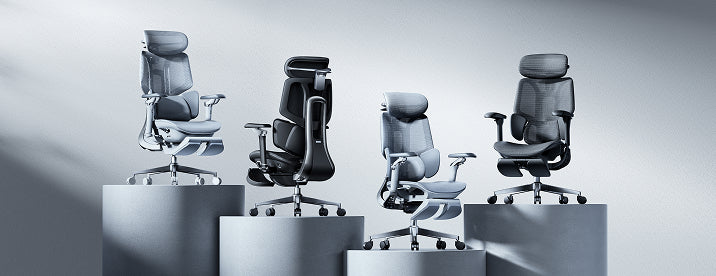

Smart seating, explained simply
What makes a chair smart?
Start with how it responds.
Sensors, automatic lumbar support, and built-in comfort features: here is what the technology does—and what still depends on you.
An AI ergonomic chair typically uses sensors and electronic controls to automate selected adjustments, such as lumbar support. In a motorized tracking system, sensor inputs help the chair respond to changes in position. The exact functions vary by model, and the “AI” label alone does not tell you whether a chair uses machine learning.
Not Just Another Chair With More Knobs
“AI chair” gets thrown around a lot these days, and it is fair to wonder what sits behind the label. The useful question is not simply whether a chair is called smart. It is which adjustments the chair makes for you.
A traditional ergonomic chair relies on you to set features such as seat height, armrest position, and lumbar support. Some also use flexible backrests or mechanical systems that respond as you move, so traditional does not necessarily mean static.
A chair with electronically controlled lumbar tracking adds another approach: it uses sensor feedback to adjust selected support features while the system is active.
The practical difference is automation. Instead of manually changing every support setting, you let the chair handle a specific adjustment within its operating range. You still need to set up the rest of your workstation.
What Actually Makes a Chair “AI”?
For a motorized lumbar-tracking chair, the basic idea is a feedback loop: sensors detect a physical change, a controller interprets the input, and a mechanism adjusts the support.
- 01. Sense Detect changes in pressure, contact, or component position.
- 02. Process Use the readings and selected settings to determine a response.
- 03. Adjust Move the support within the mechanism's available range.
This is different from simply adding more manual adjustment points. But sensors and motors alone do not establish how sophisticated the software is, whether it learns from use, or how well the chair will fit a particular person.
When comparing smart chairs, look for a clear explanation of the feature: what it senses, what it changes, and which settings you control.
The Office Chair Posture Sensor Behind the Curtain

A posture-sensing system uses physical measurements rather than an understanding of your body in the human sense. Different designs may use pressure sensors, position sensors, or a combination of inputs.
Pressure sensors
Pressure readings can indicate changes in the force applied to a sensing area. The controller can use that information as one input when adjusting support.
Magnetic position sensors
Hall-effect sensors detect magnetic-field changes. Depending on the design, those changes can help track a mechanism's position rather than directly measure the shape of your spine.
The controller then uses the available information to guide a response. Exact sensor types, sampling rates, and movement speeds are model-specific specifications—not features to assume from the words “AI chair.”
A useful distinction: Sensor sampling frequency is not the same as the time needed for a motor to complete an adjustment. A fast reading does not, by itself, tell you how the movement will feel.
Intelligent Lumbar Support, Explained Step by Step
In a sensor-driven, motorized lumbar system, the sequence can be understood in five steps:
- You change position. Leaning or shifting changes your contact with the chair.
- The system detects a change. Its sensors register the relevant pressure or position inputs.
- The controller determines a response. The response depends on the system's programming, selected mode, and available settings.
- The mechanism adjusts the lumbar support. Movement remains within the chair's designed travel range and operating limits.
- The system continues monitoring. Further input can prompt another adjustment while the tracking function is active.
The goal is to reduce the need for repeated manual lumbar adjustments as your position changes. It does not mean the chair can maintain identical contact through every movement, correct every sitting position, or adjust every part of the chair automatically.
Smart Office Chair vs. Traditional Adjustable Chair

The distinction is best understood by comparing how the support works—not by assuming one category is always comfortable and the other is not.
| Factor | Traditional adjustable chair | Smart chair with motorized lumbar tracking |
|---|---|---|
| Initial setup | You adjust the chair to fit your body and desk. | You still set up the chair, then select available electronic modes. |
| Lumbar adjustment | May be manual, flexible, or mechanically adaptive. | Uses electronic feedback to adjust selected lumbar functions. |
| Response to movement | Depends on the backrest, recline, and support mechanism. | Combines the chair's mechanical design with powered tracking. |
| User input | Manual controls and mechanical settings. | Manual setup plus powered controls or support preferences. |
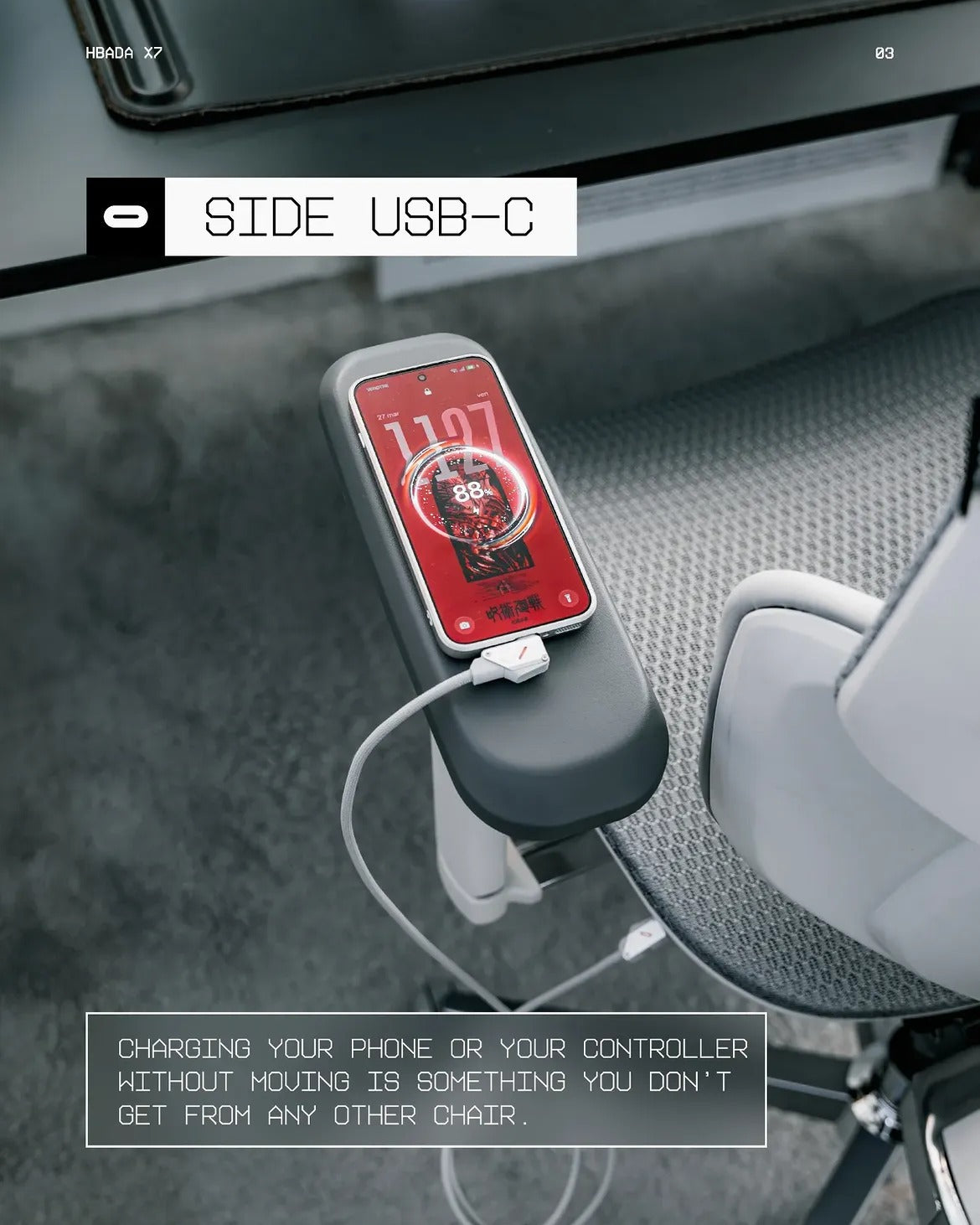
| Power needs | A purely mechanical chair needs no charging. | Electronic functions need a suitable power source. |
| Cost | Varies widely by construction and adjustment features. | Added electronics may increase cost; compare actual models. |
| What to prioritize | Fit, adjustment range, support feel, and build quality. | The same fundamentals, plus tracking behavior and electronic support. |
Beyond the Lumbar: Other Smart Features to Know
Lumbar tracking tends to be the headline feature, but smart chairs may also include powered comfort functions. These should be assessed individually rather than treated as proof that the chair learns or understands your needs.
Movement for a different support feel
Built-in massage may offer selectable patterns or intensity settings. A massage function does not automatically mean the chair detects fatigue.
Powered airflow
Fans can move air through or around the seat. This is different from passive mesh ventilation and should not be confused with refrigerated cooling.
Optional warmth
Heating adds warmth in a specified area. Review the controls and instructions; it is a comfort feature, not a promise to treat a medical condition.
Preferences, where supported
Some systems may retain selected settings. Saving a preference is different from learning your posture, and memory functions should be checked model by model.
Ask which functions you would actually use. A clear set of useful controls is more valuable than a long list of features you rarely turn on.
Is an AI Office Chair Actually Worth the Price?
That depends on how you work and how the chair feels to you. If your day includes focused typing, calls, and reclined breaks, automatic lumbar adjustment may offer a useful convenience as you change position.
If you prefer a simpler setup, a well-fitting mechanical ergonomic chair can still provide responsive support without batteries or powered controls.
Look beyond the feature list
- Fit: Check seat height, depth, width, and whether the lumbar support reaches a comfortable position.
- Control: Understand which settings you can change and how to select or disable powered functions.
- Space: Check the chair's footprint and the clearance required for reclining.
- Upkeep: Review charging instructions, electronic component coverage, and service options.
- Everyday use: Consider whether the powered functions improve your routine enough to justify the difference in price.
Battery life depends on the model, settings, and functions you use. Avoid assuming a fixed charging schedule without checking the relevant specifications and usage conditions.
Buy for fit first, automation second. Smart functions can add convenience, but they cannot compensate for unsuitable seat dimensions or a poorly arranged desk.
HBADA X7: A Real-World Example

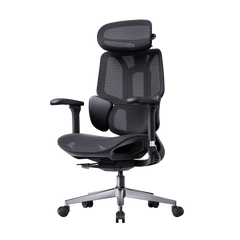
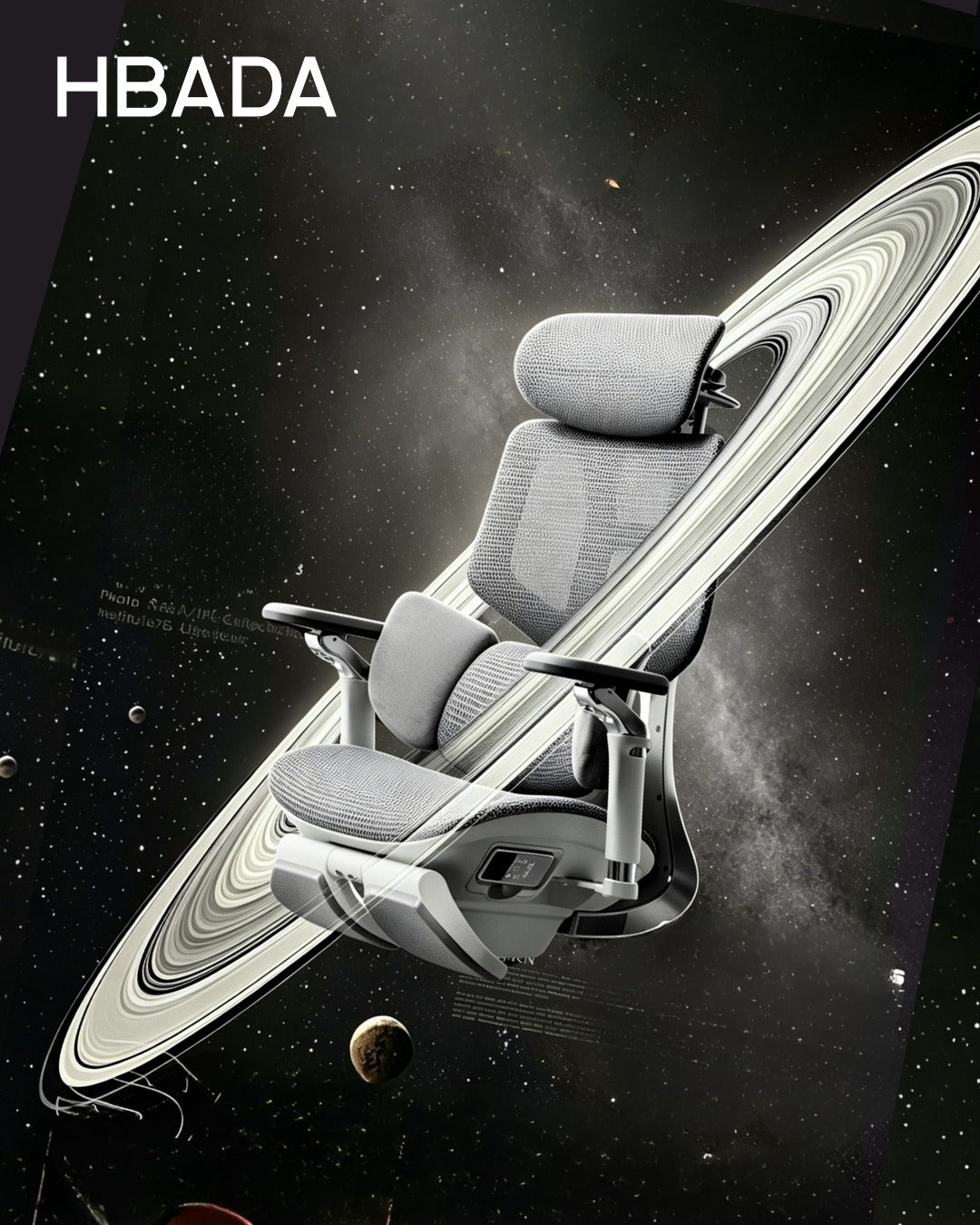
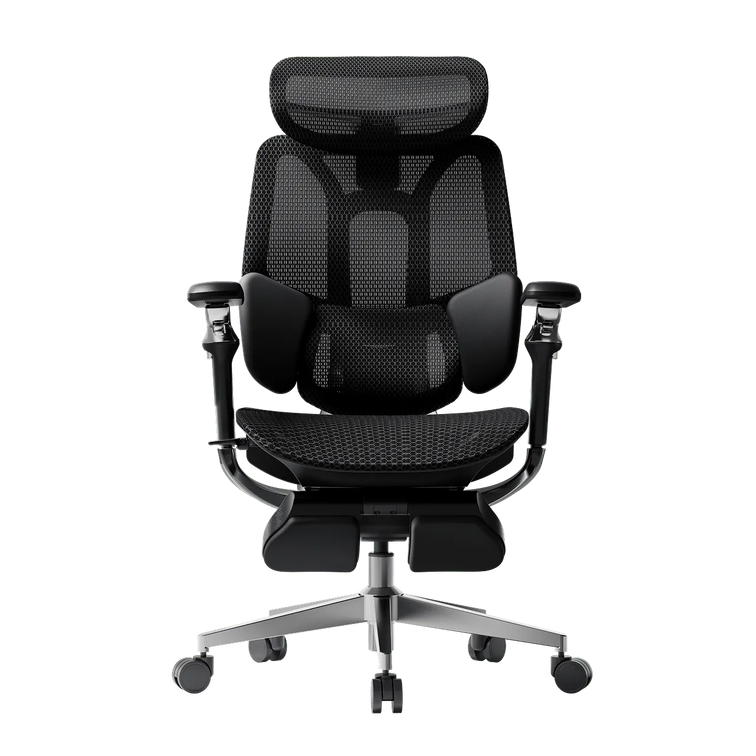
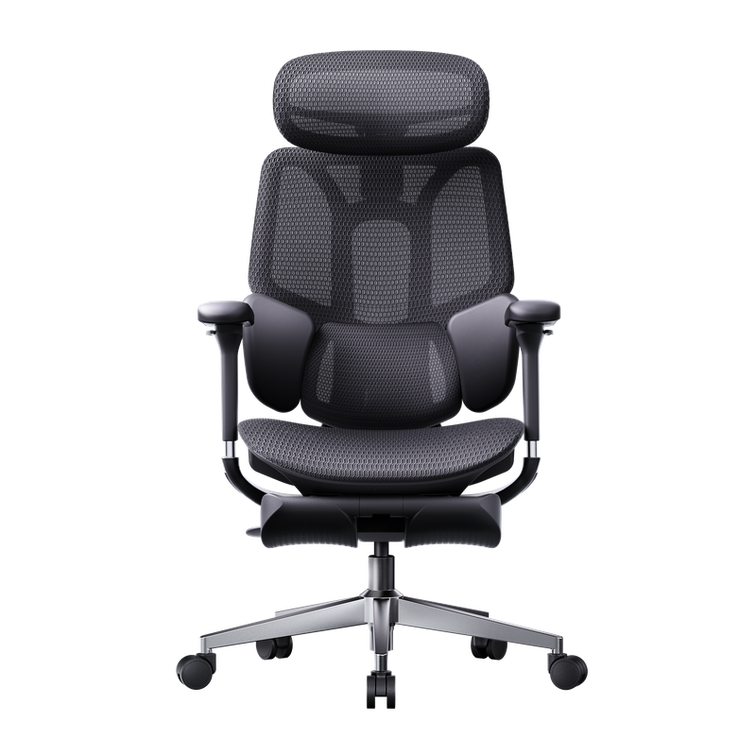
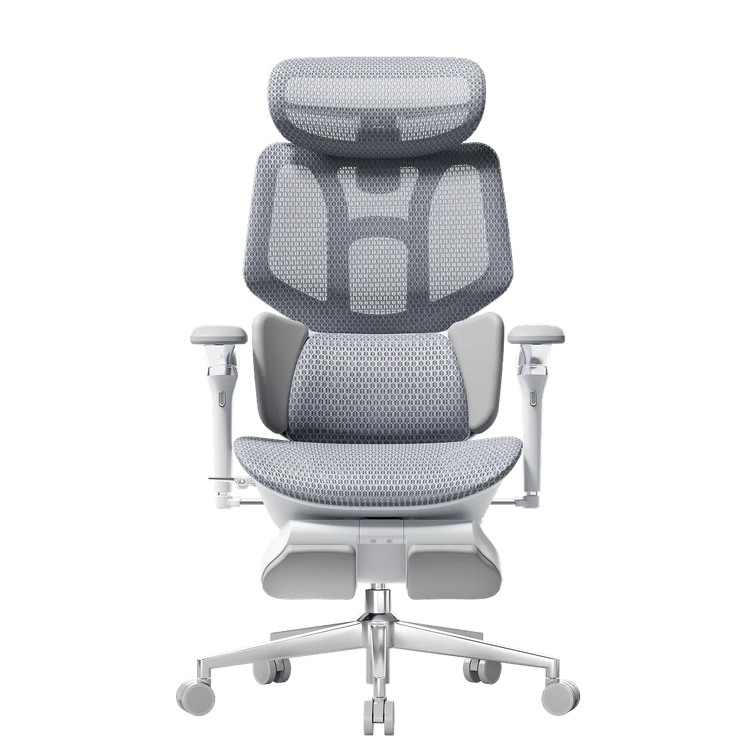
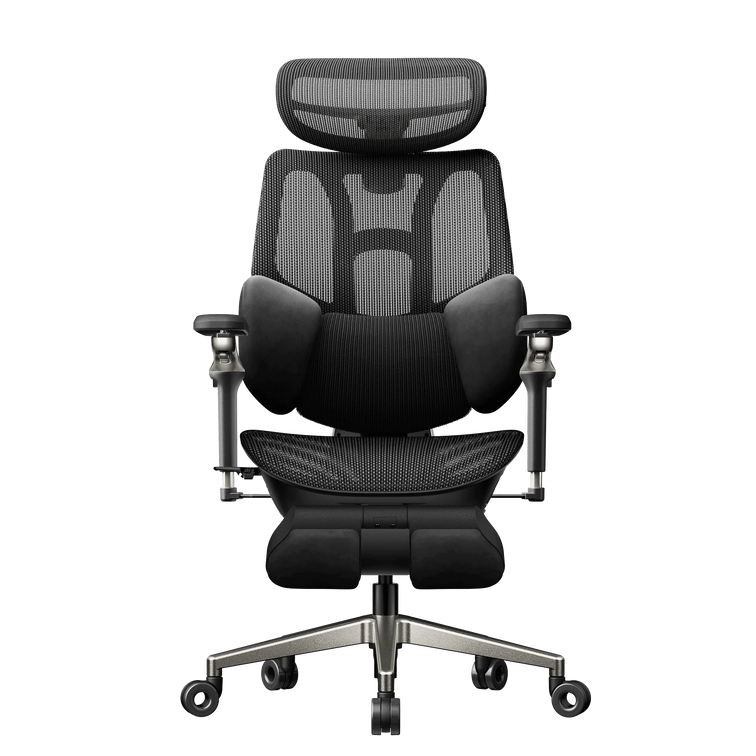
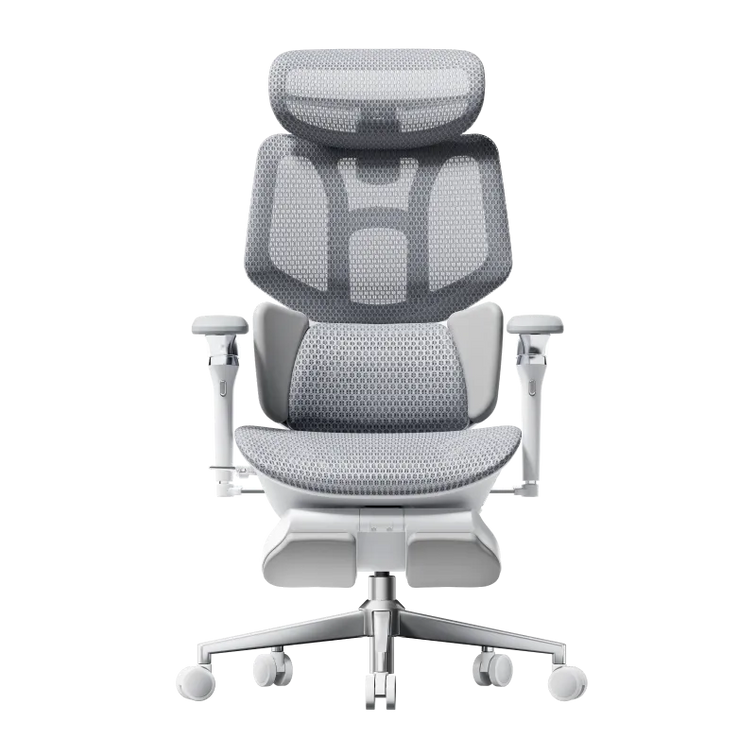
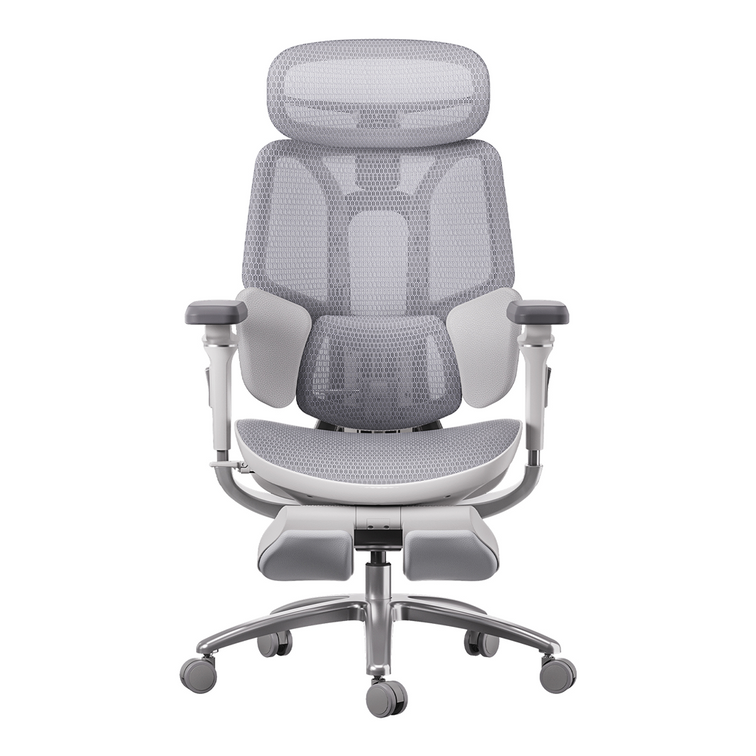
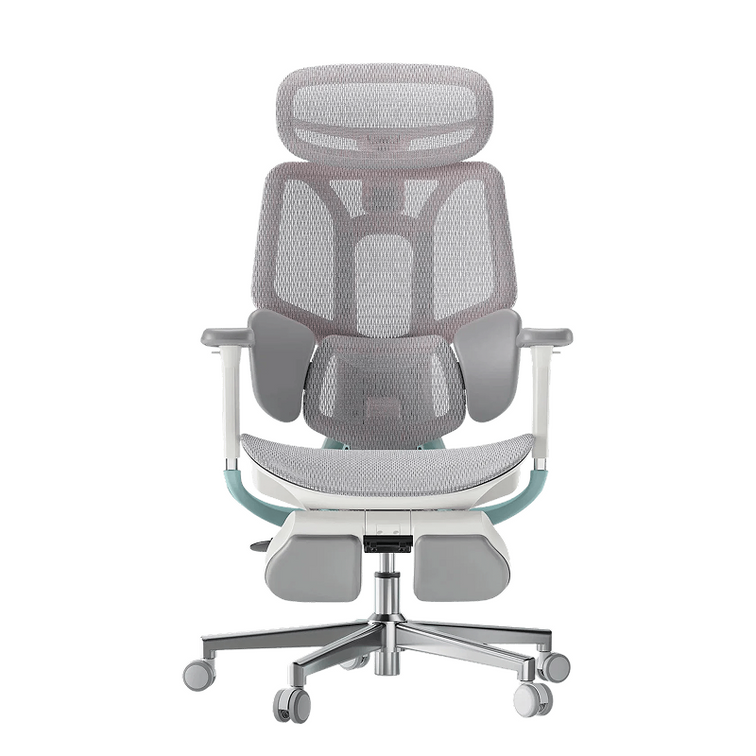
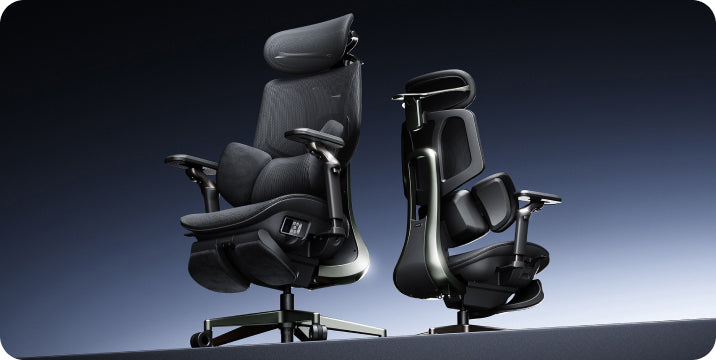
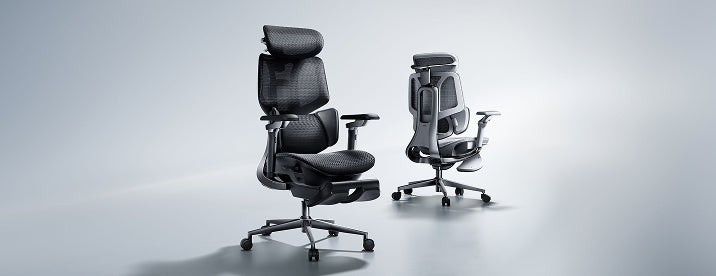
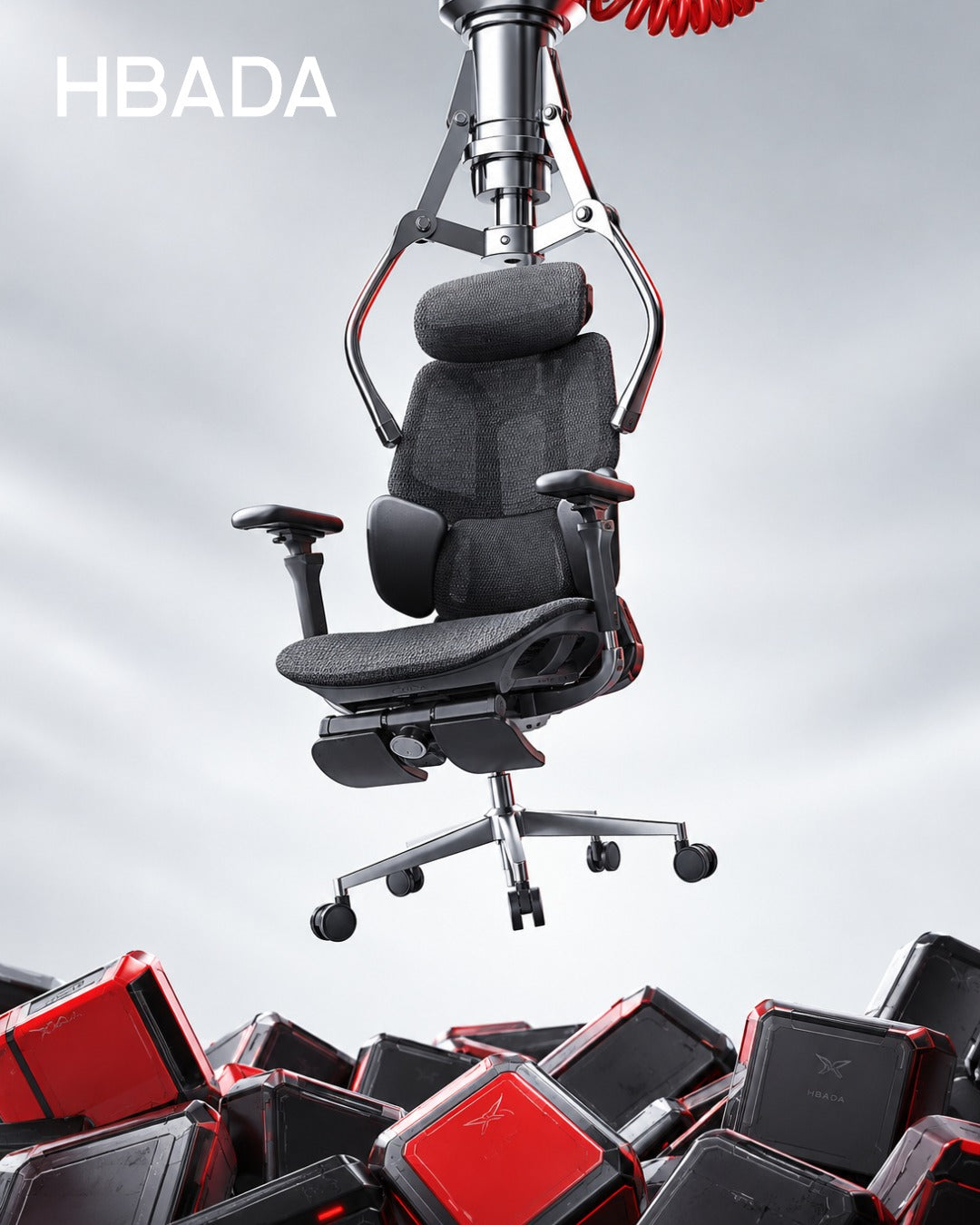
The HBADA X7 smart ergonomic office chair illustrates this approach with AI lumbar tracking alongside massage, heating, and seat ventilation.
The US product page also lists a 4D bi-axial headrest and 720° armrests. These adjustable components serve a different role from powered lumbar tracking: they help you set up the chair around your body and workspace.
Automatic support. A setup that is still yours.
Explore how the X7 combines lumbar tracking with adjustable seating and powered comfort functions. Review the current US product details and selected configuration before ordering.
Explore HBADA X7 →When comparing options across HBADA's office chair range , begin with the adjustments you need every day, then decide which electronic functions would make a meaningful difference.
Being Honest About What “AI” Means Here
It is worth pausing on the term itself. A chair marketed as AI-powered is not necessarily using the same kind of technology as a conversational AI assistant.
Automatic support can be produced by a sensor-driven control system. Whether a particular chair also uses machine learning, personalized prediction, or other techniques depends on its documented implementation.
Without that documentation, neither “it learns your body” nor “it is only pre-programmed” should be treated as an established fact.
Focus on the function you can evaluate: What adjusts? How does it feel? Can you control it? Does the chair fit? These questions are more useful than the label alone.
Similarly, words such as “smart,” “adaptive,” and “bionic” do not establish a medical benefit. Evaluate support and comfort separately from any claim about treating pain or correcting a health condition.
Frequently Asked Questions
What is an AI ergonomic chair, in simple terms?
It is a chair that uses electronic sensing and control to automate certain functions, such as adjusting lumbar support. The specific capabilities vary by model, and other chair adjustments may still be manual.
How does an office chair posture sensor actually work?
Sensors detect physical inputs such as pressure or component position. A controller can use those inputs to guide support adjustments. The sensor combination and response depend on the chair's design.
Is intelligent lumbar support better than a manual lumbar pad?
It may be more convenient if you value automatic adjustment as you move. It is not universally better: support position, pressure, adjustment range, and personal fit still determine whether it feels right. Mechanical adaptive support can also respond to movement.
Does “AI” in a smart ergonomic chair mean it uses machine learning?
Not necessarily. Automated sensor response alone does not prove that machine learning is involved. Check the manufacturer's technical explanation rather than inferring the software from the product label.
Are AI office chairs worth the higher price?
They can be worthwhile when automatic support and powered comfort functions are features you will use. Compare fit, controls, maintenance, and actual model prices. A well-adjusted mechanical chair may be a better match if you prefer simplicity.
Which HBADA chair is considered an AI ergonomic chair?
The HBADA X7 is one example, with AI lumbar tracking and additional powered comfort functions. Check the current US product page for the selected model's specifications.
Do I still need to adjust an AI ergonomic chair?
Yes. Automatic lumbar tracking does not mean every component adjusts itself. Set up the seat, armrests, and other controls according to the chair's instructions and your desk arrangement.
Comfort That Moves With You, Not the Other Way Around

The real appeal of an AI ergonomic chair is not the label itself. It is the convenience of having selected support functions respond automatically as your position changes.
That adds another option alongside manual adjustments and mechanically adaptive designs. Which approach works best depends on your body, workspace, preferences, and how much you value powered features.
Start with fit. Understand the controls. Then judge whether the smart features make your daily routine more comfortable and easier to manage.
A smarter chair is still one part of the setup. Give the same attention to your desk, screen, and working habits—and make room for regular changes of position and movement breaks.