
Cart
Your shopping cart is empty
Continue Shopping
Every Order, Backed by HBADA
30-day in-home Trial
Free 2-5 Business-Day Shipping
5-Year Hassle-Free Warranty
24/7 Customer Support


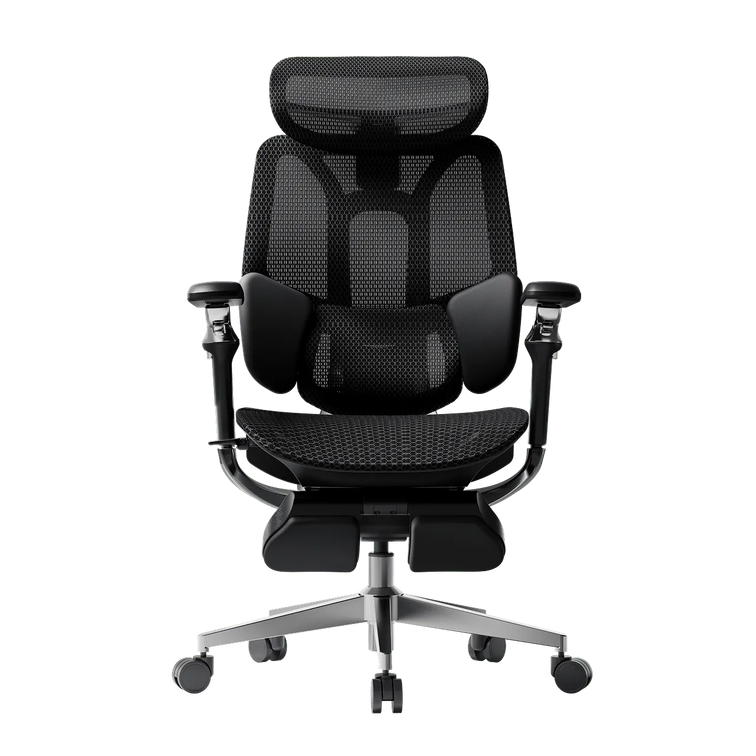
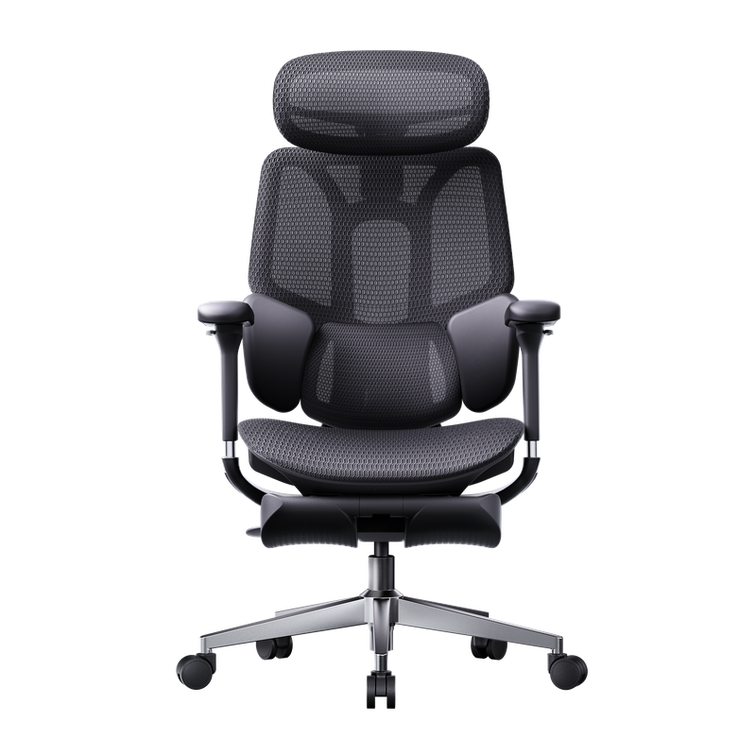
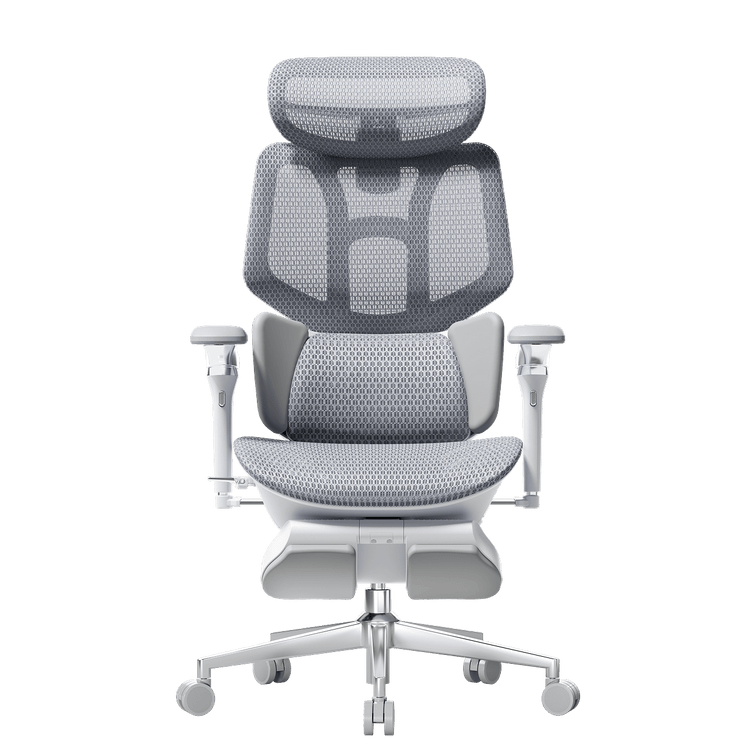
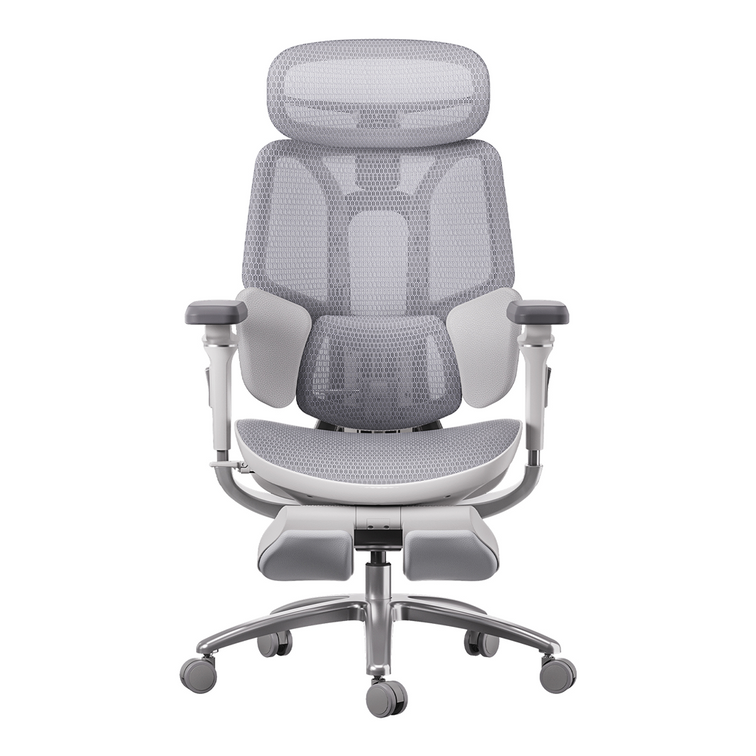
HBADA E3 Ultra Ergonomic Office Chair

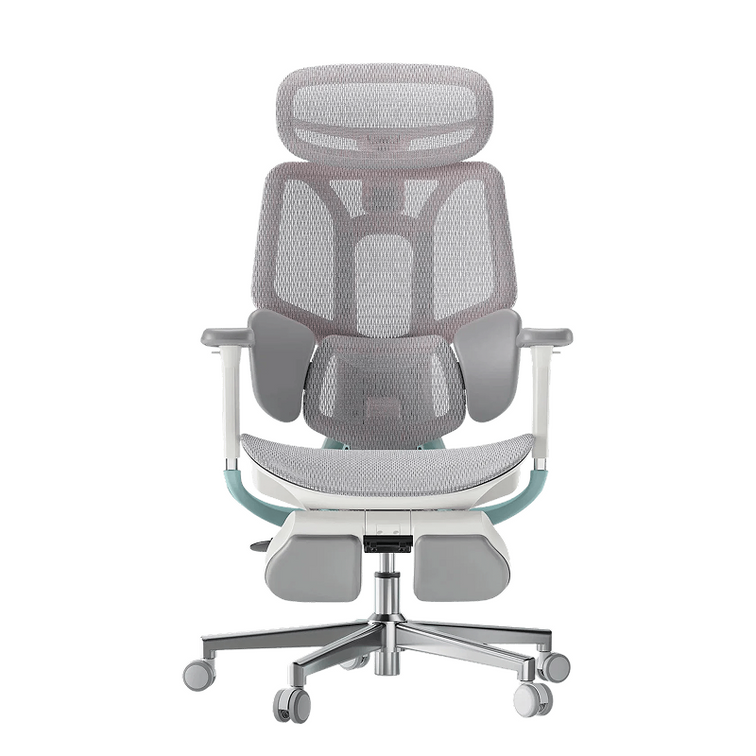
HBADA X7 Smart Ergonomic Office Chair with AI Lumbar Support

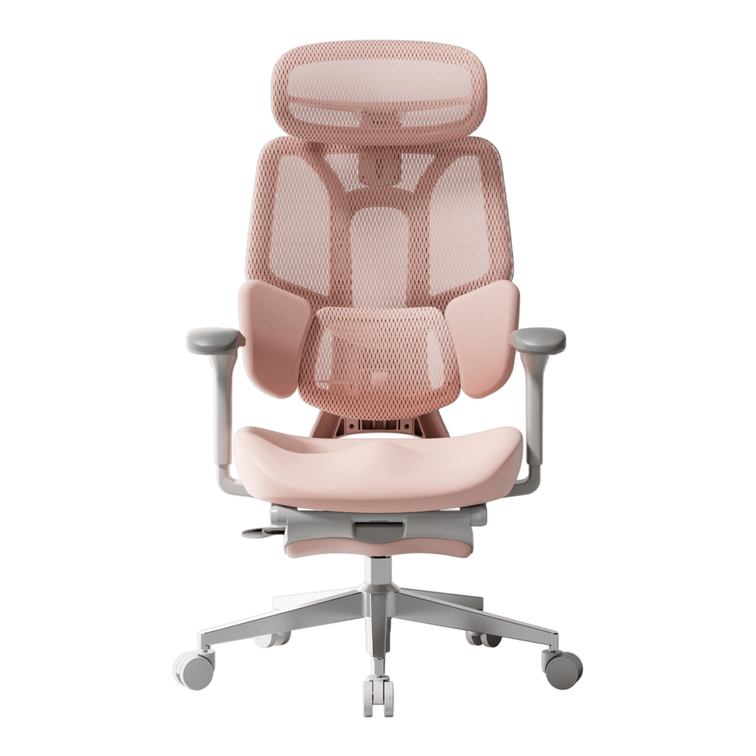
HBADA E3 Pro Ergonomic Office Chair 2026 Edition

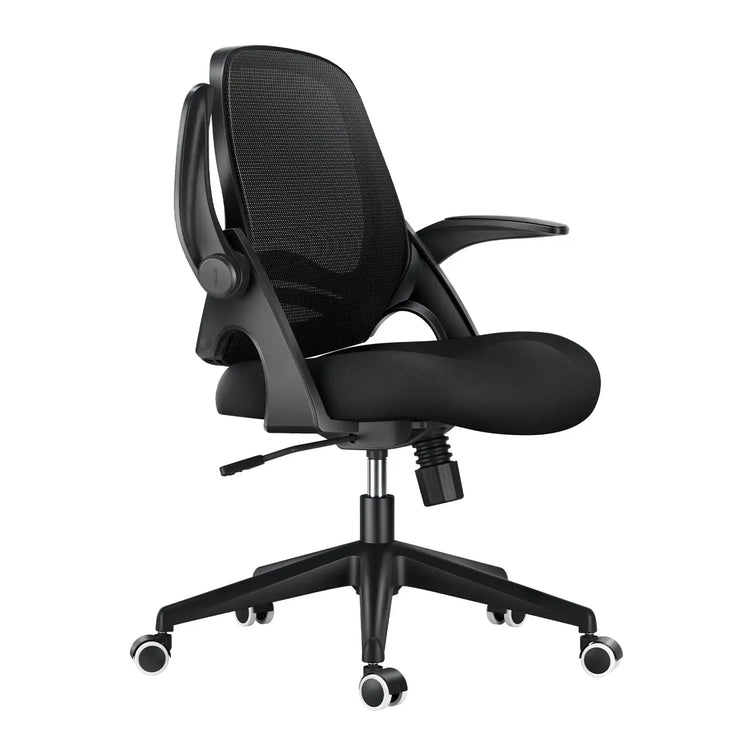
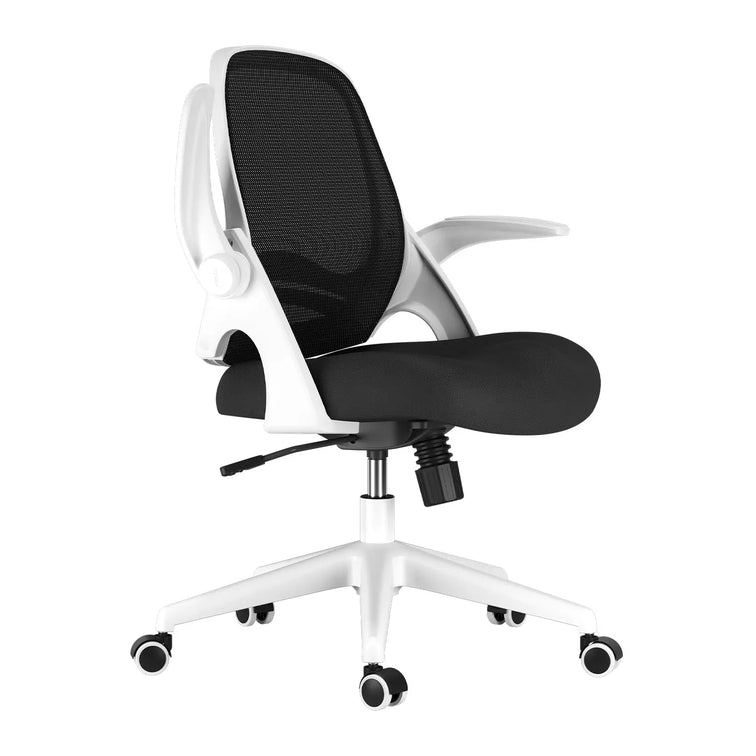
HBADA E3 Air Ergonomic Office Chair 2026 Edition
Remove this item from your cart?
Cart
This section introduces HBADA ergonomic chairs and helps you understand how to choose the right model based on support, adjustability, comfort, and daily use needs.
Traditional office chairs offer "static support," meaning you must adjust the chair to fit your body manually. HBADA chairs utilize very first AI power Bio-Synchronized technology, meaning the chair actively adapts to your movements in real-time. Our patented AI Lumbar Tracking system ensures that the support follows your spine’s natural curve regardless of whether you are leaning forward to type or reclining to relax.
Choosing HBADA means investing in a tool for productivity and health. The core benefits include:
1) Reduced Physical Fatigue: Minimized pressure on the L4-L5 lumbar region.
2) Personalized Fit: AI-driven adjustments that cater to different body types.
3) Thermal Comfort: High-density breathable mesh that prevents heat buildup during long sessions.and more to find...
When it comes to our products, two things matter most: quality and safety. We make sure our Hbada chairs are put through rigorous testing to ensure they meet the highest standards. We're talking about compliance with international standards here, like those set by BIFMA, which checks for durability and safety, and SGS/TUV certifications, which verify that our materials are non-toxic and our structures are sound. This way, you can trust that our chairs are not only comfortable but also safe to use.
An ergonomic chair is designed to support the human body's natural posture, reduce strain on the spine, and minimize muscle fatigue through high adjustability. Key features include lumbar support, adjustable seat height/depth, and reclining mechanics, which together prevent musculoskeletal disorders, enhance comfort, and improve productivity.
1. Active Spinal Alignment
Maintain the natural curvature of your spine.Traditional Chairs: Force your body to adapt to the chair, often leading to "slouching" or "hunching."Hbada Bio-Synchronized Chairs: Use AI Lumbar Tracking to actively follow your movements. Whether you lean forward to focus or recline to think, the chair ensures your lower back (L4-L5 region) is always supported, preventing the disc compression that leads to chronic back pain.
2. Pressure Redistribution
Sitting for 8+ hours creates "pressure points" in the glutes and thighs, which can restrict blood flow and cause numbness.What it does: Through a combination of high-density breathable mesh and adjustable seat depth, an ergonomic chair distributes your body weight evenly across the seat pan.The Result: This reduces the load on your sciatic nerve and prevents the "pins and needles" feeling in your legs.
3. Upper-Body Decompression (The Shoulder-Neck Link)
Neck and shoulder tension often start at the elbows.
We focus on a Direct-to-Consumer (DTC) model to keep costs low for our customers, we provide a comprehensive 30-day trial period (please check our return policy). This allows you to experience the Bio-Synchronized support in your own home and workspace.
Measure your desk height before buying. If the armrests can't slide under the desk surface, you'll have to choose between arm support and sitting close enough to your keyboard. Standard desks sit at 28–30 inches. Most chairs with armrests at the correct elbow height need clearance of at least 26 inches from the floor to the underside of the desk.
Disclaimer: Please consult your physician for a personalized medical recommendation.For users with scoliosis, we recommend chairs with high adjustability and dynamic support rather than rigid structures. The Hbada E3 Ultra is ideal because its AI-Powered 3-Zone Lumbar Support is "floating" and adaptive, allowing it to contour to asymmetrical spinal curves more effectively than a standard static backrest, reducing localized pressure.
Disclaimer: Please consult your surgeon or physical therapist before selecting a chair post-surgery.
Post-surgery recovery requires maximum spinal decompression and the ability to shift positions without strain. We recommend models with a deep recline (up to 135°) and a synchronous tilt mechanism, such as the Hbada X7. This allows the user to distribute their weight more evenly and reduce the vertical load on the recovering vertebrae.
Yes, a poorly designed chair can exacerbate or contribute to sciatica. This typically happens when a chair has a hard seat pan or lacks proper lumbar support, putting excessive pressure on the sciatic nerve in the lower back and glutes. To prevent this, Hbada chairs utilize a waterfall seat edge to reduce pressure behind the knees and Dynamic Lumbar Tracking to maintain the natural curve of the spine, keeping the nerve pathways clear.
To find your perfect match, consider these three pillars:
• Your Body Type: Check the height and weight capacity. (e.g., E3 Ultra for taller users).
• Your Primary Pain Point: If you have lower back pain, prioritize AI Lumbar Tracking. If you have neck strain, prioritize an adjustable headrest.
• Your Usage Pattern: Do you spend 8+ hours in "Focus Mode" (upright) or do you frequently recline for calls and thinking? (E3 Pro for focus → E3 Ultra for mixed use →x7 for master's choice).
The healthiest position is not a static one, but "Dynamic Sitting." We recommend the 90-90-90 rule: Elbows at 90∘90∘ on armrests, hips at 90∘90∘, and knees at 90∘90∘ with feet flat on the floor. However, the key is movement; utilizing Hbada’s Bio-Synchronized recline to shift your angle every 30–60 minutes prevents muscle stiffness and promotes blood flow.
For 8+ hours of use, a Full-Mesh Ergonomic Chair with Dynamic Support is superior. Mesh provides the same "breathability" as a small air conditioner, preventing heat buildup, while dynamic support (like our AI-Tracking system) prevents the "slumping" effect that occurs when muscles fatigue over time.
Chiropractors usually suggest using chairs that help keep your spine in a neutral position. They like chairs with a backrest that has an "S-curve" shape, which supports the natural curve of your lower back. The seat should also be adjustable so it doesn't put pressure on the back of your knees. Hbada's Bio-Synchronized systems are made to work with these same principles that chiropractors recommend. They help keep your spine aligned properly, which can make a big difference in how you feel. By using a chair that supports your spine, you can reduce discomfort and stay healthy. It's all about finding a chair that works with your body, not against it.
To get the best fit, we suggest checking out our Fit Guide on the product pages. Just match up your height, weight, and where you feel discomfort - like neck pain, lower back pain, or tailbone pressure - with what our models have to offer. If you're still not sure, don't worry! Our support team is here to help. They can give you a personalized suggestion based on your specific workspace setup, so you can find the perfect fit for you.
Our flagship models, including the E3 and X7 series, are engineered for durability and safety, supporting up to 300 lbs (approx. 136 kg). This is ensured by our heavy-duty aluminum alloy bases and Class-4 high-strength gas lifts.
Unlike traditional lumbar supports that are fixed in one place, Dynamic Lumbar Support uses a spring-loaded, AI-tracking mechanism. It acts like a "smart cushion" that automatically adjusts its pressure and position in real-time as you lean, twist, or shift, ensuring your L4-L5 lumbar region is always supported.
The choice of material directly impacts your thermoregulation and comfort:
• Breathable Mesh (Best for Long-Hours/Warm Climates): Featured in our E3 Air series, this high-elasticity mesh ensures maximum airflow, preventing heat buildup and distributing weight evenly to eliminate pressure points.
• Premium Fabric (Best for Home Comfort): Offers a softer, cozier feel with high durability. Ideal for those who prefer a warm, tactile experience in a home office setting.
• Executive Leather/PU (Best for Formal Offices): Provides a sophisticated, premium look that is easy to wipe clean. Our X7 series utilizes high-grade materials to balance an executive aesthetic with ergonomic support.→ Recommendation: For maximum spinal health and breathability, we highly recommend the E3 Air's advanced mesh system.
It really comes down to how you work and sit when you're using your computer.
Choose a Headrest (e.g.,Hbada E3 Pro/Ultra: If your day involves frequent video calls, deep-thinking sessions, or short power naps. A synchronized headrest is essential to prevent "Tech Neck" and reduce tension in the trapezius muscles.
If you like to sit up straight and focus on your work, a mid-back chair is a good choice. This type of chair gives you the freedom to move your arms and shoulders around, which is helpful if you need to do tasks that require a lot of movement. It's also a good option if you want to feel more open and unrestricted while you're sitting.
If you're someone who likes to switch between concentrating really hard and relaxing, the E3 Ultra is a great choice because it can help you with both. It's really versatile, so whether you need to focus or unwind, it's got you covered.
Absolutely. Every HBADA chair is engineered as a benchmark of safety and ergonomics. Our products are rigorously tested to meet and exceed international standards, including BIFMA (Business and Institutional Furniture Manufacturers Association) for structural durability and SGS/TUV certifications for material safety and non-toxicity. This ensures that whether in a home or a professional corporate environment, our chairs provide a safe, stable, and health-certified seating experience.
A good chair, like the HBADA E3 series, is made to last a long time - around 5 to 10 years - if you take care of it. To make sure it lasts, we use strong mesh that doesn't sag and heavy-duty aluminum bases that won't break down over time. This way, the chair stays in good shape and keeps supporting you comfortably.
• Maintenance Tip: Give your chair a little love every 6 months to keep it in great shape. Just tighten the bolts and clean the mesh, and it'll be good as new. This will help make your chair last longer and stay comfortable.
For our retail customers, we offer a wide array of colors and model configurations to fit your style. For corporate clients, interior designers, or large-scale office setups, we provide Comprehensive B2B Customization Services. This includes bulk pricing, specific color matching, and customized ergonomic configurations to meet your company's wellness standards.
Please visit our https://www.hbada.eu/pages/bulk-chair to start your professional consultation.
HBADA products are born from our advanced R&D centers, where ergonomic science meets precision engineering. Our chairs are manufactured in specialized facilities using robotic precision and strict quality control protocols. This ensures that every Bio-Synchronized mechanism is identical in its performance, delivering a consistent, high-standard experience to our global users.
This single number changes which chair makes sense. Under 4 hours — almost any well-built chair works. 6–8 hours — lumbar adjustability and breathable mesh become essential. 8–12 hours — you need active support, not passive comfort.
Lower back pain points to lumbar support as the priority. Neck and shoulder tension points to headrest and armrest height. Hip or thigh discomfort points to seat depth and cushion firmness. Knowing the location narrows the feature list considerably.
If you run warm, mesh is non-negotiable — foam-backed seats trap heat and become uncomfortable quickly. If you run cold, look for chairs with optional heating functions or thicker seat cushions that retain warmth. And HBADA X7 version have fan under the chair.
If you move constantly — leaning forward, reclining, shifting sideways — you need dynamic or AI-adaptive lumbar support (HBADA X7 have first AI-adaptive support). Fixed lumbar pads only work when you're still. If you tend to sit in one position, a well-fitted static lumbar system is sufficient.
Medical Disclaimer: Post-surgical recovery is highly individual. Please consult your surgeon or physical therapist before selecting a chair.
Post-spinal fusion, the primary goal is zero-pressure stability and the reduction of vertical load on the fused vertebrae. We recommend the Hbada X7for this specific need. Its superior stability and deep recline capability (up to 135°) allow the user to redistribute their body weight more evenly, alleviating pressure on the spinal column and aiding in a more comfortable, pain-free recovery process.
Traditional luxury office chairs often rely on "static engineering." This means when you change your posture, you must manually adjust the levers to fit your body. HBADA redefines this space by introducing active, real-time adaptation at a much more affordable price point.
Yes. HBADA chairs are engineered with high-amplitude adjustability to support a diverse range of body types. To find the best affordable fit for your workspace layout near me, refer to our biometric sizing matrix below:
| User Profile | Height Range | Recommended HBADA Model | Key Engineering Feature |
| Petite Seating | 4'11" – 5'4" (150–163 cm) | HBADA P5WMA / E3 Air | Low minimum seat height & space-saving flip-up arms to prevent shoulder elevation. |
| Universal Seating | 5'5" – 5'11" (165–180 cm) | HBADA E3 Pro | The ultimate "sweet spot" with 4D fully customizable orthopedic support zones. |
| Tall & Heavy Seating | 6'0" – 6'5" (183–195 cm) | HBADA E3 Ultra / X7 | Deep adjustable seat depth, extended heavy-duty gas lift, and an independent extra-high headrest. |
Absolutely. Tailbone fatigue is typically caused by static weight concentrated on an unyielding seat pan. HBADA relieves lower body stress through a specialized three-tiered suspension structure:
To help you choose the best setup currently onsale, match your daily sitting habits to our flagship lineup:
If you are experiencing sudden lower back fatigue, follow this quick-correction routine to optimize your HBADA chair immediately:
We accept various payment methods including major credit cards (Visa, MasterCard, American Express), PayPal, Apple Pay, Google Pay, and bank transfers. For international customers, we also support payments through Western Union and wire transfers. All transactions are secured withSSL encryption to ensure your financial information remains safe and protected.
We accept various payment methods including major credit cards (Visa, MasterCard, American Express), PayPal, Apple Pay, Google Pay, and bank transfers. For international customers, we also support payments through Western Union and wire transfers. All transactions are secured withSSL encryption to ensure your financial information remains safe and protected.
Measure your desk clearance, available floor space, preferred seat height, usable seat width, and the distance from your back to the bend of your knees. Also check the space behind the chair if you plan to recline or extend a footrest. Compare those measurements with the chair’s dimensions instead of relying only on a recommended height range.
A seat is too deep if you cannot rest against the backrest without the front edge pressing behind your knees. It is too shallow if a large portion of your thighs remains unsupported. The correct depth supports most of your thighs while leaving a small gap behind the knees, with both feet resting securely on the floor or a footrest.
Seat-height adjustment positions your feet, knees, and elbows relative to the floor and desk. Backrest-height adjustment moves the lumbar and upper-back support so it matches the curves of your torso. Users with similar overall height can still need different backrest settings because leg length and torso length vary.
Long-legged users should prioritize adjustable seat depth, an appropriate maximum seat height, and enough clearance behind the knees. Users with a long torso should prioritize adjustable backrest height, lumbar height, and headrest range. Check individual adjustment ranges in inches because total user height alone does not show whether a chair will fit your proportions.
Choose a backrest that supports the spine without forcing the shoulders forward or restricting arm movement. Compare the backrest width at shoulder level, the space between the armrests, and the armrests’ outward adjustment. A contoured backrest should contact the center of the back while allowing the shoulders to remain relaxed during typing and mouse use.
No. A wider seat provides more room, but excessive width can place the armrests too far apart and reduce upper-body support. Choose a usable seat width that allows comfortable movement without pressure at the hips. The armrests should still sit close enough to support the forearms while the shoulders remain relaxed.
Adjustable lumbar support is integrated into the chair and can be positioned to match the user’s lower back. A lumbar pillow is portable and can improve the fit of a basic chair, but it may move or reduce usable seat depth. For daily desk work, integrated height and depth adjustment usually provides a more consistent fit than a loose cushion.
Lumbar support should maintain contact with the lower back without creating a sharp pressure point. If it pushes the pelvis forward, causes numbness, or becomes distracting, reduce the depth or move the support to a better height. The goal is steady contact that follows the lower-back curve, not the strongest pressure available.
A built-in footrest is useful for reclining and short rest periods because it extends with the chair and stores under the seat. A separate floor footrest is better for supporting the feet during upright work when the desk height prevents both feet from reaching the floor. Some users benefit from both because the two designs support different postures.
One chair can serve multiple users when the seat height, seat depth, lumbar support, armrests, and backrest are easy to readjust. Confirm that every user falls within the chair’s stated height and weight ranges. In a shared home office or hot-desk workspace, controls with clear positions make it easier to reset the chair at the start of each session.
The chair should support an upright posture with relaxed shoulders, supported forearms, and feet on the floor or a footrest. Because a laptop screen and keyboard are attached, raising the screen usually requires a separate keyboard and mouse. Chair adjustment alone cannot correct a laptop screen that is positioned too low for extended desk work.
No. The Occupational Safety and Health Administration does not approve or endorse commercial office chairs or other commercial products.
OSHA publishes advisory guidance for evaluating workstation safety and ergonomic setup, but that guidance is not a product certification and must not be presented as “OSHA approved.”
Use OSHA guidance to evaluate chair fit and workstation setup, then compare the chair’s documented specifications and testing information. Explore the HBADA ergonomic chair collection and OSHA’s official explanation: Can OSHA approve my new product?
OSHA’s computer workstation guidance identifies four core chair components: the backrest, seat, armrests, and base.
OSHA recommends:
Compare these principles with the HBADA U.S. ergonomic chair buyer’s guide and OSHA’s official office chair guidance.
A neutral sitting posture keeps the joints naturally aligned while the back and feet remain supported.
OSHA describes a neutral computer-working position as having:
Neutral posture is not one rigid position. OSHA advises changing working positions throughout the day. Use the HBADA chair adjustment guide together with OSHA’s Good Working Positions.
Your feet should be fully supported by either the floor or a stable footrest.
OSHA recommends using a footrest when the desk cannot be lowered and the chair must be raised to position the keyboard and work surface at a comfortable height.
Do not lower the chair only to reach the floor if doing so forces you to raise your shoulders or bend your wrists while working. Evaluate the complete chair-and-desk setup using the HBADA office chair fit guide and OSHA’s workstation evaluation checklist.
There is no single sitting interval that fits every worker and task.
OSHA advises changing working positions frequently throughout the day by:
An ergonomic office chair supports movement; it does not make prolonged static sitting risk-free. Set the chair’s recline and tension controls using the HBADA ergonomic chair adjustment guide.
ANSI/BIFMA X5.1 is a test standard for evaluating the safety, durability, and structural adequacy of general-purpose office chairs.
As of July 2026, BIFMA lists the applicable standard as ANSI/BIFMA X5.1-2017(R2022). It covers general office and institutional seating and defines laboratory test conditions and recommended minimum performance levels.
A reference to ANSI/BIFMA X5.1 does not prove that every chair produced by a brand has been independently tested or certified. Buyers should verify:
Read the HBADA certifications and testing guide and BIFMA’s official standards descriptions.
An employer may provide or modify workplace equipment as part of an individualized reasonable-accommodation process under Title I of the Americans with Disabilities Act.
The employee normally needs to inform the employer that a workplace adjustment is required because of a disability. The employer may select an effective accommodation instead of providing a particular requested chair brand or model.
An ergonomic chair is not automatically an ADA benefit, guaranteed reimbursement, or guaranteed accommodation. Employees should contact their HR or workplace accommodations team.
HBADA can provide chair dimensions, adjustment ranges, invoices, and available product documentation through customer support. For official guidance, see the EEOC’s Reasonable Accommodation and Undue Hardship under the ADA.
Office furniture used in a trade or business can be depreciable business property, and qualifying purchased furniture may be eligible for a Section 179 election.
IRS Publication 587 explains that office furniture is generally treated as seven-year property under MACRS when its cost is not fully deducted under Section 179.
Eligibility depends on factors including:
Section 179 is a tax election claimed by the buyer, not a retail discount or guaranteed refund. Buyers should consult a qualified tax professional and review IRS Publication 587.
Businesses requiring product documentation or volume pricing can visit the HBADA bulk-order page.