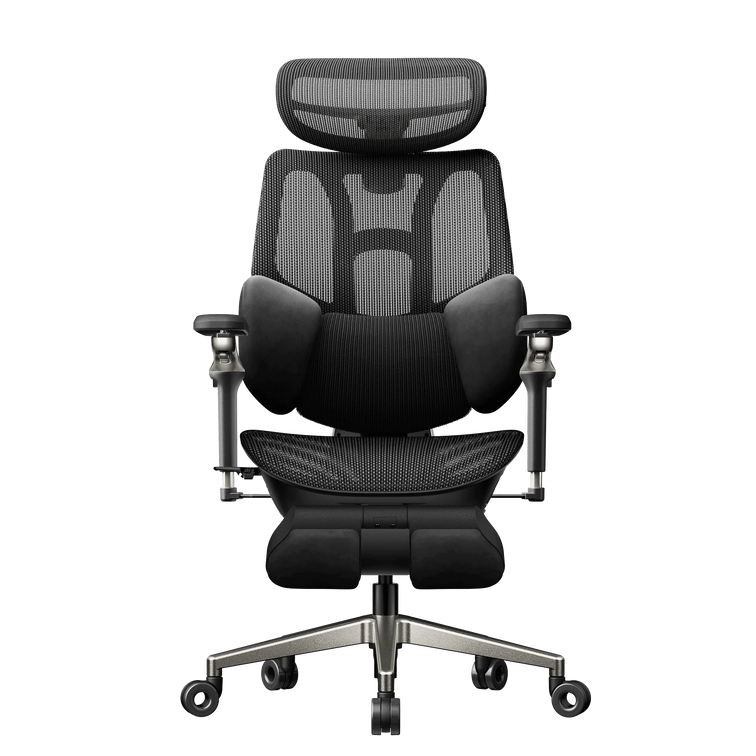
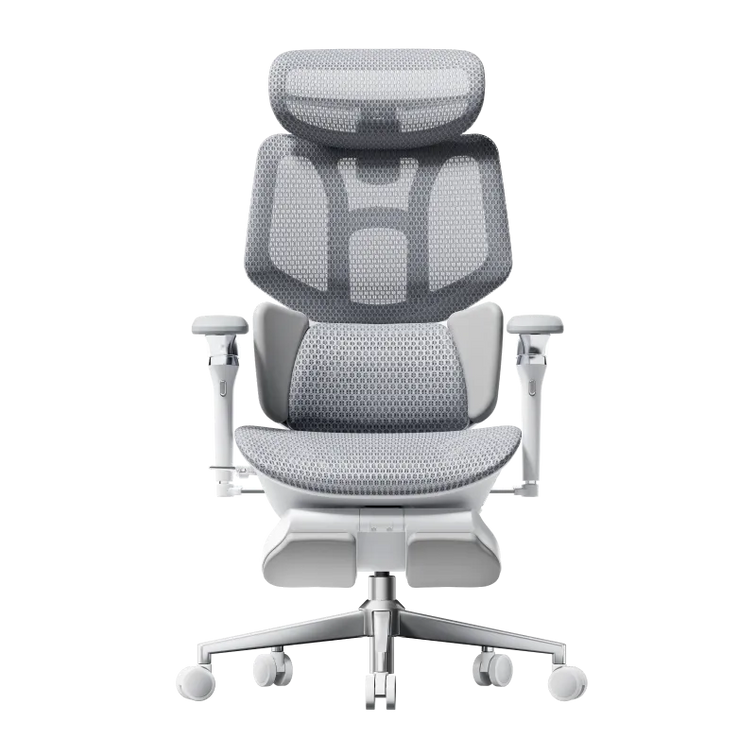
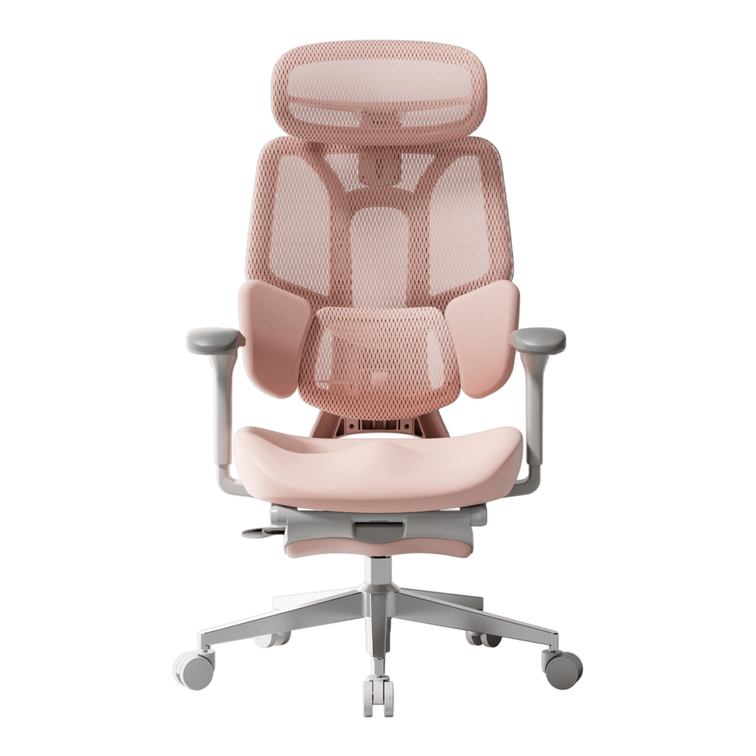
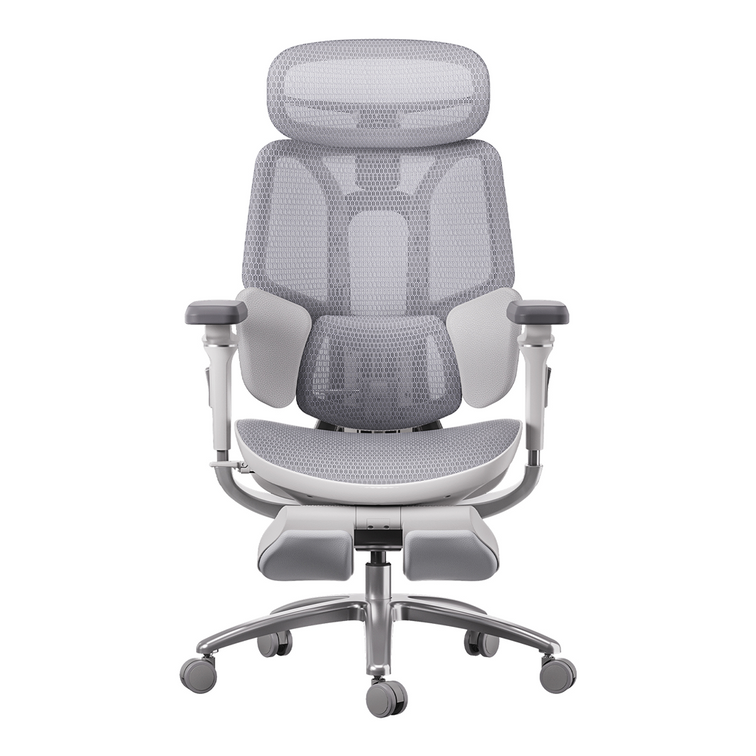
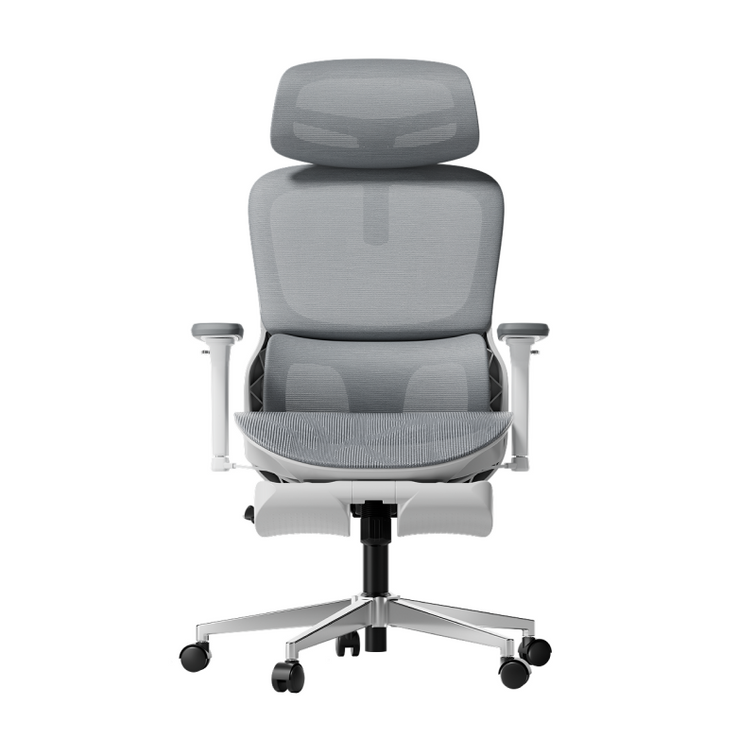
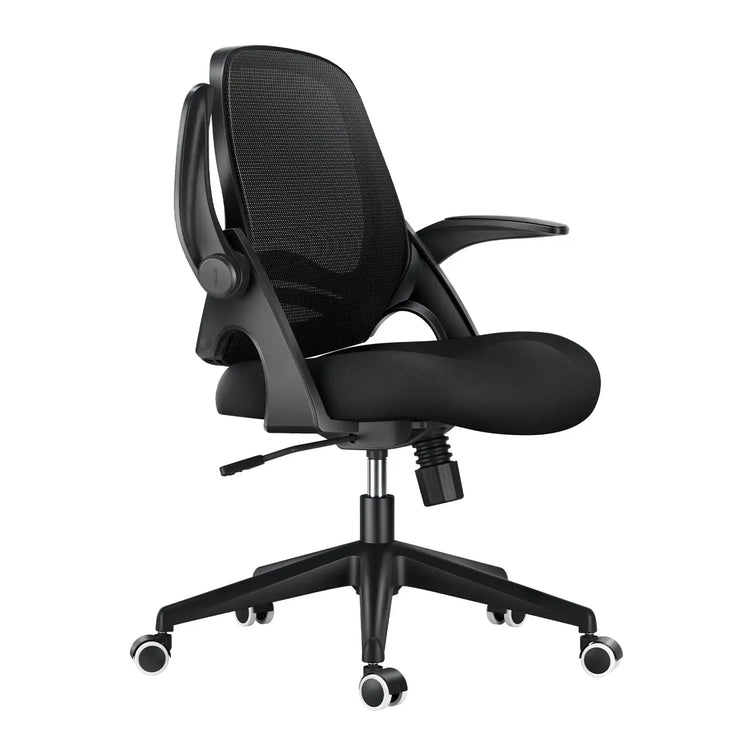
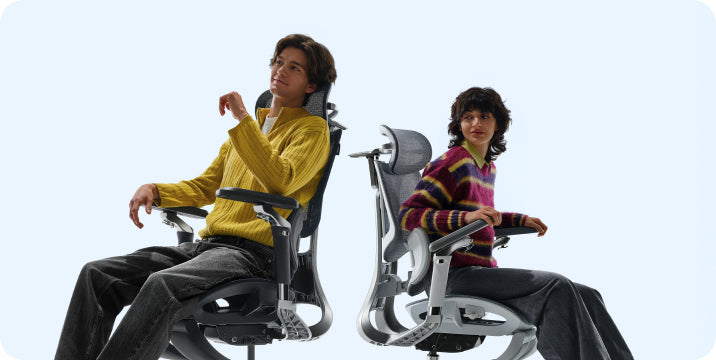
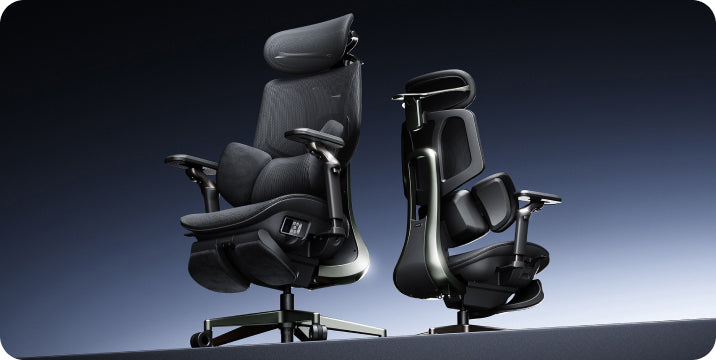

The workspace comfort guide
One supports your break. The other supports your desk setup.
A chair with a built-in footrest and a separate under-desk footrest may sound interchangeable. In practice, they usually solve different problems.
Choose a built-in chair footrest for supported, reclined breaks. Choose a separate under-desk footrest when your feet need support while you sit upright at your desk. The better choice depends on your working position, desk height, available space, and whether you want support for working, relaxing, or both.
Why This Comparison Matters
When shopping for an ergonomic office chair, it is easy to treat a footrest as one more feature on a checklist. But “footrest” can refer to two quite different products.
A retractable footrest attached to a chair typically supports your lower legs when you lean back. A separate under-desk footrest is usually a platform that supports your feet while you sit upright.
Built-in chair footrest
An integrated place to rest your lower legs when you recline, then tuck away when it is not needed.
Separate under-desk footrest
A stable surface beneath your feet when your working seat height leaves them unsupported.
Understanding this distinction helps you choose based on how you actually use your workspace—not simply which option looks more complete.
What a Built-In Footrest Actually Offers

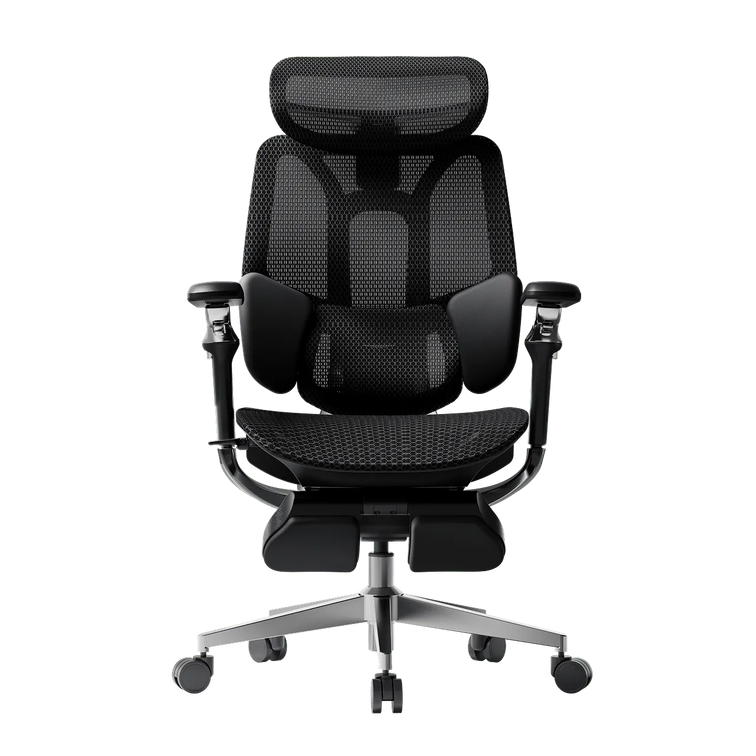
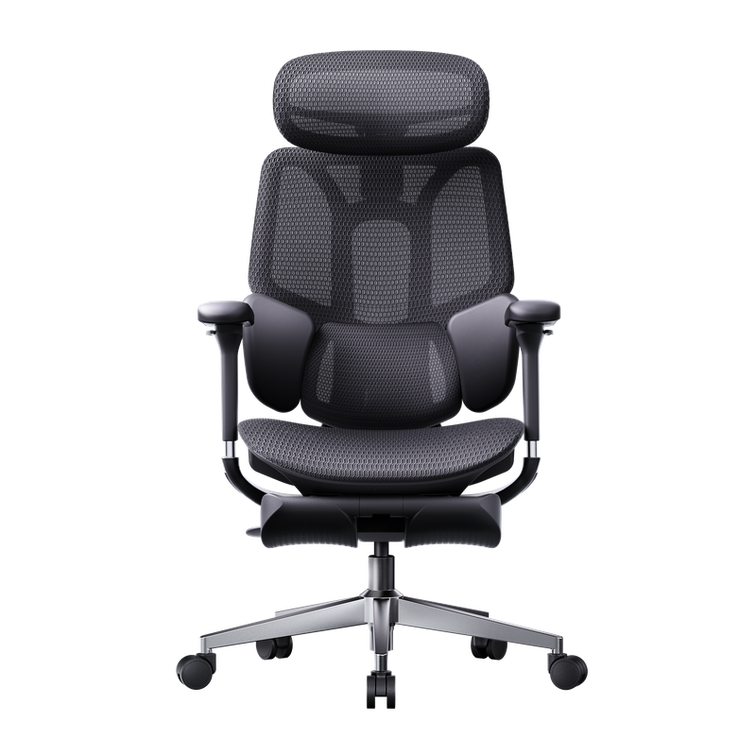
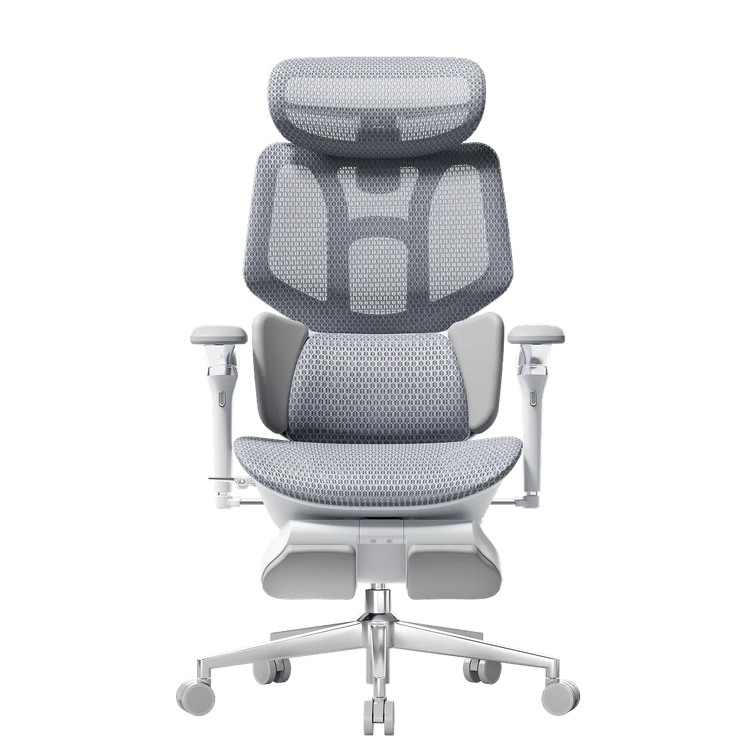
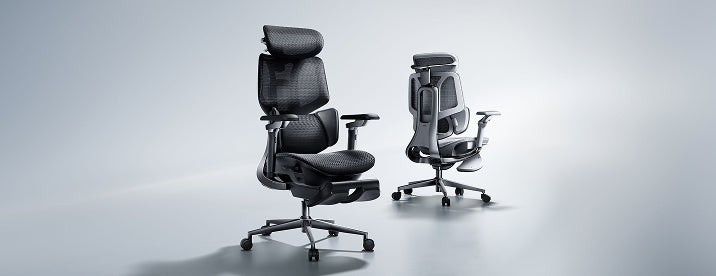
A built-in footrest is attached to the chair and can often slide or fold out from beneath the seat. Its main appeal is convenience: leg support is part of the chair rather than a separate item you need to bring over.
A convenient option for reclining
If you like to lean back during a break, read away from your keyboard, or change position between tasks, an integrated leg rest can make that transition more comfortable.
A tidier setup when retracted
Once stowed, the footrest stays with the chair. That can help keep a shared room or home office organized, although the chair still needs sufficient room when the footrest is extended.
Fit and operation still matter
Footrest length, width, deployment, and supported positions vary by chair. Check the exact configuration and operating instructions rather than assuming every built-in design adjusts or moves in the same way.
Important distinction: A retractable leg rest is not automatically a substitute for a stable under-desk foot platform during upright typing.
What a Separate Footrest Offers
In this guide, a separate footrest means a floor-standing under-desk platform—not an ottoman intended for reclining. Some platforms have adjustable height or tilt; others have a fixed shape.
Support at your working seat height
Your chair may need to sit higher to work comfortably with your desk. If that leaves your feet unable to rest securely on the floor, a separate platform can provide the missing support.
Independent positioning
You can position the platform according to your seat and desk setup. This is useful when the chair itself fits well, but the relationship between the desk height and floor leaves your feet unsupported.
A way to improve an existing setup
If your current chair already provides the adjustments you need, a separate footrest may address the foot-support problem without replacing the chair.
Before buying, check that the platform supports both feet, stays stable on your flooring, and fits without crowding your knees or restricting leg movement.
Office Chair Footrest Benefits, Either Way

The useful benefit of a footrest depends on the position it supports. For upright work, that may mean having somewhere stable to place your feet. For a reclined break, it may mean supporting your lower legs instead of leaving them hanging.
- More appropriate support: Match the support surface to your working or resting position.
- A more adaptable setup: Adjust your workspace around your body and desk rather than forcing one sitting position.
- A more comfortable break: An integrated leg rest can make reclining more convenient when the chair and available space allow it.
Support is not a substitute for movement. Neither type of footrest makes prolonged sitting automatically comfortable or healthy. Change positions, stand up, and take regular movement breaks.
Quick Comparison Table

| Consideration | Built-in chair footrest | Separate under-desk footrest |
|---|---|---|
| Primary purpose | Lower-leg support during reclined breaks. | Foot support during upright desk work. |
| Position | Attached to the chair, usually beneath the seat when stored. | Placed on the floor beneath the desk. |
| Adjustability | Deployment and positioning depend on the chair design. | Height and tilt options depend on the platform design. |
| Space needed | Clearance for the extended footrest and reclined chair. | Floor space without restricting legroom or chair movement. |
| Storage | Often retracts into the chair. | Remains separate and may need to be moved or stored. |
| Existing chair | Requires a compatible chair or manufacturer-approved option. | Can complement an existing chair if the overall setup fits. |
| Cost decision | Compare the complete chair price and selected configuration. | Compare the accessory cost if your current chair is suitable. |
| Best starting point | You want integrated support for reclining. | Your feet need support at your normal working seat height. |
When a Reclining Office Chair With Footrest Makes Sense

A reclining office chair with a footrest makes sense when you want one chair to support both desk work and occasional reclined breaks.
- You prefer an integrated leg rest to a separate item.
- You regularly lean back to read or pause between tasks.
- You want to stow the leg rest beneath the seat after use.
- Your workspace has enough clearance for the extended setup.
Check the chair as a whole before prioritizing the footrest. Seat height, seat depth, lumbar support, and armrest position still determine whether the chair fits your everyday work.
Also consider how easily you can deploy and retract the footrest. Follow the manufacturer's instructions, and do not treat a leg rest as a step or an extra seat.
When a Separate Footrest Makes More Sense
A separate under-desk footrest is usually the more relevant option when the problem occurs while you are actively working—not while you are reclining.
- Your feet do not rest securely on the floor at your working seat height.
- Lowering the chair would make your desk or keyboard position awkward.
- Your existing chair fits well in other respects.
- You want to position foot support independently of the chair.
For example, you might raise your chair to work comfortably at a fixed-height desk, only to find your feet are no longer fully supported. A suitably sized platform can bridge that gap without requiring a reclined sitting position.
Start with the setup, not the accessory. If your feet already rest comfortably on the floor and the rest of your workstation fits, a separate footrest may not be necessary.
How HBADA Handles Built-In Footrests
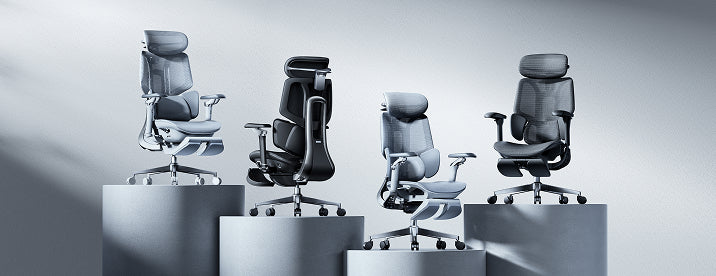
When comparing HBADA chairs, check the exact model and configuration on the US product page. Do not assume every chair within a series has the same footrest, recline mechanism, or adjustment options.
Start with the features you use during desk work, then decide whether integrated leg support would improve your breaks. A footrest is part of the overall fit—not a replacement for it.
Find a chair that fits how you work and unwind.
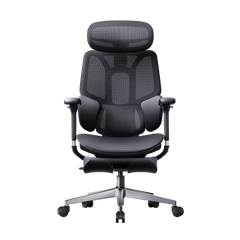
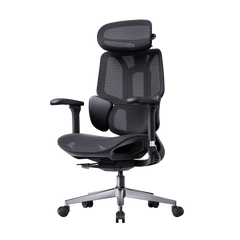
Explore the HBADA E3 Ultra ergonomic office chair and review the current product details, selected variant, and footrest information before ordering.
For a different model, explore the HBADA E3 Air ergonomic office chair . Compare the listed adjustments and configuration rather than assuming the two models work identically.
Explore HBADA office chairs →How to Decide
- Identify when you need support. Is the problem unsupported feet while typing, or a lack of leg support when you lean back?
- Set up your working position first. Adjust your chair for your desk and check whether your feet can rest securely on the floor.
- Measure the available space. Check under-desk clearance, legroom, chair movement, and the room needed for reclining. Record your measurements in inches and compare them with the product dimensions.
- Compare the actual configuration. Confirm whether a footrest is included, how it operates, and whether the selected version meets your needs.
- Consider the complete cost. If your chair already fits, compare a separate accessory with the cost of replacing the whole chair. If you need a new chair anyway, assess the footrest alongside the other adjustments.
You do not always have to choose only one. A separate platform for upright work and a built-in leg rest for reclined breaks can serve different purposes, provided neither obstructs safe chair movement or deployment.
Frequently Asked Questions
Is an office chair with a footrest worth it?
It can be worth it if you regularly recline during breaks and value integrated lower-leg support. If your main problem is unsupported feet while typing, a separate under-desk platform may be the more suitable option.
Can a built-in footrest replace an under-desk footrest?
Not automatically. Most retractable chair footrests are intended for supporting the legs in a reclined position. An under-desk platform supports the feet during upright work. Check the intended use of the specific product.
Should my feet be on the floor or a footrest?
During upright desk work, your feet should have stable support. The floor may provide that support when the chair and desk fit. If your feet cannot rest securely on the floor at your working seat height, a suitable under-desk footrest can help.
Can I use a separate footrest with a chair that already has one?
Yes, the two can serve different purposes: a separate platform during upright work and the integrated leg rest during breaks. Make sure the platform does not block the chair's wheels, recline mechanism, or retractable footrest.
Does a chair with a built-in footrest save space?
It can reduce the need to store a separate leg rest when the integrated one is retracted. However, you still need clearance in front of and behind the chair when the footrest is extended and the backrest reclines.
Can a footrest prevent back pain?
A footrest can improve support in an appropriately adjusted setup, but it cannot guarantee pain prevention or treatment. Overall workstation fit, sitting habits, and movement also matter. Persistent discomfort should be discussed with a qualified healthcare professional.
What should I check before buying a chair with a footrest?
Check the selected configuration, chair dimensions, footrest deployment, recline clearance, and operating instructions. Also check the seat and armrest adjustments you will use during everyday desk work.
Final Thoughts
A built-in chair footrest and a separate under-desk footrest are not direct replacements for each other. One typically supports your lower legs during a reclined break; the other supports your feet while you work upright.
Choose according to the problem you want to solve. If you want convenient leg support when reclining, consider a chair with an integrated footrest. If your feet need a stable surface at your normal working seat height, start with a separate under-desk platform.
The best setup supports both your work and your breaks. Start with a chair that fits, check your available space, and add the type of support that suits your routine.