
Cart

What Is a Smart Ergonomic Workspace? Chairs, Desks and Monitor Arms Explained
IFA 2026 · Workspace technology
At IFA 2026, Ergonomics Goes Beyond the Office Chair
On September 4, 2026, HUANUO announced a workspace portfolio at IFA in Berlin covering chairs, height-adjustable desks and monitor arms. Its announcement included an AI-powered standing desk with height recommendations and a desktop designed to tilt for tasks such as reading and drawing.
The manufacturer’s IFA announcement highlights an idea worth considering when upgrading a home office: the chair, work surface and screen all need to fit the person using them.
Product announcements describe intended features, rather than independent proof of improved health or comfort. For buyers, the useful question is what each adjustment actually changes during an ordinary working day.
You can buy an adjustable chair and still find yourself reaching for the mouse. You can add a standing desk and still look down at a laptop screen. Each piece of equipment solves only part of the setup.
A smart ergonomic workspace brings those parts together. Before choosing a feature list, it helps to understand which adjustments you need and how they affect one another.
What is a smart ergonomic workspace?
In this guide, a smart ergonomic workspace means a setup that combines adjustable seating, a suitable work surface and screen positioning, with features such as powered adjustment, saved settings or reminders where useful. The term does not mean every component uses AI or connects to the same app.
In this guide
The three parts of the workspace
What makes an ergonomic chair smart?
Manual, adaptive and powered features compared
How to set up the chair, desk and screen
Which part should you upgrade first?
What to check before buying
Where the HBADA X7 fits
Frequently asked questions
Three Parts, Three Different Jobs
Think about your chair, desk and monitor as separate adjustments that need to work together. Buying all three from one brand is not necessary, but checking their dimensions and clearances is.
01 · Seating
The Chair
Determines your seated height, usable seat depth, back support and arm support. These settings affect how closely and comfortably you can approach the desk.
02 · Work surface
The Desk
Positions the keyboard, mouse and other tools. A height-adjustable desk can provide separate working heights for sitting and standing.
03 · Viewing
The Monitor Arm
Lets you reposition a compatible display without changing the keyboard height. Check the mount, weight range and desk attachment before buying.
A Common Setup Problem
Imagine raising your chair to reach a high keyboard. Your feet then lose contact with the floor. Adding more lumbar support will not change that height mismatch. A suitable footrest or a lower keyboard surface may be the adjustment you need.
What Makes an Ergonomic Chair Smart?
“Smart” can describe several different features. One chair may offer powered lumbar adjustment. Another may save a preferred setting, respond to changes in position or include controls for additional comfort functions.
Ask what the feature does in physical terms. Does it move the lumbar support? Change recline resistance? Recall a saved position? Or simply send a reminder?
Automatic Adjustment and Manual Fit Serve Different Purposes
An automatic feature may reduce how often you operate a particular control. You still need to check the seat’s dimensions, the adjustment range and whether the support feels appropriate for your body.
A chair that adjusts automatically is not necessarily a better fit than a manually adjusted chair. The useful comparison is whether the feature solves something you actually notice while working.
Ask for a demonstration: “AI” on a product page does not tell you which parts move, what triggers the movement or how much control you retain. Look for a clear explanation and a model-specific manual.
Manual, Adaptive and Powered Features Compared
These categories can overlap within one chair. Use the table to understand the controls rather than treating the labels as a ranking from basic to best.
Feature type
How it works
What to check
Manual adjustment
You move a lever, dial or component to change a setting.
Can you reach the control and achieve the position you need?
Mechanical adaptive support
A mechanism responds to movement or load without necessarily using electronics.
Does its movement and resistance suit you?
Powered adjustment
An electric mechanism moves a component through its available range.
What requires power, and what happens when power is unavailable?
Memory settings
The product stores and recalls supported settings.
Which settings are saved, and can different users keep separate preferences?
App or reminder features
Software provides controls, prompts or other supported functions.
Is an account required, and can essential controls be used without the app?
AI-labeled features
The exact operation depends on the manufacturer’s implementation.
What input does the system use, and what adjustment does it make?
How to Set Up the Chair, Desk and Monitor Together
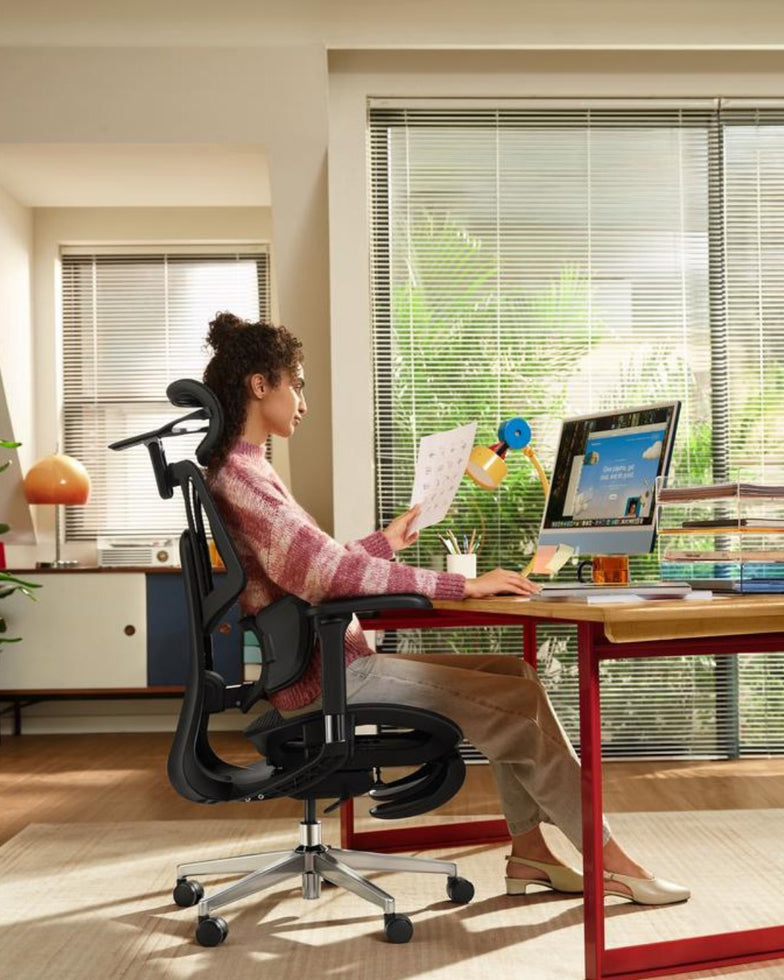
For a workstation with an adjustable desk, start with the chair, then position the keyboard and screen. This is a practical order because changing your seated height affects everything above it.
1. Establish a Comfortable Seated Position
Set the seat so your feet are supported and the front edge does not press into the backs of your knees. Adjust the available back and arm supports to suit you.
2. Bring the Keyboard and Mouse Within Reach
Adjust the work surface so you can type with relaxed shoulders. Keep the mouse close enough that you do not have to reach sideways for it.
3. Position the Screen Independently
Place your main screen in front of you and adjust its height and distance so you can read comfortably. With a laptop, a separate keyboard and mouse allow the screen to be raised without raising your hands.
4. Save a Separate Standing Setting
If your desk has memory controls, save the standing position only after checking the keyboard and screen. Recheck cable slack and clearance through the desk’s full movement.
5. Try the Setup During Your Usual Tasks
Write, read and use the mouse as you normally would. Change one setting at a time so you can tell which adjustment helped. Leave room for movement and changes of activity throughout the day.
These basic positioning principles are consistent with HSE’s workstation posture guidance . Individual viewing needs and equipment may require different arrangements.
Using a fixed desk? You may need to set the chair in relation to the keyboard first, then support your feet. If the mismatch is too large, consider a suitable keyboard tray or a desk with a more appropriate height range.
Which Part of Your Workspace Should You Upgrade First?
Start with the limitation you cannot solve using the adjustments you already have. That gives each purchase a clear purpose.
What you notice
Check first
Possible next step
The seat feels too deep or too high.
The chair’s seat-depth and height ranges.
A chair with dimensions that better fit you.
You lift your shoulders to reach the keyboard.
The relationship between the chair and work surface.
A lower keyboard surface, appropriate foot support or an adjustable desk.
You lean forward to read the screen.
Text size, screen distance and placement.
A suitable monitor stand or arm if the existing stand cannot position the screen.
Switching between sitting and standing is awkward.
Desk controls, cable restrictions and available height range.
A desk with easier controls or useful memory settings.
You frequently readjust one chair feature.
Whether the existing setting holds and fits the task.
Compare easier manual controls with adaptive or powered alternatives.
The workspace fits, but you rarely change position.
Your routine and opportunities to take breaks.
A practical reminder or change of activity may help without new furniture.
What to Check Before Buying Smart Workspace Equipment
Physical Compatibility
Measure the available space. Check whether the chair’s armrests clear the desktop, whether a keyboard tray leaves enough legroom, and whether a monitor arm can attach securely to the desk.
For a monitor arm, confirm the display’s mounting pattern and weight against the arm’s specifications. For a moving desk, account for accessories above and below the surface, including shelves, drawers and cables.
Everyday Controls
A feature is easier to use when its control is accessible during normal work. Check whether you can make the adjustments you need without reaching underneath the desk, opening an app or interrupting your task.
Power and Offline Operation
Ask which functions depend on a battery, outlet, internet connection or app. Do not assume every powered chair or desk behaves the same way when disconnected. Check the exact model’s instructions.
Accounts and Data
If an app is offered, review whether it requires an account, which permissions it requests and how saved profiles can be deleted. A product being described as smart does not, by itself, establish that it collects posture data or sends information to the cloud.
Service and Replacement Parts
Review the return terms, warranty scope and support for electrical components as well as the frame. Ask how replacement controls, power supplies or other service parts are obtained when relevant to the product.
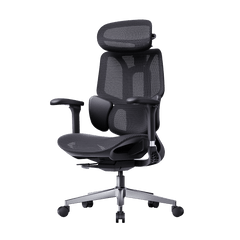
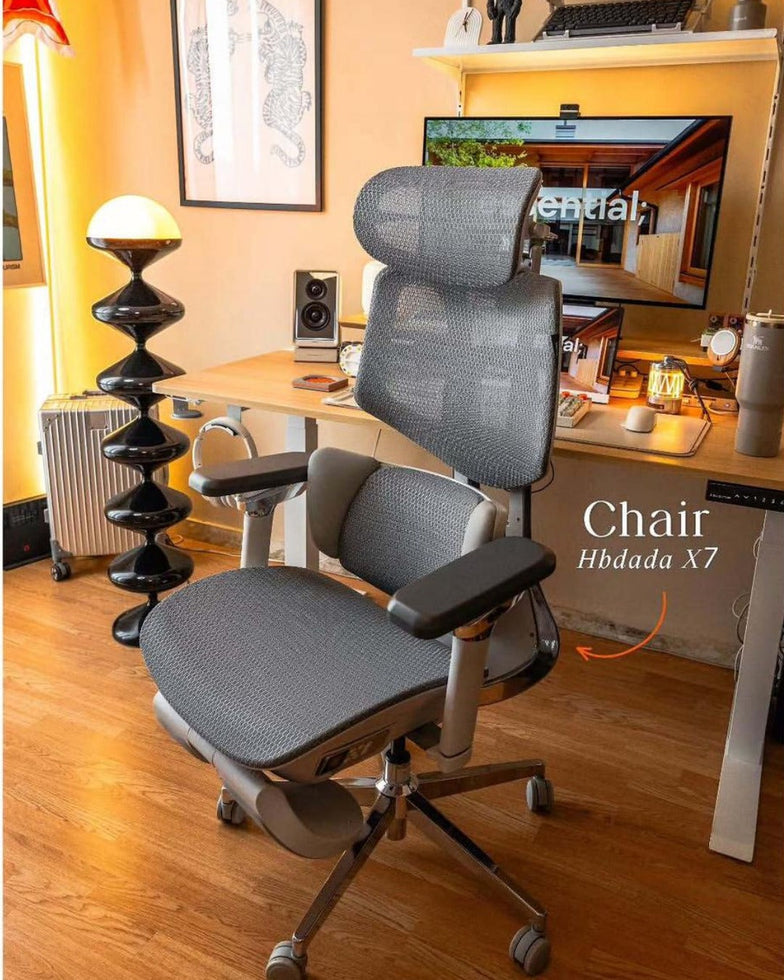
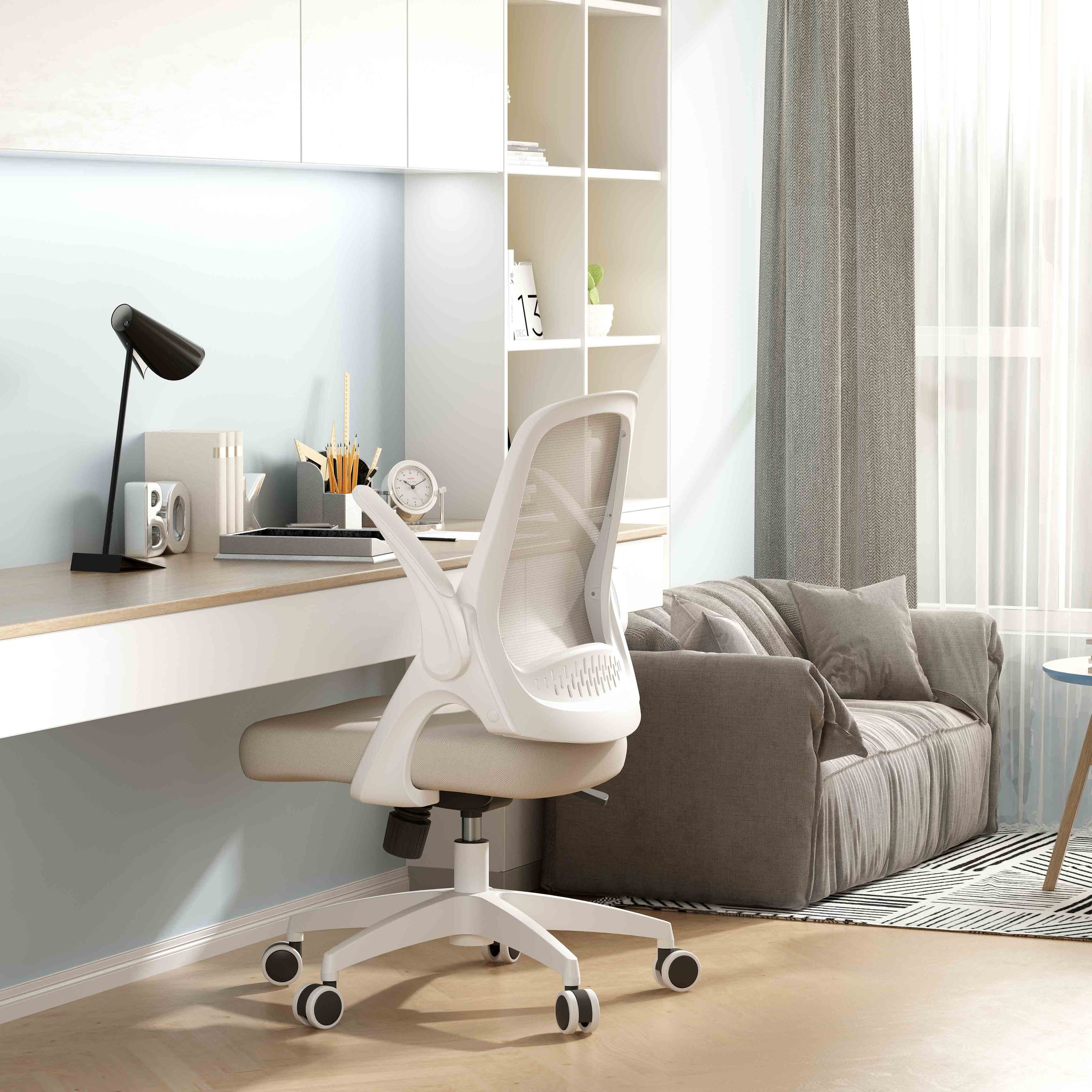
The chair in the setup
Where the HBADA X7 Fits
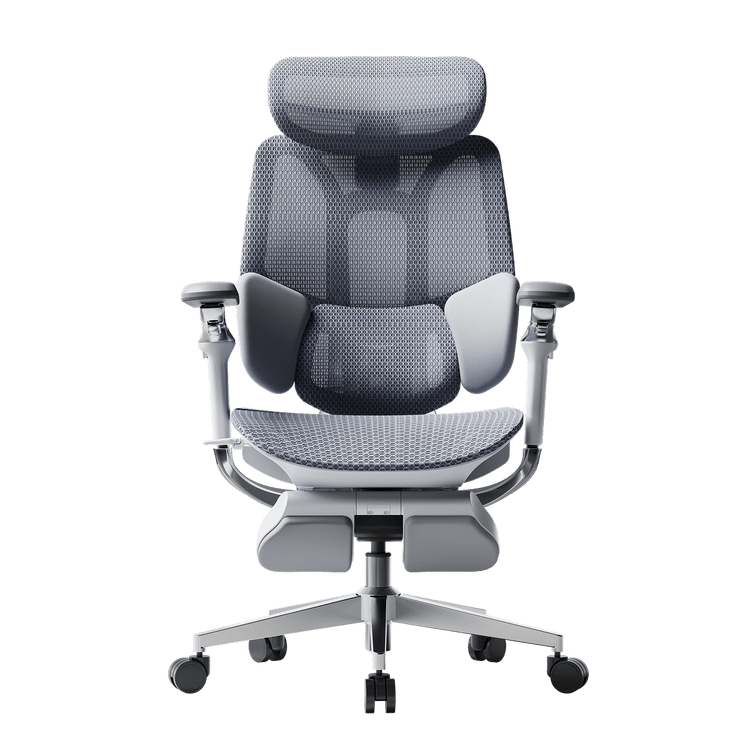
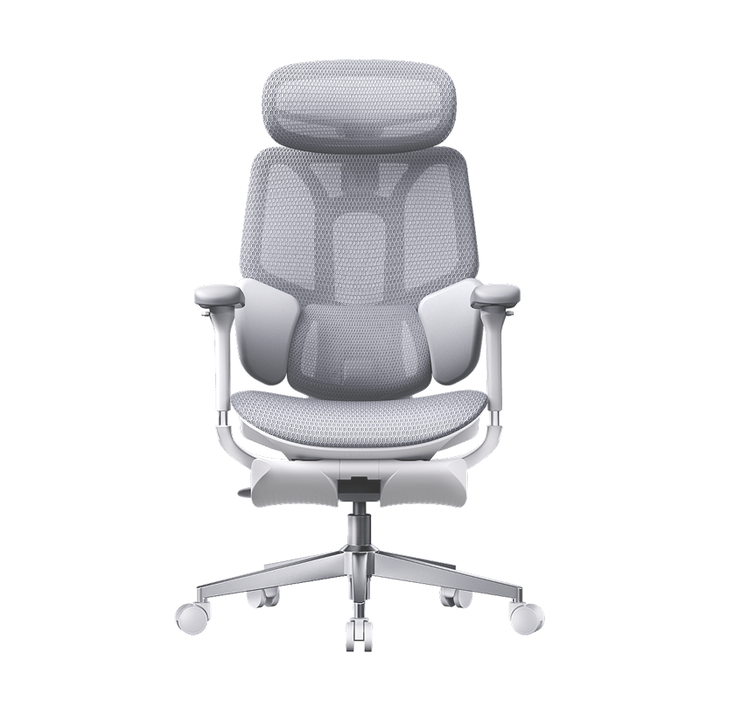
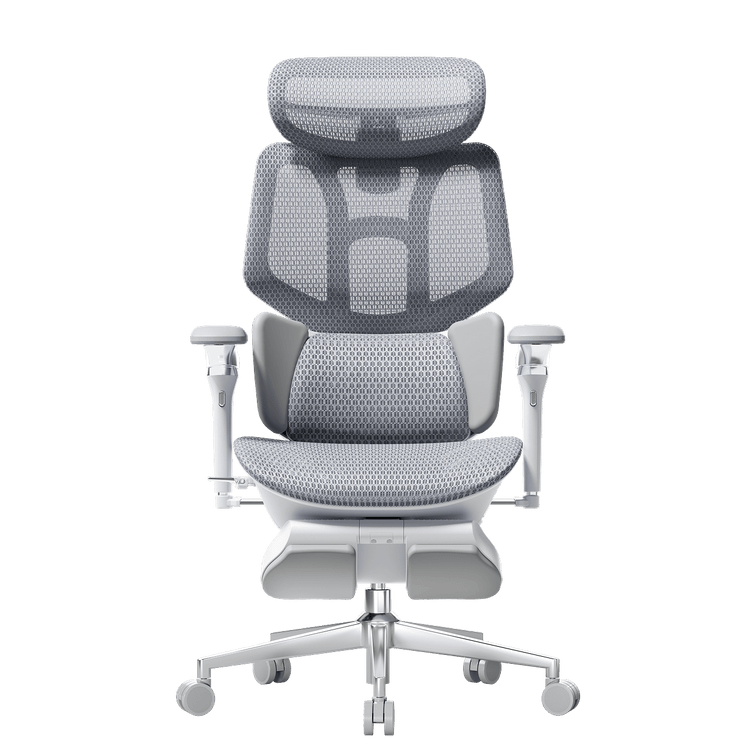
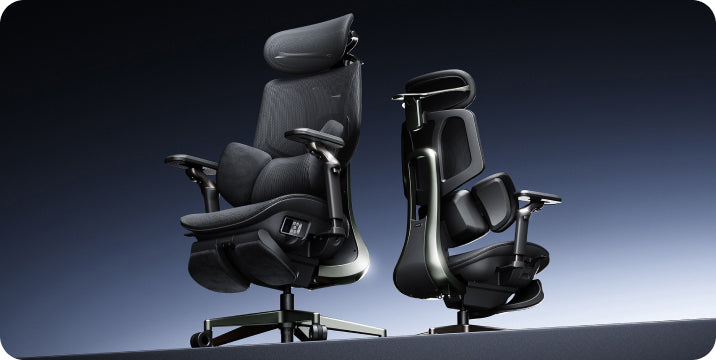
HBADA describes the X7 Smart Ergonomic Office Chair as offering AI lumbar tracking. It is an example of applying smart functionality to a specific part of the seated experience.
When considering it for your workspace, review the product’s dimensions, controls and adjustment range alongside your desk measurements. Lumbar tracking does not set your keyboard height or position your monitor, so those adjustments remain part of the setup.
Compare the exact model and variant before ordering. Do not assume that features, power requirements or operating modes are identical across the X7 family.
Explore the HBADA X7
Frequently Asked Questions
Is an adaptive lumbar support the same as AI lumbar tracking?
Not necessarily. Adaptive support may use a mechanical response to movement or load. An AI-labeled system depends on the manufacturer’s design. Check how the support moves and what controls it.
Do the chair and standing desk need to connect electronically?
No. They can work together through suitable dimensions and separate adjustments. Only expect electronic coordination if the manufacturers explicitly document compatibility.
Is a monitor arm necessary?
Only if it solves a positioning or space problem. If the monitor’s existing stand provides the height, distance and angle you need, an arm may be optional.
Can I use a smart ergonomic chair with a regular desk?
Yes, provided the chair’s dimensions and adjustment range work with the desk. Check keyboard height, armrest clearance and space for your legs before choosing the chair.
What happens when a smart chair runs out of power?
That depends on the model. Check which functions require power, which adjustments remain available and whether the manual permits normal use while disconnected. Do not assume a universal backup mode.
Can smart furniture automatically create perfect posture?
No feature label guarantees that outcome. Your equipment still needs to fit your body and tasks. Automatic adjustments also cannot replace changes of position and activity.
Should I replace my entire workspace at once?
Usually, you can assess one limitation at a time. Identify what cannot be adjusted adequately, measure the available space and upgrade the component that addresses that problem first.
Sources and scope: The IFA section summarizes a manufacturer-issued announcement. HBADA feature descriptions are attributed to the official product page. This article is an equipment-selection guide, not a hands-on comparative test.
HUANUO workspace portfolio announcement — September 4, 2026
HSE — Workstation posture guidance
HBADA X7 — Official product information
Sep 06, 2026
Office Chair Safety Check: 7 Parts to Inspect Before You Sit
Check seven key office chair parts, recognize warning signs, and know when to stop using your chair. Includes the September 2026 Branch recall context.
Sep 06, 2026
Office Chair Casters for Carpet, Hardwood and Tile: Choosing the Right Wheels
Office chair wheels may look like a minor detail, but they affect how easily your chair moves, how much noise it makes and how well the floor underneath holds up over time. The right caster depends on the flooring, wheel material, wheel diameter and the chair’s total loaded weight.
Quick answer
Choose soft, non-marking polyurethane or rubber-tread casters for hardwood, laminate, vinyl and tile. Harder wheels generally roll more easily on carpet, while larger-diameter wheels are useful on thicker carpet and floor transitions. Always confirm the stem size, total load rating and flooring manufacturer’s care requirements before replacing office chair casters.
Table of Contents
Why the floor determines the caster
Casters for hardwood and tile
Casters for carpet
Soft and hard casters compared
Do you still need a chair mat?
How to replace chair casters
Casters on HBADA chairs
Limitations and safety notes
Conclusion
Frequently asked questions
Sources
Why Does the Floor Determine the Right Caster?
The wheel and the floor work as a system.
A caster that rolls easily on carpet may be noisy or leave marks on a hard floor. A soft wheel that protects finished wood may require more effort to move across deep carpet. Wheel diameter, tread material, bearing design and floor condition all affect the result.
Soft-tread casters commonly use polyurethane or rubber-like materials that provide some cushioning and help reduce noise. Hard-tread casters commonly use nylon or another rigid material. In general, soft, non-marking treads are preferred when floor protection matters, while harder wheels usually require less effort to roll over carpet.
Simple rule: softer tread for hard flooring; harder or larger wheels for carpet. For mixed flooring, use a floor-safe caster rated for both surfaces and test it in an inconspicuous area.
Which Office Chair Casters Suit Hardwood and Tile?
Recommended
Soft PU or rubber-tread casters
A soft, non-marking tread can reduce rolling noise and lower the risk of scuffs on hardwood, laminate, vinyl and tile.
Use Carefully
Hard nylon or plastic casters
Hard wheels may be noisier on smooth flooring. Dirt or grit trapped beneath a wheel can also scratch a finished surface.
Keep both the wheels and floor clean. Even a floor-friendly caster can drag sand, grit or other debris across a finish. Inspect wheels periodically for embedded particles, flat spots and damaged tread.
Tile presents a slightly different issue. The wheel may not damage the tile itself, but narrow or hard wheels can create more noise when crossing grout lines. A resilient tread and a suitable wheel diameter generally produce a smoother ride.
Flooring warranties vary. Some flooring manufacturers still require protective mats or caster cups under wheeled furniture. Follow the care and warranty instructions supplied with your floor.
Which Office Chair Casters Suit Carpet?
Carpet changes the question from floor protection to rolling resistance.
Low-pile carpet
Many standard office chair casters can move across low-pile commercial or home-office carpet. A firmer wheel usually rolls with less resistance, although some multi-surface soft-tread wheels are designed to work on both carpet and hard floors.
Thick or plush carpet
Thick carpet allows small wheels to sink into the pile. Larger-diameter casters—often around 3 inches—can make movement easier because they cross the carpet with a shallower rolling angle. A rigid chair mat can also provide a firmer surface.
Carpet with long fibers
Hair and carpet fibers can wrap around caster axles and increase resistance. Twin-wheel casters with thread guards may help, but every wheel should still be inspected and cleaned regularly.
Soft and Hard Office Chair Casters at a Glance
Caster type
Usually suited to
Advantages
Points to check
Soft PU or rubber-tread
Hardwood, laminate, vinyl, tile and some low-pile carpets
Quieter movement and better protection for finished floors
May require more effort on thick carpet
Hard nylon or plastic
Carpeted work areas
Lower rolling resistance on many carpet surfaces
Can be noisy or leave marks on hard flooring
Large-diameter caster
Thick carpet, thresholds and floor transitions
Rolls over uneven surfaces and deeper pile more easily
Raises the chair and may change its fit under the desk
Braked or locking caster
Smooth or slightly sloped hard floors
Helps keep the chair from moving when stationary
The brake must remain accessible and suitable for the chair
Twin-wheel caster
General office use
Distributes the load across two smaller wheels
Hair and fibers can collect around the axle
Do You Still Need a Chair Mat?
Floor-friendly casters can reduce the risk of marks, but they do not guarantee that every floor can be used without a mat. Whether you need one depends on the flooring material, finish, carpet depth, chair use and the flooring manufacturer’s warranty terms.
A chair mat remains useful when:
The floor is antique, delicate, recently refinished or easily marked.
The flooring manufacturer requires protection under wheeled furniture.
Thick carpet makes the chair difficult to move.
The chair is used heavily in the same small area every day.
Grit or debris is difficult to keep away from the workspace.
Choose a mat made for the specific surface. Carpet mats usually have grippers underneath, while hard-floor mats should have a smooth, non-damaging backing.
How to Replace Office Chair Casters
Many office chairs use push-in grip-ring stems, but stem dimensions and attachment systems are not universal. Check compatibility before ordering replacements.
Place the chair on its side on a rug, blanket or other protected surface.
Inspect the existing attachment. Confirm whether it uses a push-in grip-ring stem, threaded stem or another fitting.
Pull a push-in caster straight out while holding the chair base. Use the chair manufacturer’s instructions if it does not release easily.
Measure the stem diameter and length. An 11 mm × 22 mm grip-ring stem is common, but it is not universal.
Check the replacement caster’s per-wheel load rating, stem type and recommended floor surfaces.
Press the compatible caster firmly into the socket until it is fully seated.
Return the chair upright and test every wheel at low speed before normal use.
Do not hammer in an incompatible stem or modify the chair base. A loose or partially inserted caster can affect stability and create a tipping risk.
Which HBADA Chairs Include Floor-Conscious Casters?
Caster specifications can vary by model and configuration. The current E3 Pro 2026 product information identifies silent PA+PU casters, while the X7 uses a five-caster base designed for smooth movement. Confirm suitability for your flooring on the current product page before purchasing or replacing any wheels.
Feature
HBADA X7 Smart
HBADA E3 Pro 2026
Caster information
Five-caster base; check the current configuration for tread details
Silent PA+PU casters
Best practice
Confirm compatibility with the specific floor finish
Keep the PU tread and floor free from grit
Seat material
Breathable seat with active cooling
Breathable CloudMesh seat
Maximum stated load
330 lb (150 kg)
330 lb (150 kg)
Current warranty information
Check the product page and warranty policy
Five years on listed core components; three years on other listed components
HBADA X7 Smart
The HBADA X7 Smart Ergonomic Office Chair combines a five-caster base with AI-powered lumbar tracking, massage, heating and active seat ventilation. Explore the complete HBADA X7 Series for current configurations.
HBADA E3 Pro 2026
The HBADA E3 Pro Ergonomic Office Chair 2026 Edition uses silent PA+PU casters together with a steel five-star base. You can also compare the HBADA E3 Series 2026 Edition .
For more options, browse HBADA ergonomic office chairs or view all HBADA office chairs .
Limitations and Safety Notes
Follow the chair and flooring manufacturers’ instructions before changing casters or removing a protective mat.
Confirm the stem size and attachment type instead of assuming every office chair uses the same fitting.
Check both the per-caster capacity and the total required capacity, including the chair and its user.
Larger replacement casters raise the seat and may change desk clearance, foot support and chair stability.
Remove hair, fibers and debris before a wheel becomes difficult to rotate.
Stop using the chair if a caster is cracked, loose, bent, seized or cannot be seated fully.
Replace damaged casters as a complete matched set unless the chair manufacturer states otherwise.
Conclusion
The right office chair caster depends on the surface underneath it. Soft, non-marking PU or rubber-tread wheels are generally the safer choice for hardwood, laminate, vinyl and tile. Harder or larger wheels usually move more easily on carpet, particularly when the pile is thick.
Wheel material is only part of the decision. Check the stem dimensions, load rating, wheel diameter and flooring warranty before making a change. Keep the casters clean, inspect them regularly and use a chair mat when the floor manufacturer or condition of the surface calls for additional protection.
Frequently Asked Questions
What type of office chair casters is best for hardwood floors?
Soft, non-marking polyurethane or rubber-tread casters are generally preferred for hardwood floors. They produce less noise and are less likely to leave marks than hard nylon wheels. Keep the wheels and floor free from grit, and check whether the flooring manufacturer requires a protective mat.
Do you need special office chair casters for carpet?
Not always. Standard casters may work on low-pile carpet. Thick or plush carpet usually benefits from harder or larger-diameter wheels that do not sink as deeply into the pile. A carpet chair mat can provide an even firmer rolling surface.
Will office chair wheels scratch hardwood flooring?
Hard, damaged or dirty wheels can mark a hardwood floor. Soft, non-marking casters reduce the risk, but no wheel can guarantee protection under every condition. Sand and grit should be removed regularly, and delicate or warranty-protected flooring may still require a chair mat.
Are all office chair caster stems the same size?
No. Many office chairs use a push-in grip-ring stem, and 11 mm × 22 mm is a common size, but other dimensions and threaded stems also exist. Remove and measure one existing caster or check the chair manual before buying replacements.
Are larger office chair wheels better for carpet?
Larger wheels generally roll more easily across thick carpet, thresholds and small floor transitions. However, they also raise the chair. Check desk clearance, seat-height range and overall stability before installing a larger caster.
How can you stop an office chair from rolling away?
Compatible braked or locking casters can help keep a chair stationary on a smooth floor. Before fitting them, confirm the stem size, load rating and brake clearance. A chair should remain stable when the brakes are applied and should not rely on a damaged or uneven set of wheels.
Can office chair casters be used without a chair mat?
Sometimes, but it depends on the caster, floor and flooring warranty. Floor-safe casters may work without a mat on many durable surfaces. Delicate wood, recently refinished floors, thick carpet and flooring warranties may still call for a suitable protective mat.
Sources
HBADA E3 Pro Ergonomic Office Chair 2026 Edition — current product, caster and warranty information.
HBADA X7 Smart Ergonomic Office Chair — current product and base specifications.
HBADA User Manual and Assembly Guide — model-specific setup and support resources.
This article provides general caster-selection and floor-care information. Compatibility varies by chair, caster, floor finish and product configuration. Always follow the applicable chair manual, flooring care instructions and warranty terms.
Sep 06, 2026