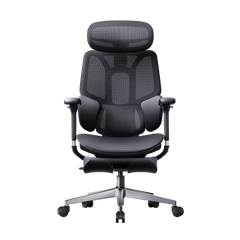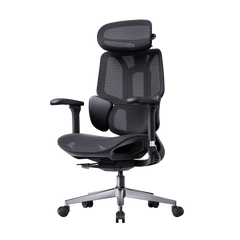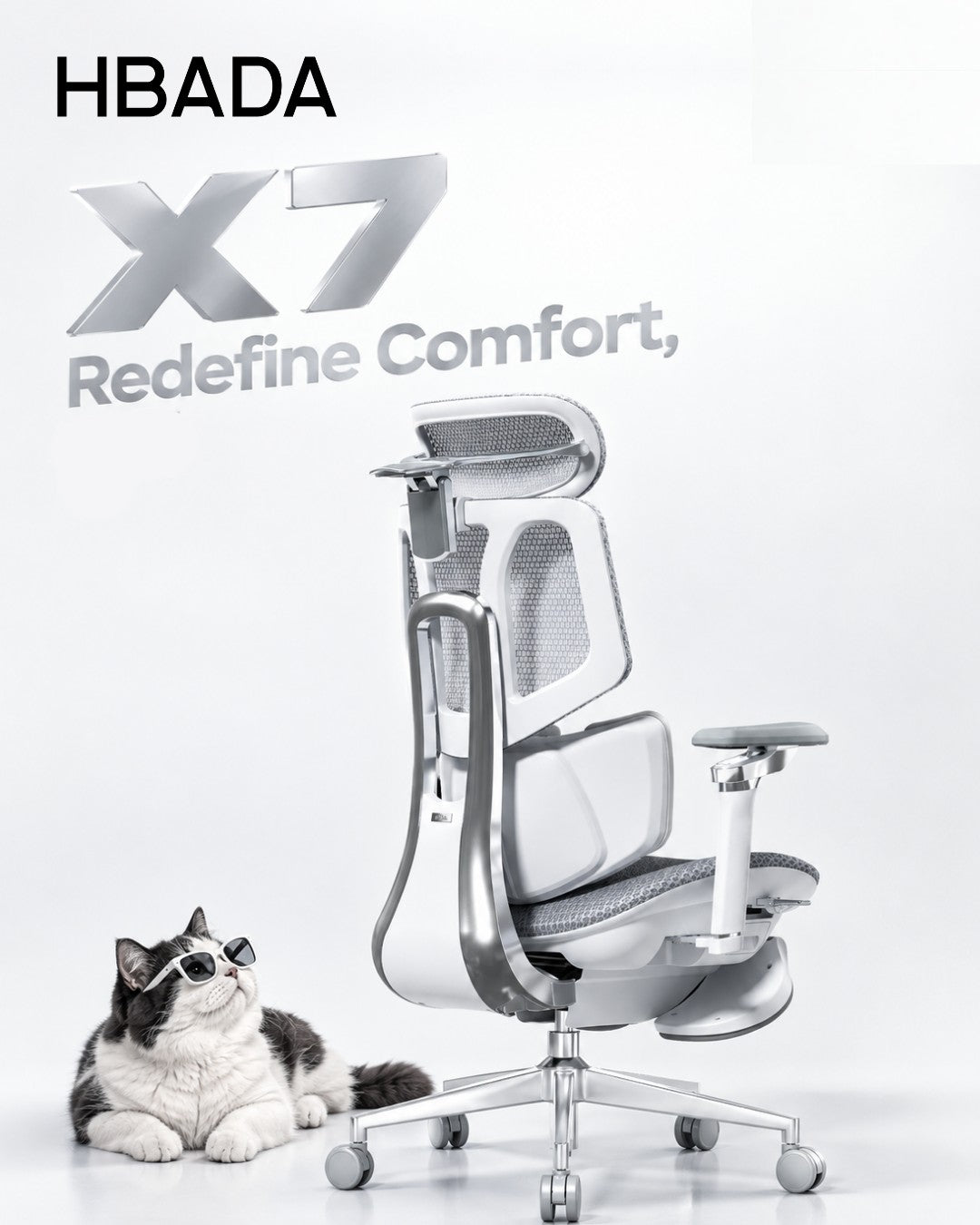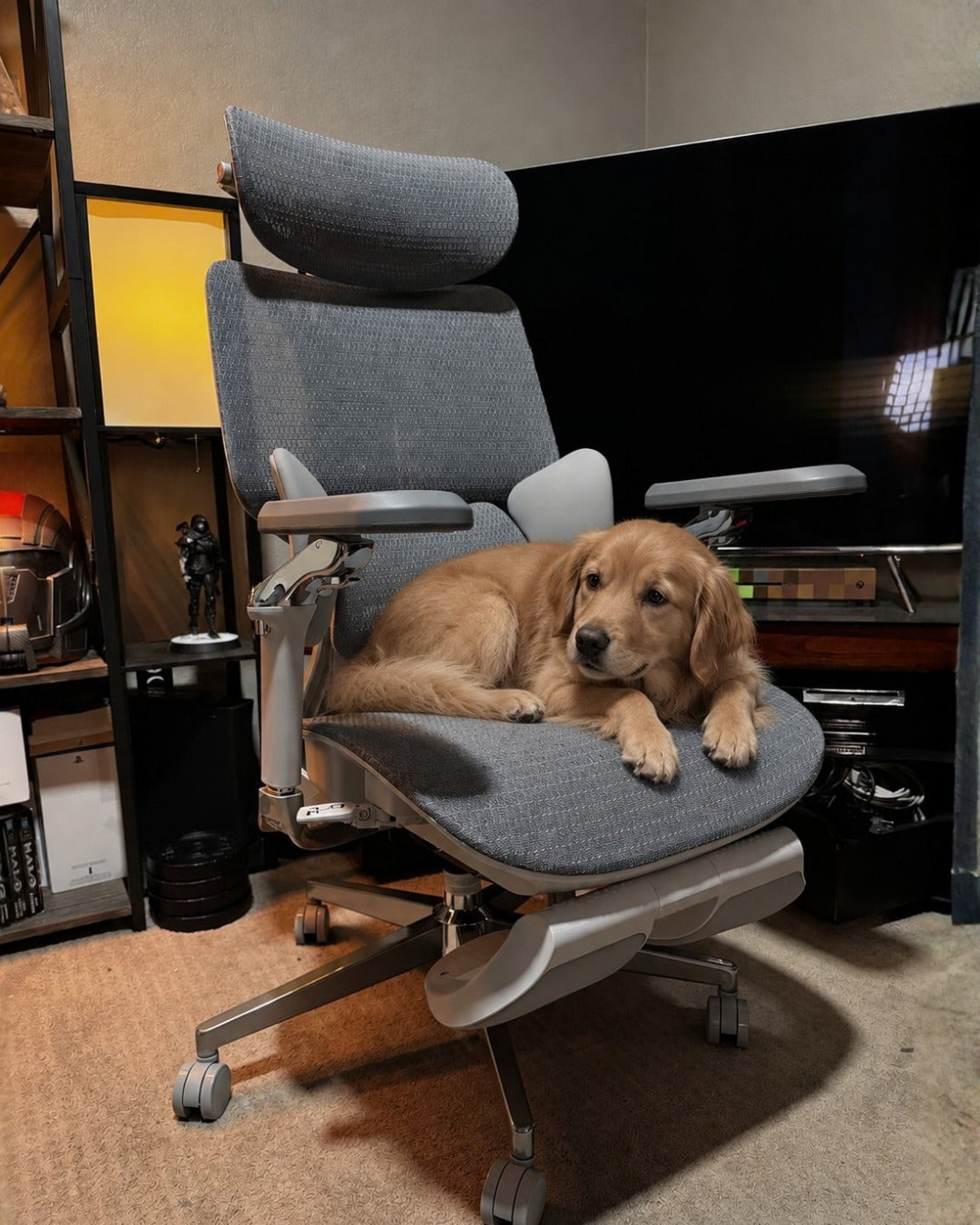
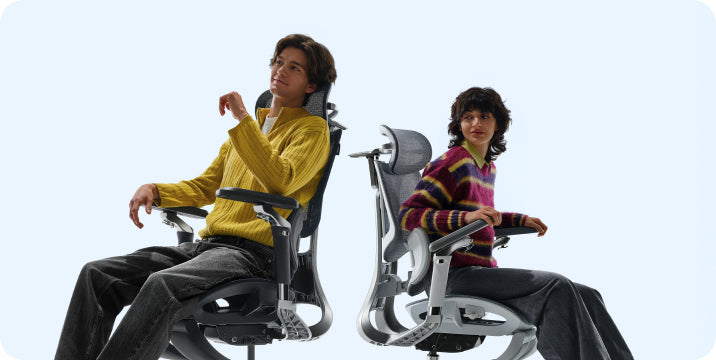
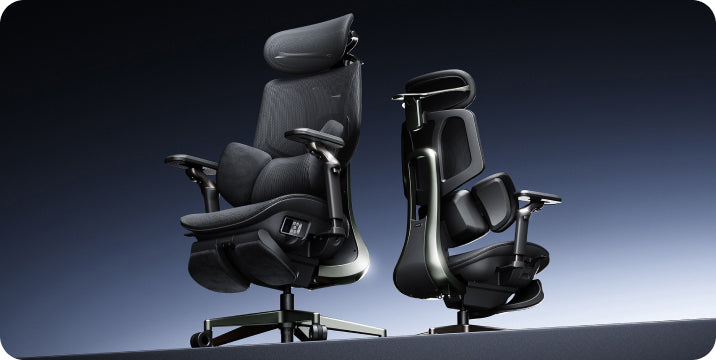

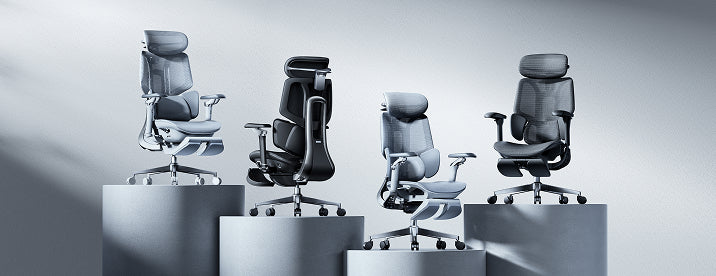
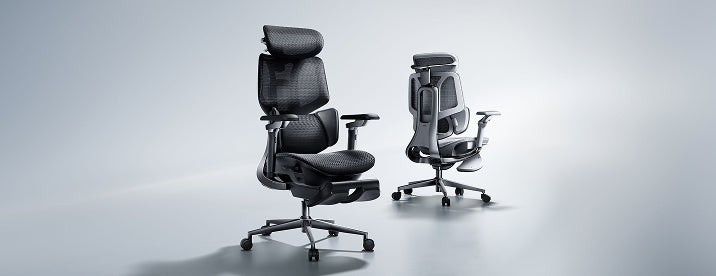

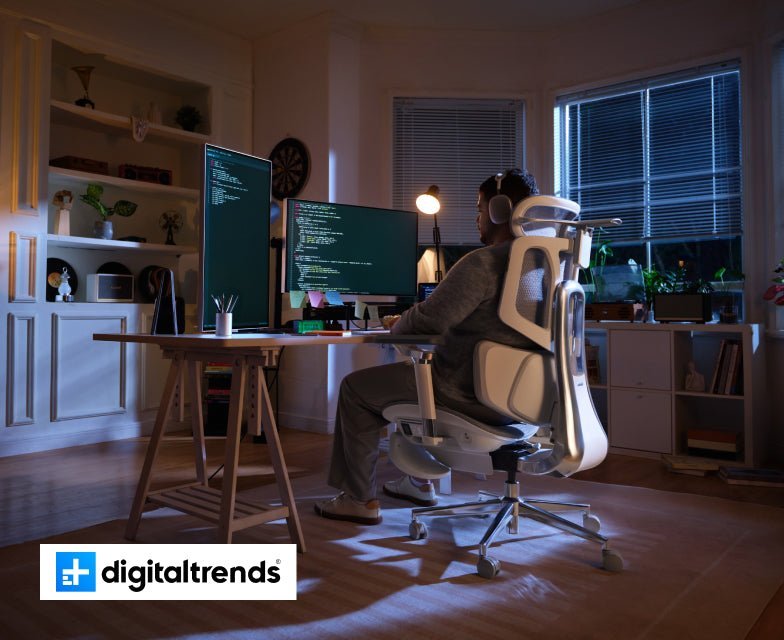
Digital Trends published a feature on the HBADA X7 Smart Ergonomic Chair in March 2026, written by their staff team. Their coverage focused on one central question: does a chair with AI lumbar tracking, bionic massage, and built-in thermotherapy actually deliver on what those terms promise — or is it engineering for its own sake?
Their answer leaned firmly toward the former.
The Writer's Starting Point
The Digital Trends piece opens with something that gives the review immediate credibility: a personal reckoning. The writer describes years of ignoring desk-related discomfort — the sore back, the neck strain — and eventually realising that the root cause wasn't their workload or their posture. It was the chair they were sitting in for six to eight hours a day.
That admission sets the tone for everything that follows. This isn't a spec evaluation. It's an assessment written by someone who understands the problem from the inside.

What They Found: Static Support Is the Wrong Standard
Digital Trends’ main point — and it’s one to really think about — is that most of what makes ergonomic chairs feel uncomfortable is that they’re fixing the wrong issue. Armrests that can be adjusted, reclining backrests, a cushion for the lumbar region: these are just a few of the options available for ergonomic chairs. But they're all fixed. They work when you're still. When you bend over to read the news, scoot over to get your coffee or lean back in the middle of the day, the support stays at the same place. Your muscles fill in the space. Do that for eight hours a day over five days a week and the result is the kind of chronic tension that sends people into physio.
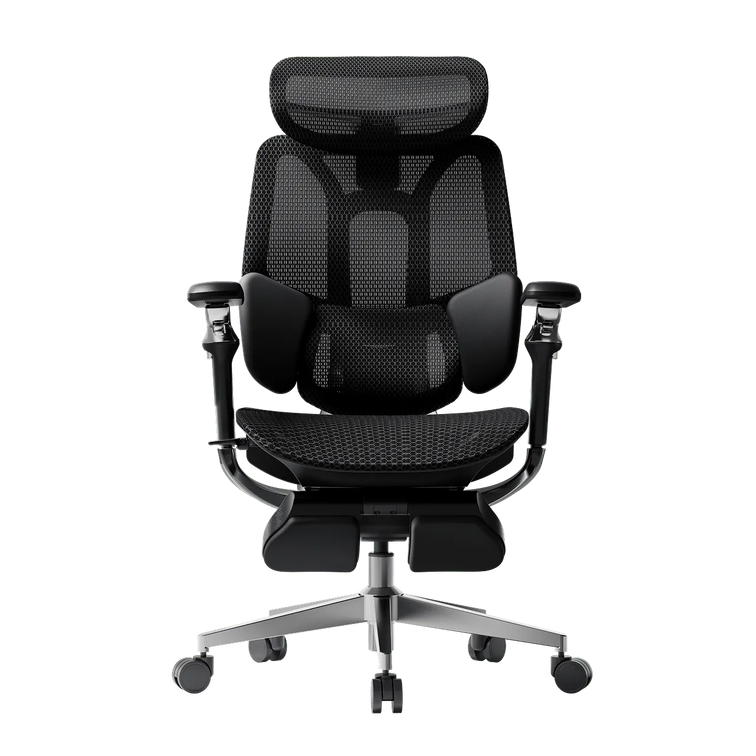
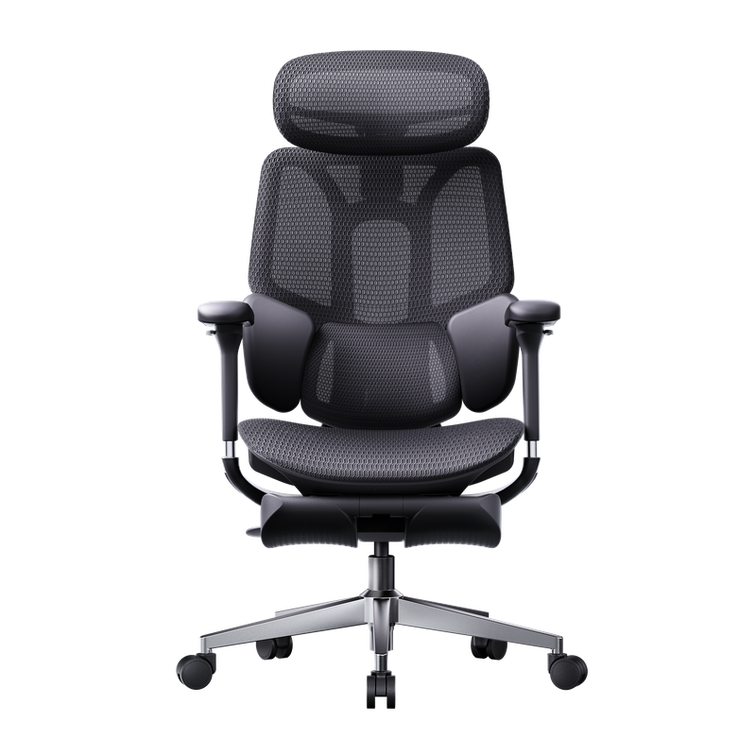
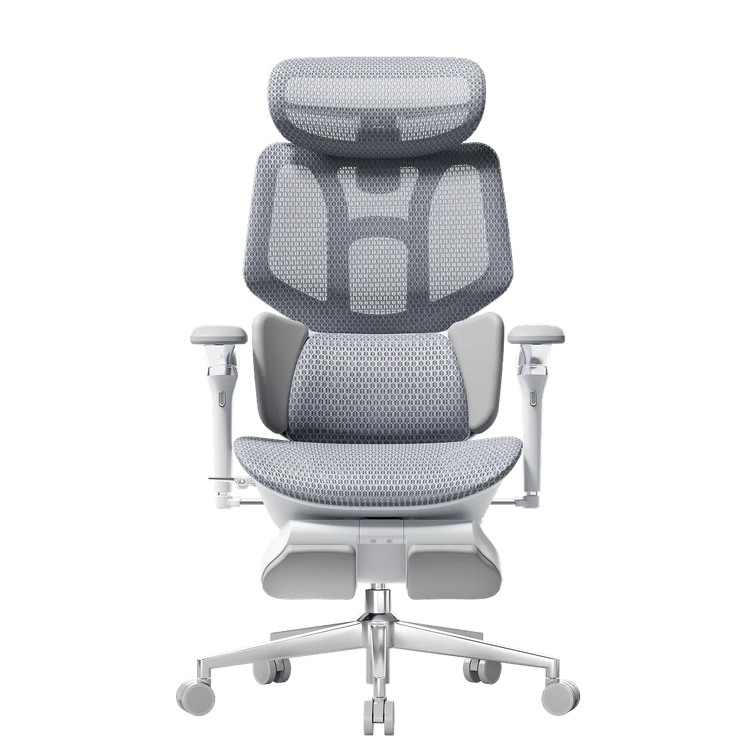
This is differently approached in the X7. Its AI lumbar system is like “a bionic extension of your back and spinal assembly” – the chair doesn’t hold you up from a fixed place, Digital Trends said. It sees where you are and it comes to you.
How does that work: Hall magnetic sensors operating at a sampling rate of 1,000Hz deliver real-time posture information to an automotive grade processor, which commands the linear motors to advance or retreat the lumbar pad up 50mm and tilt up to 10 degrees within milliseconds. Whether you’re leaning into a deadline or reclining through a call, the support stays in contact.
The Recovery System — What Most Reviews Miss
Digital Trends went further than most coverage does on the X7's physiotherapy functions, and it's worth dwelling on why those features matter beyond comfort.
Tension in the erector spinae and quadratus lumborum — the deep muscle groups that stabilise the lower back — doesn't release the moment you stand up at the end of the day. It accumulates. Left unaddressed across weeks and months, it becomes the structural stiffness that is far harder to reverse than to prevent.
The X7's 8D bionic massage uses dual-core nodes that extend to deliver deep kneading — not vibration — and retract fully when not in use. The graphene thermotherapy panels maintain a precise 45–54°C range, which Digital Trends noted is the threshold at which heat genuinely assists circulation and eases muscle tension rather than simply feeling warm. When ambient temperatures make heat counterproductive, the dual-fan ventilation system — running at 3,000 RPM and moving 810,000 cubic centimetres of air per minute — keeps the seat and back interface cool throughout extended sessions.
These aren't features bolted onto an ergonomic chair to justify a price point. They're the part of the design that addresses what happens to your body after the workday ends.
The Medical Expertise Behind the Design
One part of the Digital Trends feature that sets it apart from more cursory coverage is its focus on the teamwork that went into the X7's design.
The chair's three-zone floating wing structure — which is aimed at the erector spinae and quadratus lumborum specifically, rather than delivering a generalised lumbar pressure — was created in partnership with Dr. Dennis Miller, a certified physician and member of the International Chiropractors Association (ICA). Digital Trends took note of that as an example of the kind of medical-engineering synergy that leads to chairs shaped by anatomy rather than aesthetics.
That distinction matters. A lumbar system created with chiropractic input, and one not created with it, are not the same product, even if the marketing language is very similar.
Is It Worth the Price?

Digital Trends was not afraid to address the X7's place in the market. It is at the higher end of the ergonomic chair price bracket beginning at $1,299 – higher than the E3 Pro and E3 Air chairs, which cater for the vast majority of use cases at significantly lower prices.
This was their stance: X7 is worth the investment for professionals who spend six or more hours on their desk each day — especially those with existing back pain, or those who want to stave it off. The AI tracking, the recovery features, the decade of service life guaranteed by BIFMA X5.1 testing make it a long-term wellness decision, not a furniture one.
Their perspective was explicit: For light use applications, the value proposition is different -- and Digital Trends was upfront about that.
Explore the HBADA X7 → | Use code HpcmagX7 for $50 off
This post references a paid program published by Digital Trends on March 30, 2026. All editorial perspectives in the original article belong to Digital Trends and its writers.
People Also Ask
Q1: What is the difference between the HBADA X7's AI lumbar support and a standard ergonomic chair?
A: Standard ergonomic chairs offer "static support"—meaning when you lean forward or shift your weight, a gap forms between your back and the chair, forcing your muscles to strain. The Hbada X7 uses 1,000Hz magnetic sensors and an automotive-grade processor to detect your posture in real-time. Within milliseconds, linear motors adjust the lumbar pad up to 50mm in depth and 10 degrees in tilt, acting as a bionic extension of your spine to ensure continuous support.
Q2: Does the HBADA X7 just vibrate, or does it offer real massage?
A: Unlike basic chairs that use simple vibration pads, the Hbada X7 features a true 8D bionic massage system. It uses dual-core nodes to deliver deep tissue kneading that specifically releases accumulated tension in the erector spinae and quadratus lumborum muscles. Importantly, the massage nodes fully retract when not in use, so they won't poke your back while you are working.
Q3: How does the temperature control (heating and cooling) work on the X7?
A: The X7 is equipped with a dual-climate recovery system. For muscle relaxation, the graphene thermotherapy panels maintain a precise 45–54°C range—the exact medical threshold proven to improve blood circulation and ease stiffness. If your office runs hot, the active dual-fan ventilation system spins at 3,000 RPM (moving 810,000 cubic centimeters of air per minute) to keep your back cool and sweat-free.
Q4: Is the HBADA X7 medically approved for back pain?
A: Yes. The X7’s three-zone floating wing lumbar structure was co-designed with Dr. Dennis Miller, a certified physician and member of the International Chiropractors Association (ICA). Rather than applying generalized pressure, it is anatomically shaped to target the specific deep muscle groups responsible for lower back stabilization.
Q5: At $1,299, is the HBADA X7 really worth the investment?
A: As highlighted by Digital Trends, the X7 is a long-term wellness investment rather than just a piece of furniture. It is highly recommended for professionals who sit for 6+ hours a day or suffer from chronic back pain. With a decade of service life guaranteed by BIFMA X5.1 testing, AI tracking, and built-in physiotherapy, it justifies its price for heavy users. (Tip: You can use code HpcmagX7 at checkout for $50 off).